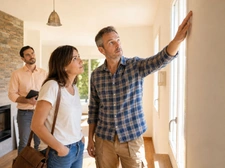
Have you fallen in love with a property during the first viewing? That's perfectly normal. Emotion often drives that initial discovery. However, before making a commitment, a second property viewing allows you to take a more objective look at the home. This follow-up visit is an essential step in securing your purchase project in 2026. In this article, we explain what a second viewing is, when to schedule it, what to check, how to get support, and how to use it as a negotiation tool.
Summary
- A second property viewing allows you to revisit a home with an objective perspective after an initial visit often driven by emotion, helping you assess its actual condition before committing.
- This second visit is used to check key technical elements: walls, floors, roof, electrical system, plumbing, heating, ventilation (VMC), double glazing, condominium documents, and the property's surroundings.
- A second viewing can become a negotiation tool if it reveals defects, necessary repairs, or inconsistencies in the diagnostics or documents provided.
What Is a Property Second Viewing? Definition and Glossary
A second viewing is an additional visit to a property carried out after an initial discovery of the home. It takes place before you make a final commitment to purchase. Unlike the first visit, which is often guided by emotion and a first impression, the second viewing allows you to adopt a more objective and methodical perspective on the property.
This step has become common in any real estate project. It gives you the opportunity to verify technical details, ask more specific questions, and confirm that the property still meets your expectations. It is also the ideal time to inspect elements you may have overlooked during your first visit.
What Is the Difference Between a Revisit and a Second Viewing?
These two terms are sometimes used interchangeably, but they refer to different realities. A revisit is simply an additional visit motivated by curiosity or the desire to see the property again. It does not necessarily have a specific objective and may be carried out simply to imagine yourself in the home once more.
A second viewing, on the other hand, serves clearly defined purposes: inspecting, checking, and validating specific points before making your final decision. You arrive with a checklist in mind, take measurements, test equipment, and examine technical details. It is a structured approach that helps secure your investment.
The Seller's Role During the Second Viewing
The seller plays an essential role during this stage. They must allow you access to the property under optimal conditions and answer all your questions transparently. This is also when they provide mandatory technical diagnostics and documents relating to the property (title deed, condominium meeting minutes, invoices for completed work).
A seller accompanied by an Optimhome advisor generally facilitates this process. The advisor coordinates the visit, answers technical questions, and ensures that all required documents are available.
When Can You Schedule a Second Viewing?
The Time Between the First Visit and the Second Viewing
There is no legal timeframe governing when you can carry out a second viewing. In practice, it is ideally scheduled between 24 and 72 hours after the first visit. This period allows you to step back from the excitement of the initial emotional response while keeping the property fresh in your mind.
Consider visiting at a different time of day. If you first saw the property in the morning, return in the afternoon or evening. This will allow you to observe natural light levels, assess noise disturbances depending on the time (traffic, neighbors, proximity to a railway line), and better understand the rhythm of the neighborhood.
The Second Viewing After a Purchase Offer
Once your purchase offer has been accepted, it is entirely common to request a second viewing before signing the preliminary sales agreement. This step allows you to verify specific technical points, measure rooms, and confirm that all advertised features correspond to reality.
It is also the ideal time to deepen your inspection: the condition of installations, condominium documents, and technical diagnostics. Your Optimhome advisor can accompany you to ask the right questions and secure your decision before making a binding commitment.
The Second Viewing Before Signing the Final Deed at the Notary's Office
Just before signing the final deed of sale with the notary, you have the right to carry out one last viewing. This serves as a final inspection to ensure that the property has not suffered any deterioration between the preliminary agreement and the final sale. Ideally, this visit should be scheduled 5 to 7 days before the notarial appointment.
This final check allows you to confirm that all agreed equipment is present, that any promised work has been completed, and that the overall condition of the property corresponds to what was recorded in the sales agreement. If you discover a problem, you may request a price retention or a postponement of the signing.
Checklist: What Should You Check During the Second Viewing of a House or Apartment?
A second viewing is the perfect time to examine every detail of the property. You will verify what you noticed during the first visit, but this time with a more technical and objective perspective. Here are the key points to inspect to secure your purchase.
The Overall Condition of the Property: Walls, Floors, and Structure
Start by inspecting the walls room by room. Look for cracks, even small ones, which may indicate foundation settlement or a structural issue. Run your hand over surfaces to detect signs of dampness, cold spots, or mold hidden beneath paint.
Then examine the floors. Check that they are level, without sagging or suspicious creaking. A squeaky or sinking floor may reveal structural or flooring issues.
For the structural elements, observe the roof from the outside and, if possible, the attic. Look for missing tiles, signs of water infiltration on ceilings, or damaged beams. Inspect the façade for significant cracks. If the property includes load-bearing walls, ensure that no modifications have been made without authorization. Also verify the advertised square footage with your own measurements.
Technical Installations to Inspect Thoroughly
Electrical systems, plumbing, and heating deserve special attention. Start with the electrical panel: ensure it complies with current standards, includes a residual current circuit breaker, and that fuses are clearly labeled. Test several outlets in each room.
For plumbing, turn on all taps to test water pressure and identify any leaks. Check the condition of visible pipework and ask about the age of the water heater or boiler.
Also inspect the ventilation system (VMC) to ensure it operates correctly. Check the condition of double-glazed windows and test the opening of every door, including the front door.
The Surroundings and Neighborhood
The second viewing should not be limited to the interior of the property. Take time to explore the neighborhood at different times of the day. Observe the atmosphere and be attentive to potential noise disturbances, such as proximity to a railway line.
Identify nearby shops, public transportation, and useful services. If you are purchasing a condominium apartment, inspect the building entrance, stairwell, and common areas. Their condition reflects the management of the condominium. Do not hesitate to ask questions to the seller or property manager regarding planned works.
Category | Points to Check | Result |
|---|---|---|
Structural Elements | Cracks in walls and façade, signs of dampness, roof condition, load-bearing walls, actual floor area | ☐ Compliant ☐ To Monitor ☐ Repairs Needed |
Technical Installations | Electrical panel, circuit breaker, plumbing, water pressure, heating, ventilation system, double glazing, front door | ☐ Compliant ☐ To Monitor ☐ Repairs Needed |
Environment | Neighborhood, noise disturbances, shops, transport, common areas, stairwell, neighbors | ☐ Satisfactory ☐ To Monitor ☐ Deal Breaker |
Should You Hire an Expert or Visit Without a Real Estate Agent?
The Opinion of a Building Professional or Architect
Being accompanied by a building professional or architect during a second viewing can be extremely valuable, particularly if you have identified signs of structural weakness or if major renovation work appears necessary. These experts assess the structure, identify defects that are not visible to the naked eye, and provide a cost estimate for future works. Their technical opinion strengthens your negotiating position.
However, it is possible to conduct a second viewing without a real estate agent if you feel comfortable with technical matters. An Optimhome advisor can nonetheless simplify the process by asking the right questions, checking mandatory documents, and assisting with administrative procedures.
How to Write an Email Requesting a Second Viewing
To arrange your second viewing, a clear and structured email is essential. Include the following elements:
- A clear subject line: "Request for Second Viewing – [Property Address]"
- A reminder of the property concerned: mention the listing reference and the date of your first visit
- Suggested time slots: propose several dates and times to facilitate scheduling
- Your objectives: briefly indicate the points you would like to verify (condition of installations, access to technical documents, additional measurements)
A courteous and professional message demonstrates your seriousness as a buyer and facilitates collaboration with the seller or their representative.
How Can You Use a Second Viewing as a Negotiation Tool?
A second viewing is not only an inspection stage; it is also a practical opportunity to negotiate the property's price. Defects discovered during this second inspection (roof requiring replacement, non-compliant electrical installation, damp walls) provide strong arguments for reducing your offer. These issues represent future works and additional costs that directly affect your budget.
To support your negotiation, obtain one or more quotes from qualified tradespeople to accurately estimate repair costs. For example, if the Energy Performance Certificate (EPC) shows an F or G rating, you can estimate the cost of energy renovations (insulation, heating system replacement) and include this amount in your negotiations. A poor EPC rating may justify a price reduction of 5% to 10%.
Optimhome advisors can also support you during this negotiation phase. Thanks to their knowledge of the local market, they help you formulate a realistic proposal and avoid unpleasant surprises. With their expertise, you can approach discussions with the seller confidently and negotiate the price of a property based on solid facts.
What Should You Do After the Second Viewing?
When the Second Viewing Is Positive: How to Confirm Your Purchase
If your second viewing goes smoothly without any unpleasant surprises, it is an excellent sign. You confirm your initial positive impression while now having a more objective understanding of the property. The technical installations work properly, the property's condition matches your expectations, and the documents provided are consistent.
At this stage, you can move on to the next steps in your property project. Submit your purchase offer specifying the proposed price and conditions, or prepare to sign the preliminary sales agreement with the notary. Your Optimhome advisor can assist you throughout these stages to secure the transaction in the long term.
When to Walk Away After a Second Viewing
Certain warning signs should encourage caution. Serious structural defects (major cracks, weakened load-bearing walls, a roof requiring complete replacement) can result in an excessively high renovation budget. Likewise, unacceptable disturbances (constant noise, problematic neighbors) or inconsistencies in condominium documents may reveal hidden risks.
An Optimhome advisor can help you assess these issues and make the right decision for your project. It is better to walk away from a risky purchase than to face costly surprises after signing.
Positive Signs | Warning Signs |
No major defects identified during inspection | Significant structural cracks or persistent dampness |
Up-to-date and compliant diagnostics (EPC, electricity, plumbing) | Missing diagnostics or concerning results |
Reasonable and predictable renovation budget | Renovation costs exceed 15–20% of the purchase price |
Quiet environment and pleasant neighborhood | Significant noise disturbances (railway, busy road) |
Clear and transparent condominium documents | Inconsistencies in condominium meeting minutes or high charges |
Documents to Request Before or During the Second Viewing
The second viewing is the ideal time to request documents that verify the information provided during the first visit. Whether for a house or an apartment, technical diagnostics should be reviewed carefully: EPC, electrical diagnosis, gas diagnosis, asbestos report, lead report, risk assessment, and sanitation report depending on the property type.
These documents provide an initial assessment of the property's condition and any work that may need to be anticipated. A poor EPC rating, outdated electrical installation, or identified natural risks can directly affect your budget and purchasing decision.
For a condominium apartment, also request the minutes of recent general meetings, condominium regulations, service charges, and details of any approved works. These documents help you understand how the building is managed, future expenses, and any ongoing disputes.
It is also useful to request invoices for recent works, valid warranties, maintenance contracts for boilers or heat pumps, and the property tax statement. These documents help you assess the true cost of ownership.
Mistakes to Avoid During a Property Second Viewing
The first mistake is treating the second viewing as a simple comfort visit without a clear method. A second viewing should be prepared with a checklist, targeted questions, and, if necessary, support from a building professional or real estate advisor.
You should also avoid focusing solely on decoration or interior layout. The most important elements are often less visible: dampness, cracks, insulation, roofing, ventilation, electrical panel condition, water pressure, heating performance, and the condition of common areas.
Another common mistake is not visiting the property at a different time of day. Returning at another time allows you to assess natural light, noise levels, parking availability, neighborhood activity, and potential disturbances that may not have been apparent during the first visit.
Finally, do not overlook the documents. Missing diagnostics, high condominium charges, approved renovation projects, or inconsistencies in floor area measurements can significantly alter the financial balance of your project. The second viewing should therefore confirm both the condition of the property, its environment, and the consistency of the information provided.
Conclusion
A second property viewing is a highly recommended step for confirming a positive first impression and securing your purchase decision.
- It allows you to examine the property methodically by checking technical aspects, installations, diagnostics, documents, and the surrounding environment.
- It helps anticipate renovation work, assess the true budget of the project, and avoid unpleasant surprises after signing.
- It can also strengthen your negotiating position if defects or additional costs are identified.
To buy or sell under the best conditions, it is recommended to work with an Optimhome real estate advisor, who can accompany you during visits, verify documents, and secure every stage of your project.
Browse our property listings throughout France to find your future home or investment opportunity.
Frequently Asked Questions About Property Second Viewings
Is a Second Viewing Mandatory When Buying a Property?
No, a second viewing is not legally required in France. However, it is strongly recommended to secure your investment. This additional visit allows you to verify the property's actual condition, confirm the information contained in the technical diagnostics, and identify any potential defects. It plays a key role in the final decision-making process before signing the preliminary sales agreement.
How Many Second Viewings Can You Carry Out When Buying a House?
There is no legal limit to the number of second viewings. In practice, most buyers conduct between one and three follow-up visits before formalizing their purchase offer. Beyond three visits, sellers may become impatient. Your Optimhome advisor can help you optimize these visits.
How Does a Property Second Viewing Take Place?
The second viewing begins with arranging an appointment with the seller or real estate agent, ideally at a different time from the first visit. You then inspect the property room by room in a methodical manner, checking all the technical aspects that concern you. This is the time to ask detailed questions about completed works, condominium charges, or the condition of installations. Remember to take notes and photos.
Should You Prepare a Checklist for a Second Viewing of an Apartment?
Yes, it is essential to avoid overlooking important details. An apartment presents specific elements that should be checked: the condition of common areas (stairwell, lobby, access points), condominium documents (meeting minutes, regulations), service charges and property taxes, as well as works approved by the property management company. Do not forget to inspect sound insulation, a criterion that is often underestimated. Your Optimhome advisor can provide a tailored checklist.
Can You Request a Second Viewing After Signing the Preliminary Sales Agreement?
Yes, this is possible and even common. This final viewing usually takes place a few days before signing the final deed of sale before the notary, approximately three months after the preliminary agreement. It serves as a final inspection to ensure that the property remains in the agreed condition and that no deterioration has occurred. It is also an opportunity to confirm that any promised works have been completed.
Author :

Fabrice DOBROWOLSKI - Optimhome Network Development Director
Optimhome offers you personalized support for your real estate project. Benefit from all my advice, based on several years of experience, to ensure the success of your project.