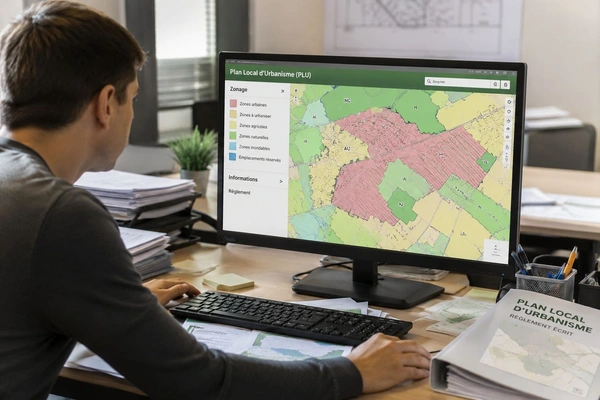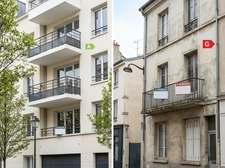
Two apartments listed at 250,000 euros in the same city can reflect two completely opposite market realities: one is a good deal, the other a future source of expenses. The listed price says almost nothing on its own; it must always be read alongside the DPE (energy performance diagnostic), the overall condition, the co-ownership charges, the floor, the exposure and the precise location of the property. In 2025-2026, the gaps linked to the energy label alone exceed 20% in the majority of French départements, and they can climb beyond 40% for a poorly insulated family house. Understanding these mechanisms is the key to avoiding pitfalls, whether you are a buyer, seller, landlord or investor.
In summary
- An identical price per m² can hide differences in real value of up to 25%, or even 40%, depending on the DPE, the condition of the property and its exact location.
- Differences between neighborhoods of the same city regularly reach 30 to 50%, and sometimes up to 80% between certain Paris arrondissements.
- The DPE has become a pricing criterion in its own right: a thermal sieve (F or G) sells on average for 15% less than a property rated D, with peaks of 25-43% depending on the city.
- Comparing two properties at the same price requires a rigorous method: DPE, charges, work to be planned, floor, exposure and the immediate environment must all be systematically weighed up.
The listed price is only a starting point
I have been repeating this to every client for years: the price shown in a listing is never sufficient information on its own. It is an overall figure resulting from a multitude of parameters, some visible at first glance, others far more discreet. Two properties at 250,000 euros can have a very similar price per square meter while representing two radically different investments in terms of real cost, quality of life and future resale.
What the price does not immediately show
A listed amount tells you nothing about the condition of the electrical installations, the quality of the insulation, the amount of the monthly charges, or the works voted at the general meeting (assemblée générale) that will fall due next year. Nor does it say anything about the property's orientation, the real brightness of the rooms, or the ambient noise at a given time of day. All these elements weigh heavily on the real value, sometimes far more than a few square meters of difference.
Why two buyers can both be right
A buyer who prioritizes a low price and accepts renovation work makes a choice that is just as legitimate as one who pays more for a turnkey property. The problem is not the choice itself, but making it without being aware of it. Too many buyers compare listings solely on price per m², without realizing that they are in fact comparing different products. It is precisely the advisor's role to explain what each price really covers.
The DPE, the new arbiter of price
For a few years now, and even more so since the DPE reform that came into force at the start of this year, the energy label has established itself as a valuation criterion in its own right, almost as decisive as surface area or location. It is no longer an administrative detail tucked away at the bottom of a listing; it is a negotiating argument that buyers are increasingly mastering.
Discounts that vary greatly depending on the property and the region
The figures speak for themselves: a property rated F or G suffers an average discount of 15% compared with a property rated D, or about 452 euros less per square meter nationally. But the average hides huge local disparities. In Paris, the gap falls to just 2%, as market tension absorbs almost everything, whereas it climbs to 25% in Brittany and can reach 43% in Saint-Étienne, where F-G properties sell for around 1,195 euros per square meter, compared with a much higher price for the best-rated homes. Outside Paris, the average gap between an A-B label and a thermal sieve rated F-G now reaches 33%, and it can exceed 40% for large family houses, which are often more costly to insulate properly.
A different effect depending on apartment or house
The discount is not uniform across property types either: it averages 4% per energy class lost for an apartment, compared with 8% for a detached house. This makes sense: a house has more heat-loss surface area, an attic, exposed walls, and individual heating that weighs directly on the energy bill. Buyers of energy-inefficient homes ("passoires thermiques") also negotiate harder: the gap between the asking price and the final sale price exceeds 6% for F-G rated properties, compared with 4.2% for properties rated D. In other words, even the asking price of an energy-inefficient property is often only a starting price, not a real price.
The expert's view
"I have seen so many clients fall in love with a price before they even fall in love with the property, and it is exactly the opposite that they should do: I always tell them to look first at what they are really buying, the twenty-year-old boiler, the service charges that rise every year, the upstairs neighbours who make noise at 6 in the morning, and only then to put that price back into perspective with everything it entails, because a property at €220,000 with a G energy performance rating (DPE) and a roof that needs redoing can cost, over ten years, far more than a property at €240,000 that is already renovated and well insulated, and it is my job as an adviser to show them this reality in figures rather than let them rely solely on the label of the asking price displayed in the shop window."
Neighbourhood disparities, an underestimated phenomenon
There is a lot of talk about the DPE, but another factor weighs just as heavily on a property's real value: its location at the level of the neighbourhood, or even the street. Two apartments at the same price in the same city can in fact belong to two completely different markets, simply because they are not in the same area.
Gaps that can exceed 50%
Gaps of 30 to 50% between two neighbourhoods of the same city are by no means rare. In Nice, for example, the price per square metre can vary by more than half from one area to another: the Carré d'Or shows around €7,500 per square metre, whereas Saint-Roch is more likely to trade at around €4,500. In Paris, the gap between certain arrondissements sometimes exceeds 80% for properties of comparable standing, and even within a single neighbourhood, two neighbouring streets can show up to a 20% difference.
Floor, view and orientation, variables too often overlooked
Within the same building, two apartments of identical surface area can show very different values depending on the floor, the view and the orientation. A bright top-floor apartment with a lift and an unobstructed view can sell for up to 20% more than a dark first-floor apartment overlooking a courtyard in the same building. On the coast, the gap between a clear sea view and an identical property on the street side can exceed 30%. These are aspects that a buyer in a hurry often forgets to ask about, even though they alone explain a good part of the price gap between two listings that seem, on paper, almost identical.
The practical tip
- Systematically ask for the amount of the co-ownership service charges for the last three years, not just the figure for the current year.
- Review the minutes of the most recent general meetings to identify works that have been voted on or are upcoming.
- Visit at two different times of day to genuinely judge the light and the noise.
- Calculate an overall 10-year cost (purchase price + estimated works + charges + heating) rather than comparing only the asking price.
- Get support to place the property precisely within its neighbourhood micro-market, not just within the city average.
How to compare two listings that seem identical
Faced with two listings at the same price, the temptation is great to decide on gut feeling, or worse, on the photo of the kitchen alone. A serious comparison requires a somewhat more structured framework, but it is not complicated once you have the right reflexes.
Building your own comparison grid
The first step is to put each property on an equal footing by neutralising differences in surface area, DPE and works required. In practical terms, this means bringing each listing back to a comparable price per square metre, then mentally adding the cost of visible or likely works, and finally comparing the projected annual charges over five to ten years. It is often at this point that a property that appears cheaper actually becomes more expensive than its better-rated competitor.
Relying on local market data
Looking at several property listings in the same area gives a more precise idea of prices street by street, and not just across the whole city. It is a useful exercise, but it has its limits, because online listings never show the details that really make the difference: the atmosphere in the co-ownership, the real quality of the insulation, or the urban planning projects scheduled for the neighbourhood. On this front, nothing replaces the eye of a professional who knows the area from the inside.
The key role of professional support
This is precisely where working with an advisor takes on its full meaning. A professional on the ground does not simply compare figures; they know the neighbourhood's sales history, the particularities of each co-ownership, and the municipal projects that will influence prices in the coming years.
A detailed reading that is impossible to obtain alone
An advisor who has worked in an area for years knows, for example, that one residence has well-controlled charges while another one across the street keeps accumulating works, or that a particular street will benefit from a new tramway line in two years. This is information that neither a listing nor an algorithm can convey with the same precision. Asking someone to help you find a local real estate advisor is precisely a way of gaining this fine-grained expertise, the kind that distinguishes a good investment from a bad surprise.
An ally for buying as well as selling
This same expertise obviously also serves sellers. Many people think that valuing a property comes down to looking at the neighbourhood's price per m², whereas the DPE (energy performance diagnostic), the floor, the exposure and the condition of the common areas can make the value vary by several tens of thousands of euros. This is why it is always preferable to estimate your property with a professional rather than rely on a neighbourhood average found online, which never reflects the precise reality of a particular home.
Investors and landlords: an even more strategic reading
For a rental investor, these price differences are not just a matter of comfort; they are real levers of profitability or, on the contrary, future financial traps. A property with a poor energy rating, in addition to losing value at purchase, is exposed to increasingly strict rental restrictions.
The rental risk linked to the DPE
With the schedule of restrictions on "passoires thermiques" (energy-inefficient homes), an F- or G-rated home can quickly become difficult, or even impossible, to rent legally depending on its date of construction and the thresholds in force. An investor who buys a poorly rated property at a lower price must absolutely factor the cost of energy renovation into their profitability calculation, failing which the apparent bargain turns into a financial pit once the mandatory works are invoiced.
The hidden potential of certain discounted properties
Conversely, some properties discounted because of their DPE represent real opportunities for those who have the means and the patience to renovate. The January DPE reform, moreover, took 850,000 homes out of "passoire" status without a single stroke of a paintbrush, simply through a recalculation of the calculation method, which shows how quickly this market moves and how much it requires constant monitoring. A well-advised investor can turn a 20 or 30% discount into an opportunity, provided they precisely assess the real cost of the works before signing.
Charges and ancillary costs, buyers' great blind spot
The purchase price is never the final cost of a property. Co-ownership charges, in particular, have risen sharply in recent years, with an increase of more than 10% between 2023 and 2025, driven notably by energy and lift maintenance.
Differences in charges that change the whole calculation
In Paris, average charges are around 44 to 45 euros per square metre per year, compared with about 25 euros on average nationally. Two apartments with the same purchase price but with charges twice as high do not, in reality, have the same cost of ownership at all over ten or twenty years. This is a fact that many buyers discover too late, once the first calls for funds have been received.
Anticipating rather than enduring
Good practice is to ask for the building's maintenance logbook and the amount of charges over several financial years before making an offer. A property that is slightly more expensive to buy but has stable charges and a well-managed co-ownership often remains, in the long term, a more reassuring choice than an attractive entry price hiding charges that will inevitably climb.
Conclusion
Ultimately, the real question to ask when faced with two properties at the same price is never "which one costs less," but "which one will actually cost me less in five or ten years." The DPE (energy performance diagnostic), the condition of the building, the service charges, the floor, the orientation and the precise location at street level each tell a piece of the story that the asking price never tells on its own. Taking the time to dig into these elements, or better still, being supported by someone who knows the local market in detail, is the best guarantee of turning a purchase into a good decision rather than a half-failed good surprise. And for sellers, it is exactly the same logic in reverse: knowing the true value of your property, beyond the simple price per m² in the neighborhood, gives you every chance of selling at the right price, neither too low nor too high.
FAQ - Frequently Asked Questions
Why can two apartments at the same price have a very different real value?
Because the asking price incorporates elements that vary widely from one property to another: DPE, condition of the installations, co-ownership service charges, floor, orientation and precise location. Two homes with the same price per m² can therefore represent a very different overall cost once renovation work, service charges and energy consumption are taken into account.
Does the DPE really lower the price of a property?
Yes, and increasingly so. A home rated F or G is negotiated on average 15% cheaper than a property rated D, with gaps rising to 25%, or even 40%, depending on the city and the type of property, house or apartment.
How can such large price gaps between two neighborhoods in the same city be explained?
Location at the neighborhood level, or even the street level, plays a major role: transport, shops, schools, noise nuisance and the image of the area strongly influence value. Gaps of 30 to 50% between two neighborhoods in the same city are common, and can exceed 80% in some large cities.
What should I check before comparing two property listings?
You should look at a minimum at the DPE, the amount of co-ownership service charges over several years, the works that have been voted on or are to be expected, the floor, the orientation and the immediate surroundings of the property. Reducing each listing to an overall ten-year cost gives a much more reliable comparison than the asking price alone.
Should an investor avoid properties with a poor DPE?
Not necessarily, provided that the cost of energy renovation work is precisely factored into the profitability calculation. These discounted properties can represent real opportunities, but only if the investor anticipates the future rental restrictions linked to energy-inefficient homes (passoires thermiques) and budgets properly for the upgrade.
Are you considering selling? To find out the market value of your property, request a free valuation.
Also read on the blog
- The real estate market in September 2026 in France: what are the trends?
- How to carry out a reliable property valuation?
- Free property valuation and opinion of value: what is the difference?
Author of the publication

Fabrice DOBROWOLSKI, Director of the Optimhome network
«Benefit from myexpert advice, based on many years of experience in real estate, to ensure the success of your buying or selling project. »