If your viewings follow one after another without a single offer, the reason is almost always the same: buyers cannot imagine themselves living in your home. The decision is actually made in the very first seconds of the visit, based on emotional criteria well before rational ones. Overly personal decor, clutter, lingering odors, a lack of light, or listing photos that are too far from reality: these seemingly minor details are what prevent buyers from picturing themselves in the home and drive them away. The good news is that most of these obstacles are easy to fix, without major renovation work or an excessive budget.
In summary
- A buyer forms a first impression in less than a minute, one that is overwhelmingly emotional, and it is then hard to change.
- Overly personal decor, a cluttered interior or a bad smell prevent the buyer from imagining themselves at home there, even if the property meets their criteria on paper.
- Light home staging, well-planned lighting and honest listing photos are often enough to unblock the situation, without major expense.
- Being supported by a professional provides an objective outside perspective, precisely the one that is sorely lacking when you sell your own house.
The first ninety seconds that decide everything
The emotional brain before reason
We would like to believe that a buyer coldly compares square meters, orientation and the price per square meter in the neighborhood. In practice, that is rarely how it happens. As soon as they step through the door, the buyer forms an almost instant impression, and that impression is first and foremost emotional. The brain picks up on an atmosphere, a smell, the brightness, a feeling of well-being or unease, long before the rational side takes over to justify or dismiss that feeling. This explains why a property with excellent value for money can go through viewing after viewing without receiving an offer: on paper everything is fine, but the experience on site does not make people want to stay.
What feedback from the field reveals
In the field, real estate agents observe the same pattern year after year: the properties that sell quickly are rarely the largest or the cheapest; they are those where the buyer was able to say to themselves, from the entrance, "I can see myself here." Conversely, an interior that is too cluttered, too personal or poorly maintained triggers an immediate and often unconscious rejection. The buyer will not necessarily tell you why they did not fall in love with the place; they will simply move on to the next viewing. It is precisely this unspoken reaction that makes the subject hard for a seller to tackle alone, since they no longer notice the flaws in their own home, simply because they have lived there for years.
Overly personal decor, the first invisible obstacle
Family photos, diplomas, travel souvenirs
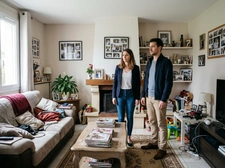
This is often the point that surprises owners the most. That living room you spent years decorating, those vacation photos on the wall, that collection of figurines or those framed diplomas in the office: all of it tells your story, not the buyer's. And that is exactly the problem. A buyer visiting a property strongly marked by the personality of its occupants feels like an intruder in someone else's home, rather than visiting their future home. They look at your belongings instead of imagining their own in the same spot. This phenomenon is all the stronger when the property is small or the decor is bold: the more pronounced the personal imprint, the harder it becomes to mentally set it aside and picture oneself there.
The right balance between neutrality and soul
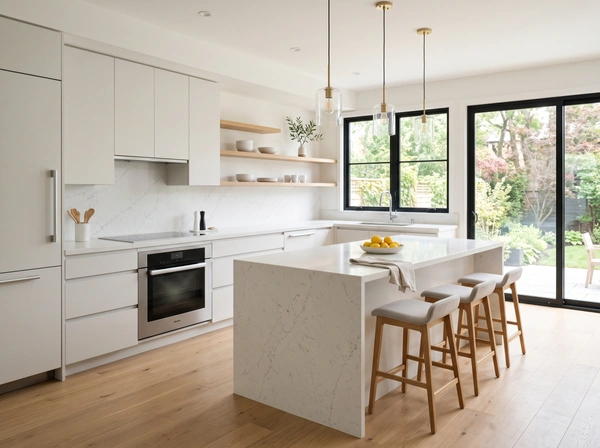
Be careful, however, not to fall into the opposite extreme. A completely sanitized interior, without any touch of life, can also leave visitors cold. The trend in recent months actually points in this direction: excessively neutral decor is no longer enough to trigger a real emotional connection; buyers want to feel a warm atmosphere, not visit an impersonal showroom. The goal is therefore not to strip your home entirely of all soul, but to remove what is too personal or too distinctive, and to keep a few simple elements that make people want to stay: a throw on the sofa, a few plants, a nicely set table. The aim is a balance between a neutral base that allows buyers to picture themselves there and enough warmth to create desire.
The expert's word
"What strikes me after all these years in the field is how much sellers underestimate their emotional attachment to their own décor, when it is often the very first thing that prevents a buyer from picturing themselves in the home; I remember a viewing where the owner, very proud of his collection of hunting trophies hung in the entrance hall, could not understand why families with children came out looking uncomfortable after five minutes, and I had to explain to him, with a great deal of tact, that what makes us personally proud can become a deterrent for a third party who does not share the same tastes or the same history; since then, I systematically advise my clients to do the exercise of visiting their own property as if they were a stranger pushing open the door for the first time, to note down everything that surprises, bothers or distracts them, and to deal with that list before even setting a date for the first viewing, because a neutral, clean, bright and uncluttered home always sells faster and often for more than a magnificent home saturated with personal memories that only its owner can appreciate."
Clutter, the silent enemy of visualisation
Halve what is lying around in each room
This is probably the most universal and effective piece of advice there is when it comes to preparing a property for sale: declutter. Every surplus piece of furniture, every shelf overloaded with knick-knacks, every pile of books or magazines visually shrinks the space and diverts the buyer's attention. A simple exercise gives excellent results: go through each room and remove half of what is in it, prioritising bulky furniture, duplicates and anything that has no obvious function for an outside visitor. This also applies to garages, cellars and attics, which buyers love to inspect and which, when overfilled, immediately give the impression of a chronic lack of storage rather than simply a storage space.
Create clear, flowing circulation areas
Beyond the visual aspect, clutter literally hinders movement through the space. A buyer who has to weave between pieces of furniture to cross a living room never properly perceives the true volumes of the room. By clearing walkways and rethinking the furniture layout to leave natural, wide circulation paths, you allow visitors to truly feel the available floor area, the one they will soon be able to live in with their own furniture and their own lives. This is a point that property advisers particularly insist on, because it concretely changes how a home is perceived, sometimes completely, for virtually no cost.
Odours, the signal you no longer control yourself
Tobacco, pets, damp, frying: the first subliminal signal
We do not always realise it when living in our own home, but the sense of smell is probably the fastest to trigger a judgement, often before the eye has had time to analyse anything at all. The smell of stale tobacco, cat litter, damp or frying can provoke an immediate, unconscious rejection as soon as one enters the home, and this negative impression then sticks to the entire viewing, even if the rest of the property is flawless. The problem is that, by living day after day among these odours, we end up no longer smelling them at all, which makes the subject particularly difficult to assess objectively on your own.
Eliminate the source rather than masking it with fragrance
The golden rule here is simple: treat the cause, do not disguise it. An overly strong room fragrance before a viewing can even arouse the suspicion of a buyer, who will wonder what you are trying to hide. It is better to air each room thoroughly before every viewing, regularly wash textiles, curtains and cushions, deep-clean rugs, carpets and kitchen extractor hoods, and deal at the source with any damp or mould problems if there are any. Baking soda remains a simple, inexpensive ally for neutralising odours embedded in textiles. Asking for an outside opinion, from a friend or from your adviser, is often the most reliable way to know whether your home genuinely smells neutral.
The practical tip
- Before each viewing, air the home for at least twenty minutes, even in winter, with all windows open.
- Systematically put away any dishes, laundry and everyday items lying around, room by room.
- Switch on all the lights and open all the shutters, even on a sunny day.
- Temporarily remove the most conspicuous family photos and any highly personal or religious objects.
- Run the vacuum cleaner and mop over the floors just before the visitors arrive; the immediate impression of cleanliness changes everything.
- Take out the rubbish and put pet litter and food bowls out of sight.
Light, the ally we always underestimate
Shutters, light bulbs and hot spots to fix
A dark interior always looks smaller and gloomier than it really is, and that is enough to kill a buyer's desire to picture themselves living there. The first step, simple and free, is to open all the shutters and curtains wide before every viewing, including those that are habitually left closed in a rarely used room. Next, you need to hunt down burnt-out or overly weak bulbs, and harmonise the light temperature throughout the house: nothing spoils an atmosphere more than a mix of cool white and warm yellow bulbs from one room to the next. Simply replacing bulbs with warmer, brighter lighting can transform the perception of an entire room for a few dozen euros.
Playing with mirrors and light shades
For rooms that structurally lack natural light, a few simple tricks make a real difference: a well-placed mirror facing a window visually multiplies the available light, just as light shades on the walls reflect more light than dark or saturated colours. If you are considering repainting before the sale, opt for neutral, bright tones rather than very bold colours, which you may like today but which tomorrow might not appeal at all to the buyer visiting your property.
Light home staging, without breaking the bank
Small investments for big effects
Home staging has been gaining momentum in recent seasons, and for good reason: with a reasonable budget, it can significantly transform the perception of a property. It is not about redoing everything from scratch, but about intelligently addressing the most visible weak points: a fresh coat of paint in the most dated rooms, replacing dated taps or cupboard handles, and a few neutral, quality accessories to dress an empty room or, conversely, lighten an overcrowded one. These targeted interventions often cost a few hundred euros and can noticeably speed up the sale, while avoiding a downward negotiation driven by an impression of age and wear.
What you should absolutely not do
Conversely, certain mistakes recur regularly among sellers who mean well but head in the wrong direction. Investing in very high-end materials or fittings that will never pay off at the time of sale, imposing a very distinctive, personal style that will appeal only to a minority of buyers, or trying to hide a structural defect behind a mere decorative device rather than actually dealing with it. Home staging is meant to reveal the potential of the property as it is, not to disguise a fundamental problem that the buyer will eventually discover anyway, at the latest during the technical visit or the diagnostic survey.
When the listing photos betray reality
The disappointment effect on arrival
Another factor, too often overlooked, directly affects a buyer's ability to picture themselves in the property: the gap between the listing photos and the reality on site. Photos that are over-edited, taken from a very wide angle that exaggerates the volumes, or showing an interior that no longer has anything to do with the current state of the home, create immediate disappointment in the buyer on arrival. This initial disappointment taints the entire visit, even if the property remains objectively appealing: the buyer spends their time comparing what they see with what they had imagined, instead of calmly picturing themselves in the space. This is a real issue when browsing property listings online, where the gap between the image and reality can put off a buyer before they even book an appointment, or, on the contrary, put them on the defensive as soon as they arrive.
Focusing on honest, high-quality photos
The right approach is to prepare the property before the photo shoot, exactly as for a real viewing: decluttering, tidying, maximising natural light, then proper photography work with a good camera or a professional, without excessive editing. Honest, bright and well-framed photos attract buyers whose expectations genuinely match what they are going to discover, which limits pointless viewings and mechanically improves the rate at which viewings convert into offers. It is also a mark of trust that reassures the buyer about the overall seriousness of the sale.
Enlisting a professional to bring an objective eye
The advisor's outside perspective: a real asset
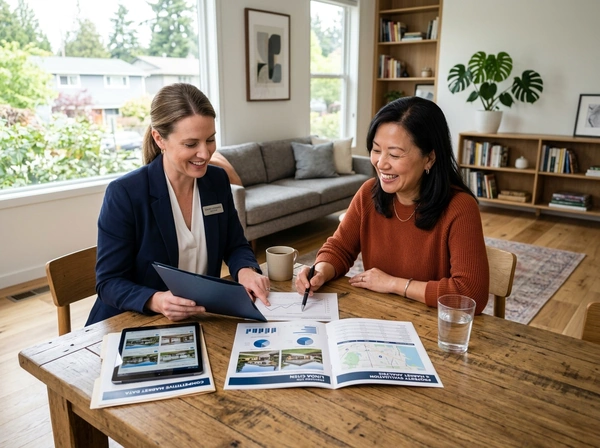
What all these topics have in common, whether overly personal decor, clutter, odors, natural light or photos, is that they are extremely difficult to perceive yourself when you have lived in your own home for years. This is where a professional's eye truly changes things: they visit your property with a buyer's neutral perspective, immediately spot what bothers or distracts, and know how to advise you, without offending you, on what should be adjusted before the first viewings. That is the whole value of working with an advisor who knows the local market and the concrete expectations of buyers in your area.
Start with an accurate valuation before preparing the property
Before even thinking about decor or home staging, it is essential to have a clear picture of your home's real value, in order to set a price consistent with the market and avoid viewings that never lead anywhere because the budget does not match expectations. That is why the first step is often to have your property valued by a professional, who can then guide you on the priority preparation points according to the profile of the buyers looking for this type of property in your area. Do not hesitate to find a local real estate advisor who knows precisely what the market near you expects, and who will support you from the preparation of the property through to the signing.
Conclusion
If viewings follow one another without leading to an offer, it is almost never an inevitability linked to the property itself, but quite often a problem of projection that a few simple adjustments can solve. Decluttering, neutralizing odors at the source, improving the lighting, removing what is too personal while keeping a little warmth, preparing honest photos and getting support from a professional who brings an outside perspective: these are the levers that, taken together, give buyers back the desire to imagine themselves in your home. A home in which people can easily picture themselves always sells faster, and most often on better price terms.
FAQ - Frequently asked questions
How long before listing the property should you prepare your home?
Ideally, allow two to three weeks to deal with decluttering, minor repairs and any repainting needed, before the first photos and the first viewings. This timeframe lets you do things calmly, without rushing the day before the first appointment.
Do you really have to remove all personal photos before a viewing?
It is not necessary to remove everything, but it is better to limit very visible family photos in the main living areas, where buyers spend the most time. The aim is to reduce the personal imprint without turning the home into a completely impersonal space.
Does home staging necessarily cost a lot?
No. Light home staging relies mainly on decluttering, tidying, a thorough cleaning and a few neutral accessories, which represents a very reasonable budget. More costly work, such as painting or replacing certain fixtures and fittings, remains optional and focused on the most visible points.
How can I tell if my home smells bad when I can no longer smell it myself?
The most reliable approach is to ask someone from outside the household, who is not used to the ambient smell, to give an honest opinion on entering the home after being away for several hours. Your real estate advisor can also play this role during their first visit to the property.
Do professional photos really make a difference in listings?
Yes, bright, well-framed photos that are true to reality generate more qualified inquiries and limit viewings that end in immediate disappointment. They also give a more serious and polished image of the entire sales file.
Thinking of selling? To find out the market value of your property, request a free valuation.
Also read on the blog
- Does home staging really increase the value of a house for sale?
- Should you sell a property empty or furnished? Impact on price and time to sell
- Renovating a bathroom or a kitchen: what impact on the property's value?
Author of the publication

Fabrice DOBROWOLSKI, Director of the Optimhome network
«Benefit from myexpert advice, based on many years of experience in real estate, to ensure the success of your buying or selling project. »