Tempted by a cheap house for sale and wondering whether the deal is really worth it? How do you tell a genuine opportunity from a property that, once the deed is signed, will hide unforeseen costs and constraints?
In this article, we explain why some houses are sold at low prices and what checks to carry out before you commit. We also look at how to cost the renovation work, spot hidden defects, and analyze local planning rules. You'll find a short worked example with figures, a downloadable checklist, and an overview of the grants you can tap into, such as MaPrimeRénov'.
Contact a local Optimhome advisor for a free estimate and a guided viewing.
In brief: cheap house for sale — key points
- Opportunity vs. caution: a cheap house for sale can be an excellent deal, but it sometimes hides major works or easements.
- Diagnostics and defects: always request the mandatory diagnostics (energy performance, lead, asbestos, termites, electrical, gas) and assess the risk of hidden defects.
- Costing the works: obtain several detailed renovation quotes, estimate a ballpark cost per m², and look into the available grants (MaPrimeRénov', energy savings certificates / CEE).
- Support: surround yourself with a notary, a technical expert, and an Optimhome advisor for a free estimate and a guided viewing.
Understanding why a house is sold cheap in France
A low price is not suspicious in itself. Several perfectly legitimate reasons explain it: an inheritance, a divorce, a job relocation, or an urgent sale. A sluggish local market or weak comparables also weigh on the price. Sometimes, too, the property is offered as-is because it's a house in need of renovation: its value then lies in its potential, not in its immediate condition.
To judge an offer, the reflex is simple: compare the price per square meter with that of equivalent properties. A knock-down price may reflect a depressed local market… or represent a real opportunity, provided you master your renovation project. In every case, check the property's legal situation and its sales history.
Legitimate reasons for low prices: house to renovate, inheritance, quick sale
Inheritance or joint ownership: heirs sometimes want to sell quickly. In this case, the deed of succession and the joint ownership (indivision) situation must be verified with the notary.
Urgent sale: a job relocation or a divorce can justify a quick listing. The price does not then necessarily reflect a poor condition of the property.
House to renovate: old, run-down properties are logically listed low. Demand a precise costing of the major works (roof, foundations, electrical) before you project yourself into the home.
Warning signs of an offer that's too good: too-good-to-be-true listing, stolen photos
Beware of listings with no diagnostics or an obviously knock-down price. Stolen or inconsistent photos are a red flag. Before the viewing, check the sales mandate, the company registration number (RCS), or the agent's professional license, and request all the documents.
The most common scams rely on the fake mandate and the request for advance payment. Golden rule: never hand over money outside the notarial framework. At the slightest doubt, have the listing checked by a local real estate advisor.
Mandatory diagnostics and the risk of hidden defects in France
The mandatory diagnostics report on the condition of the property and help anticipate the works. They must be attached to the preliminary sales agreement. Be careful, though: they do not entirely remove the risk of hidden defects, but they do provide a useful first layer of protection.
DPE, lead, asbestos, termites: what to check — energy performance diagnostic
The DPE (energy performance diagnostic) indicates the home's consumption and carbon impact. It allows you to estimate the future energy bill and the need for energy renovation. Official information is available on service-public.fr.
The lead (CREP) and asbestos diagnostics are required depending on the construction date. Their presence entails the cost of making the property safe or removing asbestos. As for the termite diagnostic, it is mandatory in the affected zones and may justify a renegotiation of the price.
Electrical and gas: compliance and dangers — electrical diagnostic
The electrical and gas diagnostics assess the compliance of the installations, often a concern once they are more than fifteen years old. A non-compliant installation calls for a detailed quote to bring it up to standard.
For a low-priced house, bring in a technical expert if the installation looks like a botched job. You can also provide for a pre-purchase inspection as a condition precedent in the agreement.
Sanitation and mains-drainage compliance — SPANC
Check the compliance of the non-collective sanitation with the local SPANC (public sanitation service). An unfavorable inspection can require mandatory works. Request the SPANC certificate and build any cost into your financing plan.
French planning rules, local plan (PLU), and easements: hidden risks on the land
The land may limit your plans far more than you'd imagine. The local urban plan (PLU), the easements, and the PPR / PPRI zones determine whether an extension is feasible. Before buying, request the planning certificate from the town hall.
A low price may in fact mask a partly non-buildable plot or one burdened with a right-of-way easement. These constraints reduce the property's real value and complicate its resale.
Zoning, PPRN/PPRI, and natural hazards — risk prevention plan
The PPRN and the PPRI impose specific rules in flood, landslide, or seismic zones. Consult the statement of risks (ERNMT / ESRIS) provided by the seller, and cross-check this information with the town hall.
In a risk zone, insurance can prove more expensive and include exclusions. Anticipate these extra costs from your initial budget.
Easements, boundary marking, and access — right-of-way easement
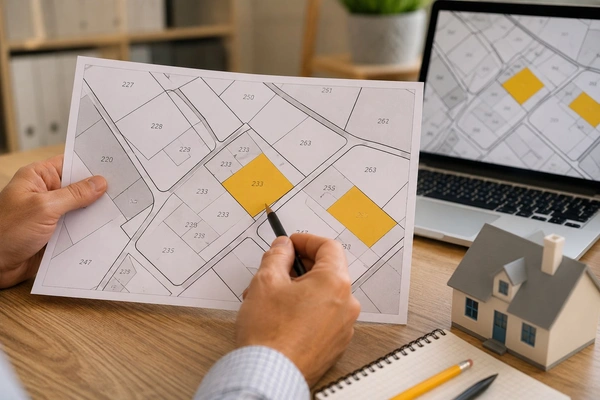
Easements (rights of way, utility networks) can restrict the use of the land. Request the cadastral extract and the title deed, and proceed if necessary with a boundary survey to clarify the limits.
A party-wall arrangement or an undeclared easement can generate regularization costs. Inform yourself before making your offer.
Declarations and permits to check — building permit
Check the permits and prior declarations linked to works already carried out. An undeclared construction can lead to a compliance order, or even a partial demolition. Request copies of the permits and the certificates of compliance.
Technical condition of the building and the real cost of works
Properly estimating the renovation cost is often what turns a cheap house into a genuine opportunity. Learn to distinguish a simple refresh from major works, always request several quotes, and plan a safety margin of 15 to 30% for the unexpected.
If doubts persist, bring in a technical expert before you commit. The inspection protects you against hidden defects and serves as a negotiating lever.
Roof, structure, damp, and foundations — structural cracks
Roof and frame: check the covering, the insulation, and the absence of leaks. A roof that needs redoing represents a major expense.
Damp and foundations:structural cracks, rising damp, and water ingress call for an inspection. In case of doubt, a pre-purchase inspection (technical or court-appointed) secures your decision.
Estimating the works and reliable quotes — renovation quote, renovation cost per m²
The recommended procedure comes in three steps: request at least three detailed quotes, check the tradespeople's insurance and references, then draw up a realistic works schedule.
These quotes will serve as a negotiating lever and help you size your renovation loan. As costs vary by region and by the condition of the building, here's a worked example to set your bearings.
Short worked example: an 80 m² house to renovate
- Major works (roof, foundations, structure): €25,000 – €40,000
- General interior renovation (electrical, plumbing, flooring): €8,000 – €12,000
- Energy renovation (insulation, heating, boiler): €15,000 – €30,000
- Indicative total: €30,000 – €60,000 — plan a safety margin of 15 to 30%
These amounts are only orders of magnitude: they vary depending on location, the complexity of the project, and the choice of materials. Once you have your quotes in hand, request a free estimate to weigh the purchase price against the costs to anticipate.
Grants and bonuses for energy renovation — MaPrimeRénov' and CEE
Grants such as MaPrimeRénov' and energy savings certificates (CEE) lighten the net bill. A reduced VAT rate may also apply under certain conditions. Check your eligibility before buying: an Optimhome advisor can point you toward the right schemes and qualified tradespeople.
Environmental and natural hazards not to be overlooked
Natural hazards and pollution can turn a cheap house into a financial sinkhole. Check the statement of risks (ERNMT / ESRIS), consult the town hall, and anticipate the consequences for both your home insurance and the cost of works.
Flooding, landslide, seismic activity — risk prevention plan, flood zone
The PPR and the PPRI govern construction in flood-prone or seismic zones. A property located in a risk zone may require costly adaptations, such as raising the structure or drainage. Build these items into your financing plan.
Pollution, groundwater, Seveso sites — soil pollution
Proximity to an industrial site or a Seveso site can limit the use of the property and require soil studies as well as decontamination works. And decontamination remains a potentially very costly item: never underestimate it.
Neighborhood, co-ownership, and collective constraints
The neighborhood directly influences your quality of life and the value of the property. Before buying, find out about nuisances and upcoming development projects. And if it's a co-ownership, study the minutes of the general meetings and the accounts closely.
A co-ownership listed as cheap can indeed conceal significant capital calls. Analyze the co-ownership rules and the status of the approved works.
Checking the neighborhood and potential nuisances — noise nuisance
Make several visits at different times of day. Talk to the neighbors and consult the town hall. Identify the road or commercial projects that might generate, down the line, a noise nuisance or a visual one.
In co-ownership: charges, AGM minutes, approved works — co-ownership charges
Request the minutes of the AGMs from the last three years and examine the decisions relating to works and capital calls. A low purchase price can quickly be wiped out by high future co-ownership charges.
French Taxation, ancillary costs, and hidden expenses
Anticipate the acquisition costs and the taxes before finalizing your financing. These elements weigh directly on the profitability of a purchase or a rental investment.
Acquisition costs and notary fees — notary fees
In the older-property market, count on generally 7 to 8% of the price for notary fees; they are significantly lower for new builds. These fees notably include the registration duties.
Property tax, residence tax, capital gains — capital gains tax
The property tax varies sharply from one municipality to another: ask the seller for the amount. And if the property is not your primary residence, anticipate the capital gains tax at the time of resale.
Renovation costs affecting profitability — rental yield
For a low-priced rental investment, calculate the gross yield and the net yield, factoring in the works, rental vacancy, and charges. After these calculations, a cheap property may simply turn out to be unprofitable.
Scams and fraudulent listings: how to spot them
Stay alert to listings that are too good to be true. The warning signs are always the same: fake mandates, stolen photos, advance payment. Use reverse image search and check the agency's RCS.
Fake mandates, stolen photos, advance payment requests
Never hand over money without an authentic deed or a deposit held by a notary. Verify the seller's professional license and identity. And request the diagnostics and official documents before any transaction.
Suspiciously quick sales and rigged auctions — auction sale, €1 house
Auction sales and the famous "€1 houses" are appealing. Yet they often come with strict conditions: a deposit, deadlines, an obligation to renovate. Read the specifications (cahier des charges) carefully and cost the works before taking any step.
Special cases: new builds, life annuity, prestige, commercial premises, rentals
Each category of property calls for specific checks. New builds, the life annuity (viager), prestige properties, and commercial premises carry risks and guarantees of their own. Tailor your vigilance to the type of property you're after.
Buying a new build at a low price: guarantees and deadlines — cheap new house
Check the ten-year structural warranty (garantie décennale), the completion guarantee, and the nature of the contract (CCMI, VEFA). A low price on a new build may result from one-off commercial incentives: the guarantees, however, remain essential.
Life annuity and low price: risks and precautions — buying a life annuity
The life annuity (viager) rests on a lump sum (bouquet) and annuity payments. Assess the life expectancy of the annuitant and the associated taxation. The right reflex: call on an expert to cost the lump sum and the real profitability.
Cheap rental investment: calculating profitability — rental yield
Calculate the net yield, factoring in the works, the charges, and the rental vacancy. Well managed on the renovation side, a cheap property can offer a very attractive yield.
Cheap prestige properties: watch out for charges — cheap prestige house
A prestige property at a low price can hide high maintenance charges. Heritage constraints may also limit your scope for modifications. Assess the insurance and upkeep costs before any commitment.
The secure buying process for a cheap house
The buying journey follows clearly identified stages: viewing, document verification, preliminary agreement, conditions precedent, loan, and authentic deed. At each of these stages, control points help reduce the risks.
Organizing the viewing: a practical checklist — viewing checklist, documents to request
Before the viewing, gather the key documents: diagnostics, title deed, cadastral extract, AGM minutes, SPANC certificate. On site, inspect the roof, the foundations, the insulation, the boiler, and the plumbing. Download the cheap-house viewing checklist (PDF) so you have it on hand on the day.
Drafting conditions precedent and protecting yourself — preliminary sales agreement
Write conditions precedent into the preliminary sales agreement: obtaining the loan, the technical inspection, and the lifting of planning reservations. The withdrawal clause and the inspection clause are a buyer's best safety nets.
The notary's role and final checks — title deed
The notary verifies the title deed, the easements, and the cadastral extract, and ensures the deeds are compliant. Contact them as early as possible: your Optimhome advisor can put you in touch.
Financing and guarantees for a low-price purchase
Financing a house to renovate often requires a mortgage that includes a renovation loan. The quality of the file, the down payment, and the debt-to-income ratio drive the bank's decision.
Getting a loan for a house to renovate — renovation loan
Several solutions exist: a conventional mortgage combined with a renovation loan, a bridging loan, or a personal loan. The interest-free loan (PTZ) remains possible in limited cases. Check with your bank and an Optimhome advisor.
Guarantee, down payment, and borrowing capacity — personal down payment
A personal down payment makes it easier to obtain the loan and to negotiate the rate. Anticipate the debt-to-income ratio and the guarantees required by the bank.
Insurance to plan for — borrower's insurance, ten-year structural warranty
Borrower's insurance and home insurance are generally required. For major works, demand the tradespeople's ten-year structural warranty (garantie décennale), and check the site insurance and public liability coverage.
Negotiation and opportunities in 2026
In 2026, real opportunities are emerging on the outskirts and in rural areas, where prices per m² often remain more affordable than in city centers. It's up to you to tailor your strategy to the target area.
Recent price trends and promising areas — real estate trends 2026
Over a period of 6 months to 3 years, some cities have recorded a slight drop in prices. At the same time, rural and peri-urban areas have become attractive again. Consult the prices per m² and request a local valuation.
Negotiation strategies for a cheap property — price negotiation
The most effective arguments? The diagnostics, the works quotes, and the AGM minutes. Make an offer conditional on an inspection and on obtaining financing, and back your proposal with solid comparables.
Best practices: a final checklist before signing
Before signing, review everything: all the documents, the detailed quotes, and the post-works estimate. Finally, make sure the conditions precedent are clear and achievable.
Documents to request from the seller — diagnostics, title deed, AGM minutes
The essential documents: mandatory diagnostics, title deed, cadastral extract, building permit, AGM minutes, SPANC certificate, and invoices for recent works. Also request the certificates of compliance for recent installations.
Bringing in an expert or tradesperson to cost the works — pre-purchase technical inspection
Call on an expert if you have doubts about the structure, damp, or the installations, and write this technical inspection into a condition precedent. A reliable quote and a realistic works schedule sharply reduce the financial risk.
Why work with an Optimhome advisor
The local Optimhome advisor knows the market inside out. They verify the documents, offer a free estimate, organize guided viewings, and put you in touch with a notary and tradespeople. Finally, they help you negotiate and draft genuinely protective conditions precedent.
Contact an Optimhome advisor for a free estimate or a guided viewing: book an appointment.
- Always verify the diagnostics, the title deed, and the statement of risks before making an offer.
- Cost the works with several quotes and plan a safety margin of 15 to 30%.
- Check the planning rules (PLU, permits, easements) with the town hall.
- Protect yourself contractually with conditions precedent in the preliminary sales agreement.
- Use the grants (MaPrimeRénov', CEE, reduced VAT) for energy renovation when they apply.
- Get support from an Optimhome advisor to secure and succeed in the transaction.
FAQ
Which mandatory diagnostics for a cheap house?
The usual diagnostics to request are: the DPE (energy performance), lead (CREP) if the construction predates 1949, asbestos if it predates 1997, termites depending on the zone, electrical and gas for installations more than 15 years old, and the statement of risks (ERNMT / ESRIS). Request the reports before the viewing.
How do you spot a hidden defect before buying a low-cost property?
Have a technical inspection carried out, request the works history, check the diagnostics and invoices, and write an inspection condition precedent into the agreement. Don't hesitate to contact a building expert or an Optimhome advisor.
Can you buy a house to renovate without financial surprises?
Yes, provided you request several detailed quotes, plan a safety margin (15 to 30%), and tap into the grants (MaPrimeRénov', CEE). The support of an advisor and an expert sharply limits the risks.
What are the risks of a "€1 house" or too-cheap listing?
These offers can conceal strict conditions (a deposit, an obligation to renovate within a deadline) and significant costs. Check the municipal specifications (cahier des charges) and cost the works before any commitment.
Why call on a local real estate advisor for a cheap purchase?
A local advisor knows the market, verifies documents and diagnostics, negotiates, and puts you in touch with a notary and tradespeople. They offer a free estimate and a guided viewing to secure your purchase.
Author :

Fabrice DOBROWOLSKI - Optimhome Network Development Director
Optimhome offers you personalized support for your real estate project. Benefit from all my advice, based on several years of experience, to ensure the success of your project.