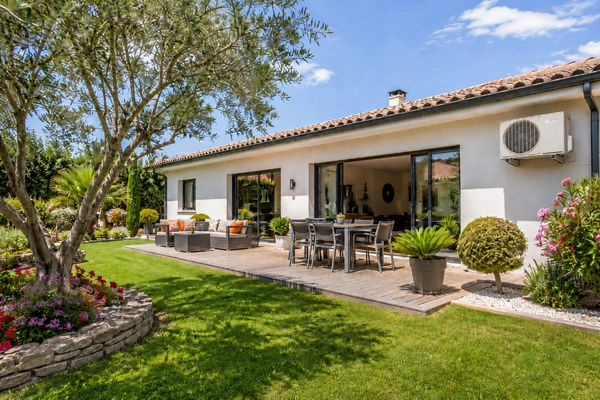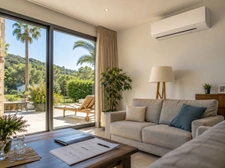
Are you wondering whether installing air conditioning really increases the value of your house or apartment? Should you choose a reversible air conditioning system rather than a heat pump to maximize your return on investment and qualify for financial incentives?
In this article, we explain how to install air conditioning and which systems to choose. We compare reversible air conditioning, air-to-air heat pumps, and air-to-water heat pumps. We also cover regulations, financial assistance, EPC considerations, practical examples, and useful advice.
Contact your local real estate advisor for a personalized valuation and comprehensive support.
Summary — Installing Air Conditioning: Key Points
- Installing air conditioning (especially reversible air conditioning / an air-to-air heat pump) generally improves a property's appeal; the added value depends on the type of equipment, installation quality, and local market conditions.
- Rules and compliance: check planning permission requirements, condominium regulations, and prior declarations. Choose an RGE- or QualiPAC-certified installer to qualify for incentives.
- Costs and incentives: prices vary depending on whether you choose a monosplit, multisplit, ducted system, or heat pump. Available incentives may include MaPrimeRénov', Energy Savings Certificates (CEE), eco-interest-free loans (eco-PTZ), and reduced VAT rates.
- Best practices: ensure proper sizing to avoid oversizing, take out a maintenance contract, and integrate the outdoor unit aesthetically. Contact a local real estate advisor to estimate the added value.
Understanding What Installing Air Conditioning Means — Definitions and Types of Air Conditioning
Installing air conditioning covers a wide range of solutions. These range from single-unit portable systems to multisplit units and centralized ducted systems. Heat pumps are available in air-to-air and air-to-water versions.
Each solution serves a different purpose: cooling, supplementary heating, or primary heating. The choice affects both the property's energy performance and its attractiveness.
Reversible air conditioning (air-to-air heat pump) provides comfort in both summer and winter. Buyers appreciate the additional comfort it offers. However, public subsidies are often more generous for air-to-water heat pumps, which also produce domestic hot water.
The right equipment therefore depends on your objective: comfort, EPC improvement, or property value enhancement.
Key technical indicators include:
- SCOP (Seasonal Coefficient of Performance for heating)
- SEER (Seasonal Energy Efficiency Ratio for cooling)
- GWP/PRG (Global Warming Potential of the refrigerant)
These indicators determine eligibility for incentives and influence the property's EPC rating. Also check compliance with the NF EN 14511 standard and energy labels such as A+++.
Reversible Air Conditioning (Air-to-Air Heat Pump) — Operation and Benefits
Reversible air conditioning works like an air-to-air heat pump. It captures heat from outdoor air to warm the home in winter. In summer, it extracts indoor heat to cool the property.
Its main advantage is its dual heating-and-cooling function, often combined with remote control capabilities.
Performance is measured through SCOP and SEER values. A higher SCOP reduces annual operating costs.
Be aware of eligibility requirements: some incentives require a SCOP of at least 3.9 and installation by an RGE-certified professional.
From a property value perspective, a properly sized and well-integrated reversible air conditioning system improves attractiveness. It is particularly appealing in warm climates and for higher-end properties.
To maximize added value, pay attention to aesthetics and keep a record of all installation and maintenance work.
Air-to-Water Heat Pumps and Alternatives — Air Conditioning vs. Heating
An air-to-water heat pump supplies underfloor heating or radiators and produces domestic hot water. It therefore directly impacts the EPC rating and overall energy classification of the property.
MaPrimeRénov' grants and certain CEE bonuses are often more substantial for air-to-water heat pumps.
An air-to-air heat pump (reversible air conditioning) is ideal for room-by-room comfort. An air-to-water heat pump is designed to improve the property's overall energy performance.
An energy audit can help determine which solution best enhances your property's value.
Differences Between Monobloc, Split, Multisplit, and Ducted Systems
A monobloc air conditioner is simple and inexpensive but tends to be noisy and rarely qualifies for incentives.
A single-split air conditioner serves one room.
A multisplit system allows multiple indoor units to be connected to a single outdoor unit.
A ducted system is discreet and particularly suited to new builds or major renovations.
These differences affect:
- The cost of reversible air conditioning
- Noise levels
- The appearance of the outdoor unit
A discreet, quiet, and well-integrated solution has a positive impact on property value.
Rules, Permissions, and Condominium Requirements for Installing Air Conditioning
Before installing air conditioning, check planning regulations and local requirements. A prior declaration may be required if the outdoor unit alters the appearance of the building.
Consult your local authority or the relevant public service website.
In a condominium, the condominium regulations often specify installation and appearance requirements. Obtain approval from the property manager and prepare a complete file including:
- Quotation
- Installation plans
- RGE certification
Failure to anticipate a refusal can delay or jeopardize a future sale.
You must also comply with noise regulations and recommended installation distances to minimize disturbances.
Compliance helps avoid disputes and preserves the property's attractiveness.
Planning Permission and Prior Declaration
A prior declaration is generally required if the outdoor unit changes the building's appearance or if the local urban plan (PLU) specifically requires it.
The application usually includes:
- Plans
- Façade photographs
- Proposed installation layout
In protected areas (historic sites or buildings subject to Architecte des Bâtiments de France regulations), procedures are stricter.
Check requirements with the local authority before signing any installation contract to avoid costly corrective work.
Condominium Regulations and Property Manager Approval
Review the condominium regulations and inform the property manager.
Provide a complete file including:
- Quotation
- Plans
- RGE certification
In some cases, a vote at the condominium general meeting is required.
If approval is refused, consider more discreet locations, decorative covers for outdoor units, or less visible indoor solutions.
Noise Standards and Required Distances
Technical specifications indicate the unit's noise level in decibels.
Install anti-vibration mounts and position outdoor units away from bedrooms whenever possible.
A maximum distance of around 15 meters between indoor and outdoor units is often recommended.
Reducing air-conditioning noise minimizes the risk of disputes and helps preserve property value.
Technical Criteria and Performance Factors to Consider Before Installing Air Conditioning
Take the time to review:
- SCOP
- SEER
- A+++ energy labels
- Refrigerant GWP values
- Compliance with NF EN 14511 standards
These factors determine seasonal performance and eligibility for incentives.
Proper system sizing prevents oversizing, short cycling, and excessive energy consumption.
A nominal capacity limit of 12 kW is often used as a threshold for incentive eligibility.
Choose an RGE- or QualiPAC-certified installer to ensure proper commissioning, refrigerant traceability, and access to available financial support.
SCOP, SEER, Energy Labels, and GWP
SCOP measures seasonal heating efficiency, while SEER measures seasonal cooling efficiency. A SCOP of 3.9 or higher is often required to qualify for certain incentives.
GWP (Global Warming Potential) measures the environmental impact of the refrigerant used. Whenever possible, choose low-GWP refrigerants such as R32 rather than R410A.
Power Output, Sizing, and the 12 kW Threshold
System sizing is determined according to the property's volume, insulation level, and solar exposure. An oversized system results in short operating cycles, accelerated wear, and higher energy consumption.
If you are aiming to qualify for incentives, ensure compliance with the commonly applied 12 kW capacity limit.
The distance between indoor and outdoor units (typically recommended at no more than 15 meters) and the quality of ductwork also affect performance and overall cost.
RGE Certification, QualiPAC, and Approved Installers
RGE certification is frequently required to access MaPrimeRénov', Energy Savings Certificates (CEE), and eco-interest-free loans (eco-PTZ).
The QualiPAC qualification certifies expertise in heat pump installations.
An approved installer provides the commissioning certificate, manages refrigerants in compliance with regulations, and helps prepare applications for financial assistance.
Choosing an Air Conditioning System — Selection Criteria and Practical Advice
When choosing an air conditioning system, first define your objective:
- Occasional comfort
- EPC improvement
- Property value enhancement
- Rental yield optimization
Your budget, property configuration, and eligibility for incentives will influence whether a monosplit, multisplit, ducted system, or heat pump is the most suitable solution.
Combining high-performance air conditioning with quality insulation remains the most effective strategy for increasing property value. Better insulation reduces energy needs and improves the EPC rating.
Compare several quotations and pay close attention to:
- SCOP and SEER ratings
- Annual electricity consumption
- Noise levels
- Outdoor unit aesthetics
- Maintenance costs
Choosing Between Reversible Air Conditioning, Heat Pumps, and Alternatives
Reversible air conditioning is ideal for localized comfort.
Air-to-water heat pumps improve EPC ratings and generally provide access to more financial support.
Alternatives include:
- Ventilation systems
- Solar shading solutions
- Thermal insulation improvements
For long-term value enhancement, consider a combined strategy involving insulation and either a heat pump or high-performance air conditioning system.
Key Criteria: Efficiency, Consumption, Noise, Appearance, and Total Cost
Use this checklist when comparing quotations:
- SCOP and SEER ratings
- Annual electricity consumption (kWh/year)
- Total cost (purchase, installation, maintenance)
- Noise level
- Visual integration
Always ensure that the quotation specifies:
- Refrigerant type
- Commissioning service
- Maintenance contract options
Installation and Integration: How Air Conditioning Installation Works
Air conditioning installation begins with a property assessment and system sizing.
The quotation should clearly state:
- SCOP and SEER ratings
- Refrigerant type
- System capacity
Installation includes:
- Mounting indoor and outdoor units
- Drilling and pipework
- Electrical connections
- Condensate drainage
Commissioning by an RGE-certified installer ensures compliance and system integrity.
Keep all quotations, invoices, and certification documents for incentive applications and future property sales.
A complete installation file reassures buyers and facilitates transactions.
Stages of Professional Installation
The installation process generally includes:
- Thermal assessment
- Requesting quotations
- Selecting an RGE-certified installer
- Scheduling works
- Installing indoor and outdoor units
- Installing ductwork where applicable
- Commissioning
- Issuing certification documents
The duration and cost depend on accessibility, installation type, and project complexity.
Technical Constraints
Common technical constraints include:
- Indoor/outdoor unit distance (recommended maximum: 15 m)
- Duct dimensions for ducted systems
- Condensate drainage
- Frost protection measures
These factors influence both performance and installation cost.
Plan wall penetrations carefully and assess the visual impact on the façade.
Costs, Financing, and Financial Assistance for Installing Air Conditioning in 2026
Air conditioning installation costs vary according to system type and complexity.
Most incentives require:
- Installation by an RGE-certified professional
- Compliance with technical criteria (SCOP, GWP, capacity ≤ 12 kW)
Use official simulators such as France Rénov' and CEE calculators to estimate available assistance.
Ask your installer to specify which incentives can be combined to reduce out-of-pocket expenses.
Purchase and Installation Costs
Single-Split Air Conditioner
Approximately €1,200–€3,500, installation included.
Multisplit System
Approximately €3,000–€8,000, depending on the number of zones.
Ducted System
Approximately €8,000–€18,000, including installation work.
Complete Air-to-Water Heat Pump
Approximately €8,000–€20,000+, depending on capacity and hot water production.
These figures are indicative only. Costs vary depending on accessibility, sizing requirements, and labor rates.
Financial Assistance and Grants
In 2026, available support may include:
- MaPrimeRénov' (subject to eligibility)
- Energy Savings Certificates (CEE)
- Energy Bonuses
- Eco-interest-free loans (eco-PTZ)
- Reduced VAT
- Local authority grants
Eligibility generally depends on:
- Minimum SCOP requirements
- Capacity not exceeding 12 kW
- Installation by a certified professional
CEE incentives are frequently available for reversible air conditioning systems.
MaPrimeRénov' primarily supports air-to-water heat pumps and comprehensive renovation projects.
Certain replacement projects may also qualify for enhanced support under the Coup de Pouce scheme.
Simulating and Combining Financial Assistance
A simple approach is:
- Estimate installation costs
- Check technical eligibility
- Obtain an RGE-certified quotation
- Simulate available grants through France Rénov' and CEE operators
- Supplement funding with an eco-PTZ if necessary
Combining national and local assistance can significantly reduce your remaining costs.
Work closely with your installer and advisor to prepare your applications.
Impact on Property Value — Does Air Conditioning Increase Sale or Rental Value?
Air conditioning generally improves a property's appeal, particularly in warmer regions and for premium properties.
The impact on property value depends on:
- Equipment quality
- Correct sizing
- Aesthetic integration
- Local demand
Between 2024 and 2026, demand for summer comfort and energy-efficient housing continued to grow.
Properties equipped with quality air conditioning systems often sell faster and, in some cases, at higher prices.
Impact on Attractiveness and Price per Square Meter
A cautious estimate suggests that in temperate regions, a high-performance air conditioning system may increase property value by approximately 1–3%.
In warmer areas or premium market segments, the increase may reach 3–7%.
Buyers place greater value on systems that are:
- Energy efficient
- Discreet
- Properly maintained
- Supported by documented servicing records
Impact on the EPC and Energy Rating
A reversible air conditioning system can improve heating performance if it has a high SCOP and the property is well insulated.
Conversely, an inefficient system may negatively affect the EPC.
Air-to-water heat pumps generally have a more favorable impact on energy ratings.
The final result depends on insulation quality and the property's energy mix.
Estimated Added Value (Example Scenarios)
Indicative examples:
- An apartment valued at €80,000 in a temperate region could gain approximately €1,000–€2,400 (1–3%).
- A house valued at €350,000 in a warm climate could gain approximately €10,500–€24,500 (3–7%).
These figures assume:
- High-quality installation
- Proper maintenance
- Appropriate system sizing
For an accurate valuation, consult a local real estate advisor.
Maintenance, Energy Consumption, and Operating Costs
Installing air conditioning is not limited to the initial purchase cost. To accurately assess profitability and the impact on your property's value, you should also take into account maintenance expenses, annual electricity consumption, and equipment lifespan.
A well-maintained system performs better, consumes less energy, and reassures future buyers. Conversely, neglected maintenance can lead to reduced efficiency, increased energy bills, and premature equipment failure.
Mandatory Maintenance and Service Contracts
Certain air conditioning and heat pump systems containing refrigerants are subject to regular inspections, particularly when the refrigerant charge exceeds regulatory thresholds.
Beyond legal obligations, annual maintenance is strongly recommended to:
- Preserve system performance
- Extend equipment lifespan
- Prevent breakdowns
- Ensure indoor air quality
A maintenance contract generally includes:
- Cleaning filters and indoor units
- Checking refrigerant pressure
- Inspecting electrical components
- Verifying condensate drainage systems
- Measuring overall system performance
Annual maintenance costs typically range from €100 to €300, depending on the type of installation.
Maintaining a complete service history can also be a valuable asset when selling the property.
Electricity Consumption and Energy Savings
The operating cost of air conditioning depends on several factors:
- The system's efficiency (SCOP and SEER)
- The property's insulation quality
- The local climate
- Occupant usage habits
A modern reversible air conditioning system generally consumes far less energy than traditional electric heating systems.
For example, a heat pump with a SCOP of 4 produces approximately 4 kWh of heat for every 1 kWh of electricity consumed.
This improved efficiency can significantly reduce annual heating costs.
To maximize savings:
- Program operating schedules
- Avoid excessive temperature settings
- Maintain filters regularly
- Improve insulation before installing new equipment
Lifespan of an Air Conditioning System
The average lifespan of a properly maintained air conditioning system is:
Equipment Type | Average Lifespan |
|---|---|
Single-split air conditioner | 12 to 15 years |
Multisplit air conditioner | 12 to 20 years |
Ducted system | 15 to 20 years |
Air-to-air heat pump | 15 to 20 years |
Air-to-water heat pump | 15 to 25 years |
Quality installation and regular maintenance play a crucial role in extending equipment life.
When selling a property, recent equipment with documented maintenance records is generally perceived as a strong advantage.
Common Mistakes to Avoid When Installing Air Conditioning
Some mistakes can reduce the profitability of your investment and limit its impact on property value.
Avoiding these pitfalls will help maximize comfort, energy performance, and resale potential.
Choosing an Undersized or Oversized System
Incorrect sizing is one of the most common issues.
An undersized unit will struggle to maintain the desired temperature and may wear out prematurely.
An oversized unit can lead to:
- Excessive energy consumption
- Frequent start-stop cycles
- Reduced comfort
- Higher maintenance costs
A professional thermal assessment remains essential before selecting equipment.
Neglecting Insulation
Installing high-performance air conditioning in a poorly insulated property often delivers disappointing results.
Before investing in a cooling or heating system, consider improving:
- Roof insulation
- Wall insulation
- Window performance
- Air tightness
A well-insulated property requires less energy and benefits more from any heating or cooling system.
Ignoring Aesthetic Integration
Outdoor units that are poorly positioned or visually intrusive can negatively affect a property's appearance.
Whenever possible:
- Install units discreetly
- Use decorative covers where appropriate
- Respect condominium and planning regulations
Good visual integration contributes to preserving the property's market value.
Failing to Verify Available Financial Assistance
Many homeowners miss out on grants because they begin work before confirming eligibility requirements.
Always verify:
- RGE certification requirements
- Technical performance thresholds
- Administrative procedures
- Application deadlines
Submitting applications before work begins is often mandatory.
Why Contact an Optimhome Advisor for Your Project?
Whether you are planning to install air conditioning before selling your property or evaluating the profitability of an energy improvement project, an Optimhome advisor can help you make informed decisions.
Their local market expertise allows them to assess:
- The potential added value generated by the installation
- Buyer expectations in your area
- The most profitable improvements
- The likely impact on sale price and marketing time
An advisor can also guide you toward the most relevant professionals and help you determine whether air conditioning, a heat pump, insulation upgrades, or a broader renovation project offers the best return on investment.
Before making a significant investment, request a professional property valuation to accurately measure the potential benefits of the proposed work.
Frequently Asked Questions About Air Conditioning and Property Value
Does Installing Air Conditioning Increase a Property's Value?
In most cases, yes. A well-designed and properly maintained air conditioning system generally enhances buyer appeal and can increase market value, particularly in regions where summer temperatures are high.
The exact increase depends on:
- Local market conditions
- Equipment quality
- Energy performance
- Visual integration
Is Reversible Air Conditioning Better Than a Traditional Air Conditioner?
Reversible air conditioning offers both heating and cooling functions.
This versatility generally makes it more attractive to buyers and can improve overall energy performance when properly installed.
Does Air Conditioning Improve an EPC Rating?
It can, especially when installed as a high-performance heat pump system with a strong SCOP rating.
However, the impact depends on the property's insulation quality and overall energy consumption profile.
Which System Provides the Best Return on Investment?
The answer depends on your objectives.
- For comfort and moderate budgets, reversible air conditioning is often the most cost-effective solution.
- For maximizing EPC improvements and qualifying for financial incentives, air-to-water heat pumps generally provide the strongest long-term benefits.
A personalized assessment remains the best way to determine the most profitable option.
Should Air Conditioning Be Installed Before Selling a Property?
In many situations, yes.
A modern, energy-efficient system can:
- Improve buyer perception
- Reduce marketing time
- Increase competitiveness
- Support a higher asking price
The decision should nevertheless be based on the property's current condition, local demand, and expected return on investment.
Can Financial Assistance Be Combined?
Yes. Depending on your situation and the chosen equipment, it may be possible to combine:
- MaPrimeRénov'
- Energy Savings Certificates (CEE)
- Eco-interest-free loans (eco-PTZ)
- Reduced VAT rates
- Local authority grants
Check eligibility requirements carefully before starting any work.
Author :

Fabrice DOBROWOLSKI - Optimhome Network Development Director
Optimhome offers you personalized support for your real estate project. Benefit from all my advice, based on several years of experience, to ensure the success of your project.