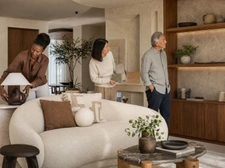
Colours, materials, space planning, home automation… Interior architecture evolves every year, driven by new expectations for comfort, nature and meaningful living. Before undertaking renovation work or simply refreshing your décor, it is worth exploring the major 2026–2027 trends to make choices that will stand the test of time—including in the eyes of future buyers.
In this article, we explore the colour palettes, materials, layouts and technologies shaping interior design in 2026–2027, as well as their impact on a property's resale value. To understand your home's current value before investing in renovation work, an online property valuation is the best place to start.
In summary
- 2026 colour trends favour warm, airy whites complemented by earthy tones such as terracotta, ochre, sage green and deep blue.
- Biophilic design is becoming a fundamental principle of interior architecture, with natural and bio-based materials including wood, raw earth, stone, bamboo and recycled wool.
- Fully open-plan layouts are giving way to gentle space divisions using glass partitions, slatted screens and room-dividing furniture that preserve flexibility while creating greater privacy.
- Smart home technology is becoming increasingly accessible, with better interoperability between brands and growing integration of local artificial intelligence.
- When selling a property, neutral and timeless interiors remain the most attractive option, while overly personal décor and unnecessary custom features can make a home less appealing.
The colours that will define 2026–2027
Pure white is gradually being replaced by warmer shades such as sand, linen, chalk and ivory, creating interiors that feel softer and more inviting while remaining easy to combine with other colours.
These neutral tones provide the perfect backdrop for more expressive accents, including terracotta, ochre, clay, sage green and deep blue, typically used on a feature wall, a piece of furniture or decorative textiles rather than across an entire room.
A particularly sophisticated shade is also emerging for 2026: a deep blue infused with aquatic green, combining elegance with freshness. Looking ahead to 2027, trends are expected to evolve towards emerald green and soft calming blue, complemented by subtler shades such as pale pink, wasabi green and warm beige.
Natural materials and biophilic design become the new pillars of interior architecture
Biophilic design—the concept of reconnecting people with nature through materials, natural light and vegetation—is no longer simply a decorative trend. In 2026, it becomes a core principle of interior architecture.
The preferred materials are increasingly natural and bio-based, including certified timber, straw, raw earth, natural or recycled stone, compressed bamboo and recycled wool. Natural textiles such as linen, wool, cotton, jute, sisal, rattan and wicker add warmth and texture to living spaces.
Decorative plaster is also becoming a standout material for creating organic surfaces and textured walls, while wood-, stone- and concrete-effect porcelain tiles are increasingly popular thanks to their natural appearance combined with the durability and low-maintenance qualities of ceramic—making them particularly suitable for flooring and bathrooms.
This preference for long-lasting materials reflects a broader philosophy: choosing furniture and interior finishes for their quality, durability and timeless appeal rather than simply following passing trends.
A new approach to interior layouts
After years of open-plan living dominating residential design, a clear shift is emerging. Noise and the lack of privacy associated with fully open spaces—such as open kitchens and constantly visible living areas—are leading many homeowners to seek greater separation between rooms.
This does not mean a return to traditional enclosed layouts. Instead, homeowners are embracing hybrid solutions, including movable partitions, glass walls, slatted screens, half-height walls, folding screens and room-dividing furniture such as bookcases and sideboards. These features help define spaces, reduce noise and provide additional storage while maintaining flexibility and allowing rooms to be reconfigured when needed.
This evolution also supports the growing popularity of multi-purpose and adaptable rooms. A home office can easily become a guest bedroom, a workspace can be integrated into an existing living area, and rooms are increasingly designed to adapt to different needs throughout the day—a direct response to the lasting rise of remote working.
Technology blends seamlessly into interior architecture
Home automation is becoming increasingly accessible, with affordable consumer solutions allowing homeowners to control connected lighting and other smart devices directly from their smartphones.
The gradual adoption of common communication standards is also making devices from different manufacturers much more compatible with one another, reducing the fragmentation that previously slowed the adoption of smart home technology.
Local artificial intelligence is gaining momentum as well. It can learn occupants' daily habits and automatically adjust heating and lighting according to the weather, indoor air quality or energy prices.
Five main areas now define the evolution of smart homes:
- Security
- Comfort
- Energy management
- Lighting
- Automation
Among these, intelligent room-by-room lighting control remains the most widely adopted application today.
What impact do these trends have on resale value?
Not every design trend contributes equally to a property's value when it comes time to sell.
Buyers continue to place the greatest importance on energy performance—including insulation, windows and heating systems—which remains the key factor influencing both financing and property value.
The kitchen and bathroom continue to deliver the highest return on investment and are generally the first rooms worth renovating before listing a property.
When it comes to interior decoration, the safest approach is to choose neutral, timeless finishes. Light natural colours, consistent flooring, uncluttered interiors and high-quality yet understated materials such as light wood, warm whites and stone-effect finishes appeal to the widest range of buyers.
Conversely, highly personalised décor, bold design choices or expensive but overly specific features—such as oversized converted attics or niche installations—can reduce a property's appeal by speaking only to a limited segment of potential buyers.
Contact an Optimhome real estate advisor near you
Keeping up with interior design trends is useful, but every local property market has its own expectations when it comes to decoration and interior layouts. To determine which improvements will genuinely add value to your home, contact your local Optimhome real estate advisor. They can help you identify the renovation and design choices that are most likely to enhance your property's appeal before it goes on the market.
FAQ
Should you follow every interior design trend before selling your home?
Answer: No. Trends that are too bold or highly personal can actually make a property less attractive to buyers. It is generally better to choose timeless, understated designs that appeal to the widest possible audience
What are the trending colours for 2026 and 2027 ?
Answer: Warm, airy whites remain the dominant choice, complemented by earthy accents such as terracotta, ochre and sage green, as well as a sophisticated new shade combining deep blue with aquatic green.
Is smart home technology a selling point in 2026–2027?
Answer: It can be, particularly when it comes to connected lighting and energy management systems. However, it remains a secondary consideration compared with more important factors such as the property's overall energy performance
Which interior improvements have the greatest impact on a property's selling price?
Answer: Renovating the kitchen and bathroom generally provides the highest return on investment, followed by a general refresh using light, neutral colours that make it easier for buyers to picture themselves living in the home.
Author :

Fabrice DOBROWOLSKI - Optimhome Network Development Director
Optimhome offers you personalized support for your real estate project. Benefit from all my advice, based on several years of experience, to ensure the success of your project.