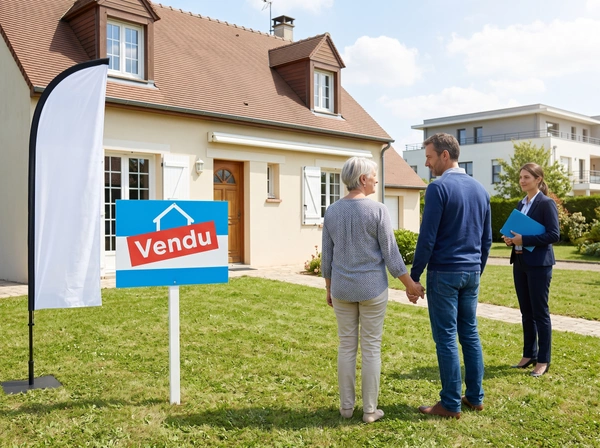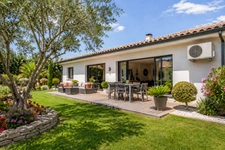
Do you own a single-storey house (a maison de plain-pied) in France and are you thinking of selling it? You most likely hold one of the most sought-after properties on the French real estate market. No stairs, accessible to everyone, opening onto the outdoors: this type of house ticks almost every box of the ideal home for a large share of today's buyers.
But you still need to know how to showcase its real strengths, avoid the pitfalls specific to this kind of property, and adopt the right sales strategy to sell quickly and at the right price. In this complete guide, we share 10 concrete tips to add value to and sell your single-storey house, after recalling what defines it, why it is so appealing, and how a precise property valuation and the support of a local advisor turn good intentions into a successful sale. Information up to date as of 2026.
To start off on the right foot, value your single-storey house online for free.
In brief
- A highly prized property in France: the single-storey house appeals to seniors, families, people with reduced mobility, and buyers seeking comfort, safety, and accessibility. In many French areas, demand exceeds supply.
- Strengths to highlight: living on one single level, no stairs, accessibility, direct connection to the garden, easy upkeep. These are your best selling points.
- Targeted enhancement: home staging, natural light, the DPE (the French energy performance diagnostic), outdoor layout, professional photos, and a well-written listing increase appeal and shorten the selling time.
- The right price above all: a reliable valuation and an Optimhome real estate advisor who is an expert in the local French market remain the keys to a fast sale at the right price.
Need a reliable benchmark? An Optimhome advisor knows the real demand for this type of property in your municipality in France.
What is a single-storey house? Definition and characteristics
Before thinking about the sale, it helps to fully grasp what defines — and distinguishes — this type of property in France, because these very characteristics will form your sales pitch.
The definition of a single-storey house
A single-storey house is a home whose living spaces are all on the same level, with no upper floor and no interior staircase. Bedrooms, kitchen, living room, bathroom: everything is accessible from the ground floor, along a horizontal circulation. This configuration most often comes with direct access to the outdoors (a terrace, a ground-level garden) and involves a larger footprint than a two-storey house — and therefore, generally, a larger plot of land.
The different forms of single-storey houses in France
Not all single-storey houses look alike, and their shape influences their appeal. The traditional single-storey house, often rectangular, is simple and functional. The L-shaped house clearly separates the sleeping area from the living area and creates a sheltered outdoor space. The U-shaped house, rarer, is organized around a central patio or terrace, much sought-after for its privacy and light. Knowing which category your property belongs to helps you highlight its layout logic.
Single-storey or two-storey house: what are the differences?
Compared with a two-storey house, the single-storey house offers decisive advantages for many buyers in France: no stairs (safety, accessibility, comfort as you age), easier upkeep, and being level with the garden. In return, it takes up more ground space, which requires a sufficient plot, and it may have a larger roof surface, with an energy challenge to keep an eye on. These differences shape demand — and your sales narrative.
Key takeaways
- A single-storey house is defined by the absence of an upper floor and life on a single level.
- Its shape (traditional, L, or U) and its plot are value drivers in their own right.
Why is the single-storey house so sought-after in France?
Understanding buyers' motivations means knowing exactly what to emphasize. And the single-storey house meets strong, complementary expectations.
A property favored by seniors and people with reduced mobility
With France's ageing population, demand for accessible homes keeps growing. Seniors and people with reduced mobility (PMR) actively look for houses with no stairs, where movement is easy, where a fall is less likely, and where they can age in place in full autonomy. For this audience, a single-storey house near shops and services is a genuine favorite.
A practical and safe choice for families
Families with young children also appreciate the single-storey house: no dangerous staircase, easier supervision, and direct access to a garden where children play safely. The everyday functionality — everything on one level — appeals to parents seeking practicality.
An investment designed for the future
More and more buyers think long-term and choose a home where they can stay whatever life brings. The single-storey house is seen as a durable, adaptable, and reassuring home: a strong asset-related argument.
Demand often exceeding supply
The result of these combined expectations: in many French regions, single-storey houses are more in demand than available. This market tension works in your favor when selling — provided you position the property at the right price and present it at its best.
Key takeaways
- The single-storey house appeals to a broad audience in France: seniors, PMR, families, forward-thinking investors.
- This diversity of buyers sustains strong demand, often outstripping supply.
The appeal factors of a single-storey house
Not all single-storey houses add value in the same way. Several criteria boost desirability, and therefore price:
- Accessibility: wide doors, no thresholds, a ground-level (walk-in) shower, adapted circulation. This is the first lever for senior and PMR buyers.
- Layout functionality: well-distributed rooms, a clear separation between day and night areas, smooth circulation without wasted corridors.
- Natural light: large openings, good orientation, living rooms bathed in light.
- Quality of the plot and the outdoors: a well-kept garden, a terrace, no overlooking neighbors, a pleasant exposure.
- Energy performance (the DPE): a good rating reassures and adds value; a poor one holds buyers back.
- Proximity to shops and services: a decisive criterion for buyers anticipating reduced mobility.
Knowing these levers means knowing what to communicate in the listing and what to draw attention to during viewings.
10 tips to add value to and sell your single-storey house
Now to the heart of the matter: ten concrete, actionable tips, from the price to the distribution of the listing.
1. Have your property valued at the right price
This is the absolute priority, the one that governs everything else. A property listed at the market price from day one attracts serious buyers and sells faster; overvaluing it, on the contrary, scares buyers away, "wears out" the listing, and often ends up… selling for less, later. Rely on a precise valuation, based on recent comparable sales and on the specific demand for single-storey houses in your area of France — a segment where scarcity can justify a higher valuation.
Value your single-storey house online for free to find out its market value in a few clicks.
2. Take care of the façade and entrance for the first impression
The first impression forms within seconds, right from the gate — and it's decisive. Clean the façade, maintain the garden, clear and light the driveway, freshen up the front door. On a single-storey house, whose façade is often widely visible from the street, this exterior care immediately inspires confidence and makes people want to discover the inside.
3. Highlight single-level living and accessibility
This is your number-one argument, so don't leave it implicit: explicitly showcase the comfort of living without stairs. Mention the level access, the wide doors, the walk-in shower, the safety for children and elders alike, and the ease of moving from one room to another. These strengths speak directly to your target buyers and set you apart from two-storey houses.
4. Enhance the indoor-outdoor connection
Single-storey houses often offer direct access to the garden and terrace from the living areas: a major asset to stage. A furnished terrace, garden furniture, a well-kept outdoor space with no steps visually extend the living space and spark the crush. The ground-level garden, accessible without effort, is especially appreciated by families and seniors alike.
5. Optimize the natural light
Light radically transforms how a property is perceived. Open the shutters, clean the windows, clear the windows of any bulky furniture, favor light shades on the walls. Where natural light is lacking, well-thought-out lighting and a few well-placed mirrors visually enlarge and brighten the rooms. A bright house looks bigger, healthier, and more welcoming.
6. Refresh and depersonalize through home staging
Home staging is particularly effective on this type of property. Declutter the rooms, depersonalize the décor (remove overly personal photos and objects), refresh tired paintwork, and neutralize bold colors. The goal: to let every visitor picture themselves in the home right away. For an often modest investment, home staging noticeably shortens the selling time and limits downward negotiations.
7. Improve the energy performance (the DPE)
The DPE weighs more and more in the buying decision, and single-storey houses — with their large roof surface — can be prone to heat loss. A few targeted works (attic insulation, replacing an ageing boiler, fitting solar shading) can improve the energy rating, reassure the buyer, and justify a better price. Good to know: for a house rated E, F, or G in France, an energy audit is now mandatory at the time of sale — anticipate it so as not to delay the preliminary agreement.
8. Make the most of the attic, outbuildings, and the potential to expand
Many single-storey houses have convertible attics, a garage, or outbuildings that can add value. Without necessarily undertaking major works, highlight the potential: the option to fit an extra bedroom, an office, a master suite, or a remote-working space. This adaptability reassures families who might fear "running out of room" in a single-level property.
9. Produce professional photos, a floor plan, and a virtual tour
In the age of online searching, the visual quality of the listing is decisive. Professional photos, a clear 2D floor plan (which highlights the property's horizontal logic), and a 3D virtual tour attract already-convinced visitors and let distant buyers picture themselves. The result: more qualified viewings, and fewer of them before an offer — so a smoother sale.
10. Write a targeted listing and distribute it widely
Finally, your listing must speak to the right audience. Choose a clear, attractive title (for example, "Single-storey house, 4 rooms – garden – no overlooking neighbors – near shops"), then a description that highlights accessibility, the connection to the outdoors, the natural light, and proximity to services. Then distribute it as widely as possible — property portals, social networks, an advisor network — to maximize your visibility among buyers looking for precisely this type of property.
Key takeaways
- The winning trio: the right price, enhancement (staging, outdoors, light, DPE), and a targeted listing.
- Emphasize what makes single-storey living unique: accessibility, life on one level, connection to the garden, adaptability.
Points to watch and pitfalls to avoid
A sought-after property is not a flawless one: it's better to anticipate the weaknesses than to suffer them.
Energy performance is the most frequent point to watch: a large roof surface, sometimes older construction, possible heat loss. Address the issue upfront rather than letting it weigh on the negotiation. The large footprint means a plot whose every square meter must be maintained and showcased — a neglected garden heavily penalizes this type of property. Also keep an eye on the layout: rooms in a row (enfilade), a lack of privacy between the night and day areas, or overlooking neighbors can cool buyers down. Finally, avoid the classic mistakes of any sale: overvaluing the price, neglecting the mandatory diagnostics, publishing poor photos, or using multiple agencies with no strategy. A professional eye helps spot and correct these points before the property goes on the market.
Mistake to avoidNever put a single-storey house on the market without addressing its two typical weak points: a well-kept exterior and a presentable energy performance. These are what make — or break — the crush.
What sales strategy should you adopt to sell a single-storey house in France?
Selling a prized property does not exempt you from a clear strategy; on the contrary, it's what lets you get the best price.
Target the right buyers
First identify your core target — seniors, families, first-time buyers, investors — according to the property's characteristics (surface area, plot, location, accessibility), and adapt your narrative and your visuals to their expectations. The same property is not "told" the same way to a retired couple and to a young family.
Set the right price from the start
A coherent price from day one creates positive momentum, generates qualified viewings, and avoids drawn-out negotiations. Conversely, a price that is too high and gradually lowered sends a poor signal to the market. The scarcity of single-storey houses can justify a premium, but it must stay anchored in the reality of comparable sales.
Succeed in the viewings
Prepare each viewing: a tidy, aired-out, bright house, with documents ready (diagnostics, sales file). During the viewing, highlight the specific strengths of single-storey living (accessibility, garden, no stairs) without overselling, and stay attentive to visitors' feedback to adjust if necessary.
Distribute widely and track the indicators
Play the multichannel distribution card to reach as many buyers as possible, then track the indicators: number of listing views, viewing requests, conversion rate. Few contacts? The problem often lies with the listing or the price. Many viewings without an offer? The price or a perceived flaw is at fault. These signals guide your adjustments.
How long does it take, and at what price, to sell a single-storey house in France?
There is no single answer: both the selling time and the price depend above all on the local French market, the quality of the property, and its positioning. That said, the strong demand for single-storey houses often works in the seller's favor: well presented and correctly valued, this type of property can find a buyer faster than average in areas where supply is scarce. The key remains the same: the right price from the start and careful enhancement. For a reliable, personalized benchmark, nothing replaces a local valuation.
Online valuation and the Optimhome advisor: the two keys to a successful sale
You'll have understood: selling a single-storey house well rests on two complementary foundations.
First, an accurate valuation. It's what sets the right price, attracts the right buyers, and triggers useful viewings. The Optimhome online property valuation tool gives you, free of charge and in a few minutes, a first reliable benchmark of your property's value — an excellent starting point before any sale.
Then, expert support. An Optimhome real estate advisor, a keen connoisseur of the local French market, knows precisely how a single-storey house sells in your area: they refine the valuation, target the right buyers, enhance the listing, prepare the viewings, and lead the negotiation through to the signing. Everything you need to sell in the best timeframe and at the right price, calmly and without a misstep.
👉 Start with a free online valuation, then get the support of an Optimhome real estate advisor near you.
- Set the right price from the start thanks to a precise, local valuation.
- Highlight the strengths of single-storey living: accessibility, life on one level, garden, adaptability.
- Enhance the property (home staging, natural light, DPE, professional photos) for qualified viewings.
- Anticipate the weak points (energy, layout, upkeep of the plot).
- Adopt a targeted strategy and wide distribution, tracking the right indicators.
- Get support from an Optimhome advisor who is an expert in your French market.
FAQ
What exactly is a single-storey house?
It's a house whose rooms are all on a single level, with no upper floor and no interior staircase. Bedrooms, kitchen, living room, and bathroom are accessible on one level, most often with direct access to the garden. This horizontal configuration explains its comfort of use and its success in France.
Why are single-storey houses so sought-after in France?
Because they offer life on a single level, with no stairs: a comfort and safety appreciated by seniors, families with children, and people with reduced mobility. They also appeal through their easy upkeep, their direct connection to the outdoors, and their durable character. In many French areas, demand exceeds supply.
How do you add value to a single-storey house before the sale?
By taking care of the first impression (façade, garden, entrance), by depersonalizing and refreshing the interior (home staging), by optimizing the natural light, by improving the DPE if necessary, and by staging the indoor-outdoor connection. Professional photos and a targeted listing round out the enhancement.
Does a single-storey house sell more easily than a two-storey house in France?
Often, yes, because it meets a broad and growing demand (accessibility, no stairs). However, the sale always depends on the price, the condition of the property, the energy performance, and the local French market. A good valuation and careful enhancement remain essential.
What are the pitfalls to avoid when selling a single-storey house?
The main pitfalls: overvaluing the price, neglecting the energy performance (often the weak point), underestimating the upkeep of the plot, ignoring layout flaws (rooms in a row, overlooking neighbors, lack of privacy), and offering a poor-quality listing or photos.
How do you set the right price for a single-storey house?
By relying on a precise valuation, based on recent comparable sales and on the local demand specific to this type of property. The Optimhome online valuation tool and the opinion of a local advisor give you a reliable benchmark to sell at the right price, without overvaluing or underselling.
Are any specific diagnostics needed to sell a single-storey house in France?
The mandatory diagnostics are the same as for any house (the DPE, asbestos and lead depending on the age, electrical, gas, statement of risks, etc.). For a house rated E, F, or G, an energy audit is also required at the time of sale in France. Have them carried out by a certified inspector.
Why work with an Optimhome advisor?
An Optimhome advisor knows the real demand for single-storey houses in your area of France. They accurately value the property, target the right buyers, enhance the listing, prepare the viewings, and negotiate through to the signing — to secure a fast sale at the best price.
Information up to date as of the publication date (2026). The enhancement tips are general benchmarks; the optimal strategy depends on your property and your local French market. For personalized advice, consult an Optimhome advisor.
Author :

Fabrice DOBROWOLSKI - Optimhome Network Development Director
Optimhome offers you personalized support for your real estate project. Benefit from all my advice, based on several years of experience, to ensure the success of your project.