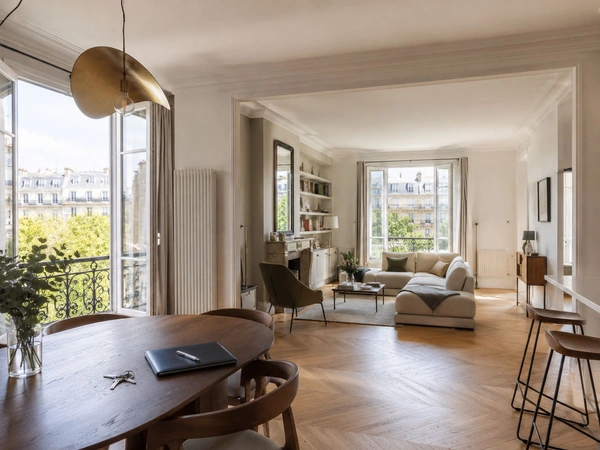
Buying to let without choosing the wrong target tenant means first choosing a type of property based on the tenant profile you are looking for: student, young professional, family or senior, even before thinking about location or budget. In 2026, a shared-occupancy studio in a high-demand student city such as Toulouse or Lille can yield between 6 and 8% gross, compared with 3 to 6% for a standard property let to a single tenant. A house on the outskirts will appeal more to a family looking for space and stability, while a renovated two-room apartment (T2) in the city centre will suit a busy young professional who is demanding about quality of life. This article helps you choose the right rental target before buying, in order to secure your yield and limit vacancy periods.
In Summary
- The profitability of a rental investment depends less on location alone than on how well the property matches the targeted tenant profile.
- Students and shared occupancy offer the best gross yields in 2026 (up to 10-12% in some cities), but require more management.
- Young professionals favour well-located, well-connected small units, families look for space on the outskirts, and seniors represent a segment that is still under-invested but promising.
- A local real estate advisor helps you combine property type, geographic area and rental target to build a coherent strategy rather than a shot in the dark.
Why the Rental Target Should Guide Your Purchase, Not the Other Way Around
I still see many investors who fall in love with a property before asking themselves who will live in it. It is exactly the opposite that you should do. A successful rental investment starts with a simple question: who will I rent this property to, in five years, in ten years? Because a brand-new one-room apartment (T1) in the heart of the city centre will never interest a family with two children, and a house with a garden in a suburban housing development will not appeal to a student who wants to be a ten-minute walk from their university. The property and the target must match; otherwise you accumulate vacancy periods and end up cutting the rent to find a tenant.
The Trap of the "Property That Appeals to Everyone"
This is often the classic mistake of a first investment: looking for an "all-purpose" property supposed to appeal to everyone. In reality, a home designed for everyone truly appeals to no one. A studio designed for a student will need compact, durable furniture, a fast internet connection and a tight rent, charges included. A three-room apartment (T3) for a young working couple will instead focus on natural light, an open kitchen and proximity to public transport. These are two completely different approaches to design, decoration and even rental management.
What This Means Concretely for Your Yield
The figures speak for themselves: a furnished shared-occupancy studio in a high-demand university city can show a gross yield of 6 to 8%, with peaks of 10-12% in some highly sought-after mid-sized cities. Conversely, a family house on the outskirts, more stable and less subject to turnover, yields more around 4 to 8% depending on location, with a markedly lower rental risk. Neither strategy is better in absolute terms: it all depends on your appetite for risk, the time you want to devote to management, and the horizon of your wealth-building project.
Investing for Students: Shared Occupancy, the Star of Yields in 2026
If you are looking for the highest possible yield on your initial outlay, the student target remains the benchmark in 2026, provided you aim correctly. Standard student residences show a gross yield of 3.8 to 5.5%, which is decent but nothing more. Shared occupancy, however, changes the game completely: it generates between 25 and 50% more rent than a standard letting of the same property, for a gross yield that climbs to 6-8%, or even 10-12% in the most dynamic mid-sized cities.
Student Cities to Watch
Toulouse, with its 130,000 students, shows shared-occupancy yields of around 7-8%. Lille, with its 110,000 students, is at similar levels. Lyon, despite its 180,000 students and genuine rental demand pressure, remains somewhat more moderate, between 6 and 7%, due to already high purchase prices. Rennes, more affordable to buy into, is also around 6-7%. Paris remains the tightest market in France for student shared occupancy, driven by rents so high that shared occupancy has become almost a necessity for many students, even though the yield there remains lower than in the regions.
What to Anticipate Before Getting Started
Shared living (colocation) requires more involvement: higher turnover, more leases to manage, furnishings to maintain, and sometimes flatmates looking for their own replacements in the middle of the year. It is a real profession, or else a real partnership with a property manager. Before buying, always look at the local university calendar, the proximity of campuses and public transport, and above all the neighbourhood's historical rental vacancy rate rather than the national average, which often doesn't mean much.
The expert's view
"What I repeat to every investor who walks into my agency is that there is no such thing as a good rental investment in the absolute; there is only a good investment for a specific target tenant, and that is where most projects go wrong: people buy a property because it is beautiful, because it is cheap, or because a friend bought a similar one that is doing well, without ever asking themselves the real question, namely who will want to live there and for how long; I have seen superbly renovated studios stay empty for six months because they were a fifteen-minute walk from the campus instead of five, and I have seen houses with no particular charm get rented within forty-eight hours because they were next to a good school and a tram stop with a direct line to the centre; my conviction, after all these years in the field, is that an investor who takes the time to define their ideal tenant before visiting a single property saves precious time, avoids costly disappointments, and always ends up with a more stable return than an investor who buys first and looks for a tenant afterwards."
Targeting young professionals: the well-located small unit that never disappoints
Young professionals are those people in their thirties, at the start or middle of their careers, often single or in a couple without children, who prioritise proximity to work, public transport and urban life over living space. This is a very creditworthy target, generally on permanent contracts (CDI), who stay on average two to four years in a home before moving on to a new stage of life. Turnover is therefore lower than with students, but higher than with families, which makes it a good compromise for many investors who are just starting out.
What type of property for this target
Furnished studios and T1/T2 units (one- and two-room apartments), ideally renovated with real attention to quality, easily find takers among this population. Yields are, moreover, among the highest on the market in this segment: up to 8 to 8.5% gross in cities such as Saint-Étienne, Mulhouse or Béziers, where purchase prices remain contained while still offering genuine rental demand from young professionals and advanced-level students. In large metropolitan areas such as Lyon or Nantes, yields are more modest, but rental security and potential resale prospects are better.
The criterion that really makes the difference: precise location
For this target, location is decided at street level, not just at neighbourhood level. A metro or tram station within a five-minute walk, a supermarket, a few bars and restaurants nearby: these are the details that turn a decent home into one that rents within a few days. Before buying, I always advise walking the route again during rush hour, morning and evening, to put yourself in the future tenant's shoes.
Aiming at families: the suburban house, a safe haven in rental investment
Families with children are looking above all for stability: a sufficiently large home, a quiet neighbourhood, a good school nearby, and if possible outdoor space. This is a target that stays on average much longer in a home, sometimes five to ten years, which sharply reduces management costs and rental vacancy. In return, the gross yield is often more modest, between 4 and 8% depending on location, and heavily dependent on the property's purchase price.
Outskirts and second ring: the right compromise
Areas on the near outskirts, in the second or third ring of large conurbations, offer an excellent balance between controlled purchase prices and family rental demand. In Évry, on the outskirts of the Paris region (Île-de-France), for example, some operations show returns close to 6%, particularly on properties designed for several occupants. This type of area also benefits from the development of public transport and partial remote working, which make the distance from the city centre less of a drawback than it was ten years ago.
What families look at first
Before price, a family looks at the school catchment map (carte scolaire), neighbourhood safety, the presence of local shops and green spaces. A garden, even a small one, or a parking space often makes the difference between two equivalent properties. If you are aiming at this target, never neglect these criteria in favour of a simple yield calculation on a spreadsheet: a family home is rented on trust and long-term projection, not just on price per square metre.
The practical tip
- Before any viewing, list three non-negotiable criteria for your target tenant (proximity to public transport, school, shops, campus...) and immediately rule out any property that ticks none of them.
- Browse the rental property listings in the targeted neighbourhood to see how long similar properties stay advertised: a simple, free indicator of real rental demand.
- Find out about the local calendar: the start of the university year for students, job transfers for young professionals, school-related moving periods for families.
- Always have your property valued before a buy-and-resell to check the consistency between purchase price, market rent and potential capital gain on resale.
- Never underestimate management costs: a student shared flat takes more time than a family rental, so factor this into your net profitability calculation, not just the gross figure.
Seniors: a rental segment still too little exploited
It is rarely discussed, but the senior target group is becoming an attractive rental investment avenue. With an ageing population and seniors' growing desire to remain independent for as long as possible, demand for suitable housing, whether single-storey or with a lift, close to shops and healthcare services, continues to grow. It is often a solvent, stable target group that does not look to move every two years.
What type of property works for this group
Small apartments in town centres or village centres, on the ground floor or with a lift, in the immediate vicinity of pharmacies, doctors and public transport, are particularly sought after. The adaptations are simple but essential: a walk-in shower rather than a bathtub, grab bars, and no steps at the entrance. These are inexpensive renovation investments, yet they considerably widen the pool of potential tenants.
Why this target group deserves your attention in 2026
Demand far exceeds the available supply in many medium-sized towns and cities, which limits rental vacancy and secures returns over the long term. It is a less spectacular strategy in terms of advertised gross yield, but often more profitable once you factor in low tenant turnover and reduced management costs. A good compromise for an investor seeking peace of mind rather than maximum performance at all costs.
Choosing the right geographic area according to your target group
Once the rental target group has been defined, you still need to choose the right geographic area. A tight student town does not follow the same codes as a residential family town, and the two markets can perfectly well coexist a few kilometres apart. This is where a local, on-the-ground perspective makes all the difference compared with a simple internet search.
The indicators to cross-check before buying
Look at the number of students enrolled in the institutions in the area if you are targeting that group, the net migration balance and demographic trends for families, or infrastructure projects (a new tram line, a business park) that can transform a neighbourhood within a few years. Always cross-check this data against the property listings available locally to make sure the supply of properties comparable to your project is not already saturated.
The support of a local professional
This is often where I see the biggest difference between an investor who succeeds and one who struggles: the former has surrounded themselves with a professional who knows the local market in detail, street by street, sometimes building by building. Turning to a local property adviser gives you concrete feedback on the real rental demand in a neighbourhood, beyond the general statistics found online.
Securing your investment: management, taxation and support
Choosing the right rental target group is not enough if the financial structure and day-to-day management do not keep pace. The taxation of furnished lettings (LMNP), for example, is particularly well suited to student and young professional rentals, whereas unfurnished lettings often fit better with long-term family rentals. The choice of tax regime should therefore also follow from the targeted rental group, and not the other way round.
Delegating or managing it yourself
A student house share requires active management: frequent inventory checks, replacing flatmates, and maintaining the furniture. A family or senior rental, by contrast, lends itself to lighter management, with long leases and little turnover. Depending on your availability and your tolerance for administrative stress, once all costs are factored in, it may be more profitable to delegate rental management to a professional rather than doing it yourself on a property with high turnover.
Plan for resale from the moment you buy
A good rental investment should also be considered in terms of its future resale. A student studio will be easier to resell to another investor than to an owner-occupier, whereas a family house will appeal more to a buyer looking to live in it. This difference directly affects the liquidity of your property in ten or fifteen years, and deserves to be anticipated from the purchase stage, while always keeping an eye on market value through regular valuations.
Conclusion
Buying to let without choosing the wrong target tenant is not a marketing slogan; it is truly the key to a rental investment that lasts over time. Students and house shares to maximise gross yield, young professionals for a good balance between yield and stability, families in the suburbs for rental security, seniors for a segment that is still under-exploited but promising: each target has its own logic, its preferred area and its management style. The right reflex, even before viewing a property, is to define precisely who you want to house, then let that answer guide all your choices, from the neighbourhood to the interior decoration. And if you are still hesitating between several strategies, nothing replaces the advice of a professional who knows your local market, to refine your project and avoid costly mistakes.
FAQ - Frequently asked questions
Which rental target offers the best yield in 2026?
Student house shares remain the most profitable target in gross terms, with yields that can reach 10 to 12% in certain highly sought-after mid-sized cities, compared with 6 to 8% in major student cities such as Toulouse or Lille. Please note, however, that this higher gross yield comes with heavier rental management than a standard family rental.
Should you favour a big city or a mid-sized city for investing?
It depends mainly on your budget and the target you have in mind. Major cities such as Lyon or Paris offer strong rental security but more moderate yields, whereas mid-sized cities such as Saint-Étienne, Mulhouse or Béziers allow you to obtain significantly higher gross yields thanks to more affordable purchase prices.
How can I tell whether a neighbourhood suits the target I have in mind?
The best approach is to observe the neighbourhood in practice at the times that matter for your target: morning and evening for young professionals, school pick-up times for families, university start-of-term days for students. Comparing similar rental property listings in the area also gives a good idea of the level of real demand.
Is it risky to invest in seasonal rentals rather than choosing a traditional target?
Seasonal rentals can be attractive in certain tourist areas, but they remain more sensitive to changes in local regulations and to the seasonality of demand. For a first rental investment, it is often more prudent to position yourself on a stable target (students, young professionals, families or seniors) before considering this more specific type of strategy.
Can a property advisor really help me choose my rental target?
Yes, and it is even one of the most concrete benefits of professional support. An advisor who knows the local market can tell you precisely which types of property rent best in each neighbourhood, to which tenant profile, and with what level of turnover. This helps avoid many beginner mistakes and saves precious time in defining your strategy.
To bring your project to life, discover our properties for sale.
Also read on the blog
- 10 tips for a profitable rental investment
- Real estate investor: which legal status should you choose?
- Beware of the habitability criteria for a property put up for rent!
Author of the publication

Fabrice DOBROWOLSKI, Director of the Optimhome network
«Benefit from myexpert advice, based on many years of experience in real estate, to ensure the success of your buying or selling project. »