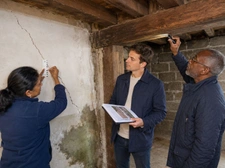
Cracks in the façade, rising damp in the walls or termites in the roof structure: these defects can worry sellers who fear their property may become impossible to sell.
However, selling a house with defects is entirely possible, provided you are transparent and supply the required technical surveys.
The law requires sellers to inform buyers of any known defects. Failing to do so can result in the sale being challenged even after completion.
This article explains your legal obligations, the surveys you must provide and the best strategy for selling securely.
Key Takeaways
You must inform the buyer of any known defect. This is a legal obligation separate from the mandatory technical surveys.
The hidden defects warranty protects the buyer against defects that were not visible at the time of sale, were not disclosed and make the property unsuitable for its intended use.
A termite report is mandatory only in areas covered by a prefectural order; the risk and pollution report (ERP) also covers clay soil shrinkage and swelling, which can cause cracks.
Depending on the seriousness of the defect, there are two main strategies: sell the property as is at an adjusted price with full transparency, or carry out repairs before putting it on the market.
A detailed repair quote, ten-year warranty or additional guarantee can reassure buyers when visible defects are present.
Concealing a known defect can expose the seller to cancellation of the sale and damages, even long after the deed has been signed.
Visible Defects and Hidden Defects: What Must You Declare?
The Difference Between an Apparent Defect and a Hidden Defect
Not all defects are treated in the same way legally.
An apparent defect is visible or detectable by a normally attentive buyer during viewings, such as:
a large crack in the façade;
damp marks at the bottom of a wall;
a musty smell in a cellar.
A buyer who signs the deed with full knowledge of such a defect generally cannot later make a claim against you on that specific point, as they are considered to have accepted it at the time of purchase.
A hidden defect, by contrast, is one that was not visible at the time of sale and could not reasonably have been detected during a normal inspection of the property.
It must be serious enough to make the property unsuitable for its intended use or reduce its usefulness to such an extent that the buyer would not have purchased it—or would have paid less—had they known about it.
Examples may include:
termites concealed behind wall lining;
a weakened roof structure that is not visible;
a structural crack hidden by recent façade work.
These situations may qualify as hidden defects if the seller knew about them and failed to disclose them.
Hidden Defects Warranty and Duty to Inform
Under the French Civil Code, the seller must protect the buyer against hidden defects that make the property unsuitable for its intended purpose.
If you are aware of a defect—even an old one or one that has only been partially treated—you must inform the buyer before the preliminary sale agreement is signed.
This duty to inform is separate from the mandatory technical surveys. It applies to everything you know about the property, including:
work previously carried out;
insurance claims;
past damage;
defects that have been identified but not yet repaired.
In practice, this information is often included in the preliminary sale agreement through a specific clause or an appendix listing all known defects.
Mandatory Surveys Related to Property Defects
Termite Report in Risk Areas
A termite report is mandatory only in municipalities or parts of municipalities covered by a prefectural order.
These areas are generally located in southern and western France, as well as certain overseas departments.
If your property is located in one of these areas, the report must be attached to the preliminary sale agreement or final deed and is valid for only six months.
If your municipality is not covered but you have previously found evidence of termites, your duty to inform still applies: you must disclose this information even if no formal termite survey is legally required.
Risk and Pollution Report and Clay Soil Shrinkage and Swelling
The risk and pollution report (ERP) informs the buyer about natural, mining, technological, seismic and soil pollution risks affecting the area.
It includes exposure to clay soil shrinkage and swelling, a common cause of cracks in detached houses built on clay-rich soil.
Alternating dry and wet periods cause the ground to move, which can weaken foundations and create characteristic cracks, often diagonal ones around the corners of façades.
The ERP is mandatory for every sale and must be less than six months old when the transaction is signed.
However, the ERP only informs the buyer about risks associated with the geographical area. It does not replace your obligation to disclose defects already identified on the property itself.
If cracks are already visible and documented, they must therefore be disclosed separately.
Sell As Is or Repair Before Selling: Which Strategy Should You Choose?
There are two main strategies when selling a house with defects.
The right choice depends mainly on your budget, your timeframe and the actual extent of the problem.
Sell As Is at an Adjusted Price
When the defect is significant, longstanding or expensive to repair, selling the property as is may be the quickest and legally safest solution, provided the price is adjusted accordingly.
A buyer who has been clearly informed about the defect, understands the estimated repair cost and factors the corresponding discount into their offer is making an informed decision.
They should therefore not be able to later challenge the sale on that specific disclosed issue.
To set a coherent asking price, it is useful to compare the property with similar transactions involving the same type of defect.
An online property valuation carried out with a professional who understands the local market can help assess the real impact of the defect on value.
Carry Out Repairs Before Putting the Property on the Market
If your budget allows, repairing the defect before selling can broaden the pool of potential buyers and reduce the risk of difficult negotiations later.
Examples include:
certified termite treatment;
resin injection to stabilise foundations;
damp treatment covered by a professional warranty.
These measures can immediately reassure buyers, particularly those who are not experienced with renovation work.
The cost can vary greatly depending on the scale of the problem. A standard termite treatment may cost a few thousand euros, while foundation repairs linked to clay soil shrinkage and swelling can reach several tens of thousands of euros.
Always compare the cost of repairs with the likely discount required if you sell the property as is.
How to Reassure Buyers When Defects Are Visible
A visible defect does not necessarily prevent a sale, provided buyers are given enough information to assess it properly.
Always provide a detailed repair quote from a qualified professional.
This turns a vague concern into a quantified and negotiable cost and reassures the buyer that the problem has been identified and can be treated.
If repairs have already been carried out, keep and provide the invoices together with any applicable ten-year or two-year warranty certificates.
For specific treatments such as termite treatment, damp treatment or crack repair, some companies also provide additional warranties lasting several years and transferable to the new owner.
This can be a strong selling point because it transfers part of the risk from the property itself to the professional who carried out the work.
Careful property presentation remains important even when defects are present. Clear and honest photographs—including, where appropriate, the areas affected by work to be carried out—help establish trust from the first online viewing.
Concealing a Known Defect: What Are the Legal Risks?
Concealing a known defect at the time of sale can amount to fraudulent concealment, a form of deception that may be sanctioned long after the final deed has been signed.
If the buyer later discovers a defect that you knew about and failed to disclose, they may bring a hidden defects claim or even seek cancellation of the sale for fraud if they can prove the information was deliberately concealed to persuade them to purchase the property.
The consequences can be serious:
a court-ordered reduction in the sale price;
cancellation of the sale and repayment of the buyer;
damages where additional loss is proven.
These claims may arise several years after the sale, as the limitation period may begin when the defect is discovered rather than on the date of completion.
This is why full transparency is, paradoxically, the most protective strategy for the seller. Clearly informing the buyer helps secure the transaction from the outset.
Work with an Optimhome Real Estate Advisor
Selling a house with defects requires both technical and legal awareness, which can be difficult to manage alone.
A local Optimhome real estate advisor can help you:
explain known defects clearly in the preliminary sale agreement;
choose between selling as is and carrying out repairs beforehand;
negotiate with buyers using factual information rather than emotion;
find suitable surveyors and tradespeople for reliable quotes.
Optimhome's network of more than 1,800 independent advisors operates throughout France and supports sellers dealing with cracks, damp or termite issues.
Optimhome advisors' property listings also provide buyers with the mandatory diagnostic information and useful details about the property, helping avoid surprises during negotiations.
Conclusion
Selling a house with defects—cracks, damp or termites—is not unusual and does not mean your sale cannot go ahead, provided you comply fully with your legal obligations.
Always inform the buyer of any known defect, beyond the mandatory surveys.
Provide a termite report if your area is concerned and the risk and pollution report in all cases.
Choose between selling as is at a discount and carrying out repairs beforehand depending on your budget and the seriousness of the defect.
Use quotes, invoices and warranties to reassure the buyer objectively.
Never conceal a known defect: the legal risk is far greater than the inconvenience of negotiating a lower price.
Professional support can help secure every stage of this type of sale and ensure the property is priced realistically and sold under the right conditions.
FAQ
Do I Have to Disclose a Crack Even If It Is Not Dangerous?
Yes. As soon as you are aware of a crack, it should be disclosed to the buyer, even if it appears superficial.
It is then for the buyer, potentially with advice from an expert, to assess its actual seriousness before committing to the purchase.
Is a Termite Report Mandatory for Every House?
No.
It is mandatory only in areas covered by a prefectural order.
Outside these areas, no termite survey is legally required, but you must still disclose any previously identified termite presence.
Can I Sell My House Without Carrying Out Repairs?
Yes.
You can sell the property as is, provided the buyer is clearly informed of the defect and the asking price takes it into account.
This approach is often quicker than carrying out repairs before putting the property on the market.
What Happens if the Buyer Discovers a Defect After the Sale?
If it is an undisclosed hidden defect, the buyer may bring a hidden defects claim or, if intentional concealment is proven, an action for fraud.
The seller may then face a reduction in the price, cancellation of the sale or damages.
Does a Hidden Defects Exclusion Clause Protect Me Completely?
No.
It may protect a non-professional seller who genuinely did not know about the defect at the time of sale, but it will not protect you if you knew about the problem and concealed it.
Good faith and transparency therefore remain essential.
How Is Clay Soil Shrinkage and Swelling Taken into Account During a Sale?
It is mentioned in the risk and pollution report, which informs the buyer about the property's exposure to this risk.
If cracks linked to this phenomenon are already visible on the house, they must be disclosed separately from the report itself.
Can a Real Estate Advisor Help Me Set the Right Price Despite the Defects?
Yes.
A local advisor can compare your property with similar sales involving comparable defects and help determine a realistic asking price that informed buyers are more likely to accept.
Author :

Frédéric Rémy – Director of Commercial Performance
A real estate professional for several years within the Capifrance network, I would like to share with you some essential advice to help you succeed in your real estate project with the support of our advisors.