A well-maintained, newly renovated house in a sought-after neighbourhood that receives no calls: it is almost never a question of the property, it is almost always a question of the listing. A poorly positioned price, dull photos, a flat title or distribution limited to a single portal are enough to make an otherwise excellent home invisible. Buyers judge in a few seconds on a screen, long before thinking about pushing open the front door. The good news is that each of these blockages can be corrected quickly, without touching a single wall of the house.
In summary
- A price that is off by just a few percent is enough to make a listing disappear from serious buyers' searches.
- Professional photos and a virtual tour multiply clicks and viewing requests several times over.
- Advertising on a single portal amounts to closing the door on a large share of potential buyers.
- A local real estate advisor can diagnose in a few minutes what is holding a listing back and correct course.
Price, the first invisible obstacle
Before even looking at the photos, buyers filter by price range. It is an automatic, cold, unsentimental sorting: if your house is priced a few thousand euros above a buyer's budget, it simply never appears in their searches. It is not poorly regarded, it is invisible. Conversely, a price that is too low worries buyers as much as it attracts them, because many wonder what is wrong.
How to know whether your price is consistent
The right reflex is to compare with sales actually completed in the neighbourhood, not only with listings still online, which often reflect prices that were never achieved. A property that stays listed for six months is not the benchmark to follow. That is precisely why it is better to entrust the analysis to a professional: having your property valued by someone who follows the local market on a daily basis avoids relying on generic simulators that ignore the specifics of your street, your orientation or the real condition of your roof.
What the number of views without contact reveals
There is a very reliable signal for knowing whether the problem comes from the price: the number of views of the listing compared with the number of contact requests. Many views and no calls often mean the price is the sticking point, or that the description kills the desire at the last moment. Few views at all points rather to a problem of visibility or distribution. This simple diagnosis shows where to act first, rather than changing everything blindly.
Photos, your number one showcase
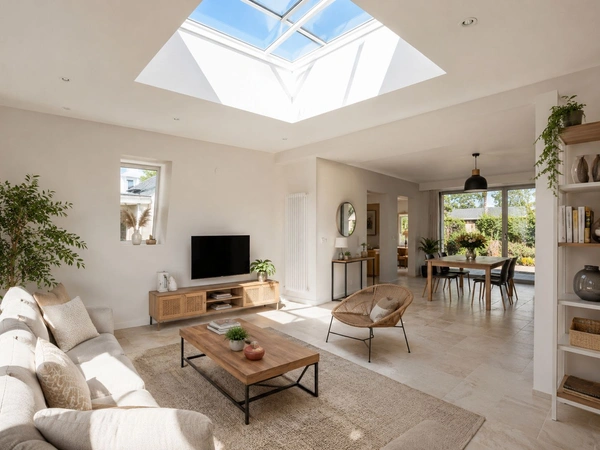
On a real estate portal, the cover photo decides in a fraction of a second whether the buyer clicks or moves on to the next listing. It is brutal, but it is the reality of the online journey: nobody reads a title before having been caught by an image. A magnificent house photographed against the light, with untidy rooms or a crooked framing, will always give a less flattering impression than reality.
What a real professional photo changes
The industry figures are unequivocal: professional photos generate up to seven times more views than unprepared smartphone photos, and on some portals, well-illustrated listings sell on average three weeks faster than the others. It is not an aesthetic detail, it is a sales lever in its own right. A good photographer knows how to open the shutters at the right moment, choose the angle that enlarges a room and avoid the distortions that betray the reality of the property.
The mistakes that sink a listing without anyone realising
Certain mistakes come up again and again: photographing an interior cluttered with clothes or dishes, leaving the lights on in broad daylight, which gives a yellow, dull rendering, or multiplying blurry photos meant to "show every angle". Eight sharp, bright photos are better than twenty mediocre shots. The buyer never remembers the quantity, only the first impression.
The expert's word
"I still see far too many sellers who are convinced that their house 'will sell itself' because it looks beautiful in person, when online it looks like any other property with no character: I remember a detached house with a superb garden, a magnificent wooden terrace and a newly renovated kitchen, but whose photos had been taken on a rainy day, with the shutters half closed and a cat lounging on the living room sofa in three different shots; the result was zero viewings in a month even though the property was objectively one of the most beautiful in the area, and all it took was redoing the photo shoot on a sunny morning and reworking the title to mention the tree-filled garden and the proximity of the schools to receive five viewing requests in a week, proof that the problem is almost never the house, but always the way it is presented online."
The Title and Description: The Art of Making People Want More
The title is the first sentence a buyer reads, and often the only one if they are not convinced. "House for sale" or "Beautiful family home" says nothing specific and gets lost among thousands of similar listings. A good title gives concrete information and a real advantage from the very first words.
A Title That Must Say Everything in One Line
The type of property, the town or neighbourhood, the surface area and a distinguishing strong point: that is the formula that works. "4-room house with enclosed garden, 5 minutes from the centre of Chambéry" naturally attracts more clicks than "Pretty house not to be missed". Buyers type in precise searches, and the title must respond directly to their criteria, almost as if it anticipated their question.
A Description That Tells a Story, Not a List
A description made up solely of dry keywords, "3 bedrooms, garage, garden, cellar", informs but does not inspire. The best descriptions paint a scene: morning coffee on the terrace, the light streaming through the living room at the end of the day, the school or the market within walking distance. This does not replace the essential factual information, but it creates the desire to visit, which is precisely the purpose of a listing. Comparing your own listing with other property listings in the same area often makes it possible to spot at a glance what yours is missing.
Multi-Portal Distribution: Don't Put All Your Eggs in One Basket
Publishing on only one site, however popular, amounts to closing the door on a not insignificant share of buyers. Each portal attracts a slightly different audience depending on age, budget or region, and some buyers only consult a single site out of habit or convenience.
Why Le Bon Coin Is No Longer Enough
Le Bon Coin remains a reference in France, but its algorithm strongly prioritises recent listings: a listing that is never republished or updated ends up pushed far down the results, even if it is of good quality. SeLoger, for its part, attracts nearly nine million visitors each month who compare, picture themselves in the property and often make up their minds after several targeted searches. Ignoring either one means depriving yourself of a real share of potential buyers.
The Role of the Local Network and Digital Word of Mouth
Beyond the major portals, distribution through a network of local advisers, social media and digital word of mouth multiplies visibility even further. A well-established adviser often has a database of already qualified buyers looking for precisely this type of property, which can speed up a sale much more than a simple online republication.
The Practical Tip
- Republish or update your listing every two weeks to stay well positioned in the portals' algorithms.
- Change the cover photo regularly: a changing visual renews the interest of buyers who have been following the market for several weeks.
- Compare the number of views and enquiries each week to quickly identify whether the problem comes from the price, the photos or the text.
- Always publish on at least two or three complementary portals, never just one.
- Ask for an outside opinion before publishing: the eye of someone who lives in the house is never objective about its own photos.
The Virtual Tour: The Underused Weapon
Many sellers still consider the virtual tour a gimmick reserved for high-end properties. That is a mistake: it is becoming a real differentiator, including for more modest properties, simply because it reassures and saves everyone time.
What a 3D Tour Really Changes
Industry data shows that listings featuring a virtual tour generate nearly 87% more views and up to 49% more inquiries than standard listings. Even better, properties with a virtual tour sell on average 31% faster. The reason is simple: a buyer who has already "walked" through the living room and kitchen virtually arrives at the actual viewing with a real purchase plan, not just out of curiosity.
Who it is really useful for
A virtual tour is particularly valuable for buyers who are moving from another region or from abroad, or for those with a tight schedule who want to shortlist properties before traveling. It also limits "tourist" viewings that waste time for both the seller and the agent, by naturally filtering for genuinely motivated buyers.
Understanding portal algorithms
Real estate portals work like search engines: they rank listings according to specific criteria, and understanding these rules changes everything in how a property should be presented.
Why a recent listing ranks higher
The freshness of a listing is a central criterion. A listing published yesterday naturally appears ahead of one that is three months old, even if the latter concerns a comparable or better property. This is why professionals recommend regularly reworking the content, and not just clicking "republish" without changing anything, because some algorithms also detect identical repetition.
The trap of a poorly done refresh
Republishing without varying either the text or the photos can be seen as a negative signal by some systems, almost as proof that the property is not finding a buyer. The right approach is to genuinely change the listing with each update: a new featured photo, a different tagline, a strong point highlighted that was not before. It is meticulous work, but it pays off over time.
Turning to a professional to take back control
When a listing remains invisible despite all efforts, the outside eye of a professional often changes the situation in just a few days. They spot in a few minutes what the owner no longer sees, simply because the owner has lived in the property for too long to have a fresh perspective.
An outside assessment that changes everything
A industry professional simultaneously analyzes the price relative to the real market, the quality of the visuals, the relevance of the title and the distribution strategy. They also know how to negotiate with hesitant buyers and turn a viewing into a concrete offer, which is often the weak point of sellers who manage their listing alone.
The role of a local advisor in relaunching a listing
An advisor rooted in their area knows the neighborhoods, the schools, the shops, and knows how to put forward the right arguments for the right buyer profile. They also have professional distribution and presentation tools that are often out of reach for private individuals. Taking the time to find a local real estate advisor can literally transform a ghost listing into an active sales file within a few weeks.
Conclusion
An impeccable house that receives no calls is almost never a problem with the property; it is a problem of digital staging. The price, the photos, the title, the distribution and the virtual tour form a coherent whole, and it is often enough for just one of these elements to be deficient to make the entire listing invisible to buyers. The good news is that each of these levers can be corrected quickly, without renovation work or major investment, provided you know where to look. If doubt persists after several weeks without results, a professional's opinion is often the fastest way to understand what is blocking the sale and to relaunch it on a sound footing.
FAQ - Frequently asked questions
Why is my listing getting no views despite a quality property?
It is generally a visibility problem rather than a problem with the quality of the property: distribution limited to a single portal, a listing that is too old in the algorithm, or a title that is too generic to appear in buyers' specific searches. Checking these three points first often makes it possible to identify the cause in a few minutes.
How many photos are needed for an effective real estate listing?
Between eight and fifteen sharp, well-framed, bright photos are more than enough, provided they cover the main rooms, the exterior spaces and the property's strong points. It is better to have a small number of quality photos than a long series of blurry or redundant shots that dilute the buyer's attention.
Should you lower the price if the listing generates no inquiries?
Not necessarily: you first need to check whether the problem really comes from the price or from other factors such as the photos, the title or the distribution. If the listing receives many views but no inquiries, the price is often the cause; if it receives almost no views, the problem probably lies elsewhere.
Is a virtual tour useful for all types of property?
Yes, it offers real benefits even for modest properties, because it reassures buyers and filters out unserious visits. It is particularly valuable for buyers who live far away or those who want to shortlist several properties before travelling in person.
How often should you update your online listing?
Updating about every two weeks is a good rhythm, provided you genuinely change the content each time: a new featured photo, a slightly reworked text, or a different strong point highlighted. Republishing the listing identically without changing anything can be less effective, or even counterproductive on some portals.
Author of the publication

Fabrice DOBROWOLSKI, Director of the Optimhome network
«Benefit from myexpert advice, based on many years of experience in real estate, to ensure the success of your buying or selling project. »