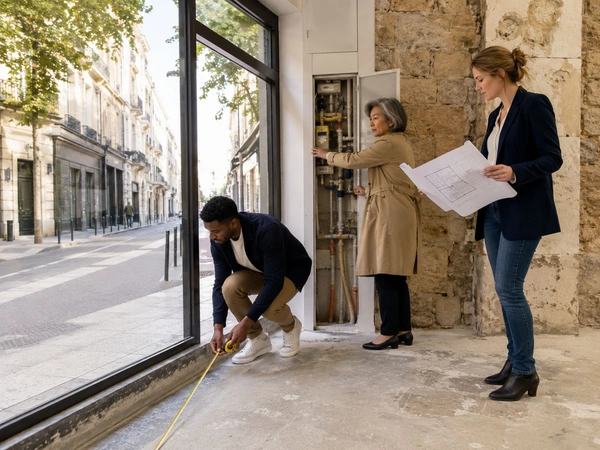
Are you planning to sell or buy a property and wondering whether a structural diagnosis is part of the mandatory procedures? The answer depends on several criteria: the type of property concerned, its location, and the recent legal framework introduced by the law of April 9, 2024. This article explains everything you need to know about structural diagnosis, whether it is mandatory, its cost, and practical advice for buyers and sellers.
What Is a Structural Diagnosis of a Building?
A structural diagnosis is an in-depth technical analysis that assesses the solidity and stability of a building. Its purpose is to identify observed defects that affect the structural integrity of the construction and to assess the risks they pose to the safety of occupants and third parties. This structural work assessment makes it possible to detect weaknesses in load-bearing elements before they become critical.
What Is the Difference Between the Diagnosis of a House and That of an Apartment Building?
A structural diagnosis varies depending on the type of property concerned. For a detached house, the assessment focuses on elements specific to a single construction: foundations, load-bearing walls, roof structure, floors, and façade. The professional examines the entire structure as a whole, taking into account the property’s specific architecture.
For a collective residential building, the diagnosis is more complex. It covers all common areas and shared load-bearing elements: columns, beams, shear walls, shared floors, common staircases, and balconies. In a co-ownership, the co-owners’ association arranges this assessment, as it concerns the safety of all occupants of the building.
Which Elements Are Checked During the Structural Assessment?
The expert methodically examines all components that ensure the building’s load-bearing capacity. The roof covering is inspected to detect deformation or sagging. Façades and balconies are examined for cracks, spalling, or signs of reinforcement corrosion in concrete.
Inside, load-bearing walls, structural partitions, floors, and staircases are analyzed to identify any sagging, deformation, or deterioration. The basement and foundations receive special attention, as they form the basis of the building’s overall stability.
The expert also assesses the condition of the ground and looks for traces of moisture, differential settlement, or ground movement that could weaken the structure over the long term.
In Which Cases Is Structural Diagnosis Mandatory?
Since the law of April 9, 2024 aimed at accelerating and simplifying the renovation of degraded housing, supplemented by Decree No. 2025-814 of August 12, 2025, structural diagnosis has become mandatory in certain specific situations. This legal framework was adopted following the building collapses that occurred in Marseille in November 2018, which caused the deaths of eight people on Rue d’Aubagne. These tragedies revealed failures in the management of degraded housing and the need to better prevent collapse risks.
Which Buildings Are Subject to the Mandatory Structural Diagnosis?
The obligation concerns collective residential buildings over 15 years old located in sectors defined by the municipality. This measure aims to identify structural weaknesses before they become critical. The diagnosis must be renewed every 10 years to ensure regular monitoring of the condition of the building.
For co-ownerships, this obligation may be satisfied by preparing the draft multi-year works plan (PPPT), provided it is carried out by a qualified professional meeting the same competence requirements as for the structural diagnosis. This flexibility allows structural analysis to be integrated into the overall planning of co-ownership works.
Which Areas and Municipalities Are Concerned by This Obligation?
Each municipality has the power to define the sectors subject to the structural diagnosis obligation by deliberation of the municipal council. The criteria used to define these areas are multiple: a high proportion of old housing, construction periods likely to present weaknesses, specific technical and architectural characteristics, construction materials used, or ground conditions.
Once these sectors are defined, they are appended to the local urban planning plan, the equivalent urban planning document, or the municipal map within three months. This integration into the planning document guarantees transparency and allows owners and buyers to know the applicable obligations.
What Is the Role of the Co-ownership in Carrying Out the Diagnosis?
The co-owners’ association plays a central role in the process. After notification of the municipal council’s deliberation, it has 18 months to have the diagnosis carried out and send it to the municipality. This period allows the mission to be organized, a qualified professional to be chosen, and the financing to be voted on at a general meeting.
If the diagnosis is not submitted within one month following a request from the municipality, the mayor may have the diagnosis carried out automatically at the expense of the owner or the co-owners’ association. This provision ensures that the obligation is respected, even in the event of inaction.
Here is a summary table of situations where the diagnosis is mandatory or recommended:
Type of property | Situation | Legal obligation |
|---|---|---|
Collective building over 15 years old | Located in a sector defined by the municipality | Mandatory every 10 years |
Collective building over 15 years old | Outside a sector defined by the municipality | Recommended |
Detached house | Any situation | Recommended before works or sale |
Collective building under 15 years old | Any situation | Not mandatory, except where signs of weakness exist |
How Is a Structural Diagnosis Carried Out?
Carrying out a structural diagnosis follows a rigorous process combining technical expertise, specialized equipment, and in-depth analysis. This mission takes place in several stages: detailed visual inspection, additional technical investigations if necessary, then delivery of a structured report to the client. Whether to comply with a legal obligation or as part of a voluntary diagnosis before works, the process remains similar.
What Are the Responsibilities of the Engineering Firm or Engineer?
The structural diagnosis must be entrusted to a qualified professional, generally a specialized technical engineering firm or civil engineer. This specialist analyzes and verifies the solidity of the building’s load-bearing elements: foundations, walls, beams, slabs, and roof frames.
They must demonstrate specific skills, including an engineering degree issued by a competent authority in the European Union, a professional qualification in building techniques at an equivalent level, or a recognized professional qualification certificate. Beyond the diploma, the professional must master the legal texts in force and the Eurocodes governing construction.
They must also hold professional liability insurance covering the consequences of their recommendations. Finally, to guarantee the objectivity of the diagnosis, they provide a sworn statement of impartiality and independence from the owner, property manager, and companies working on the building.
What Equipment Is Used for the Structural Diagnosis?
The diagnosis always begins with an in-depth visual inspection of structural elements. The professional examines the condition of the roof covering, external and internal envelope, basement, and foundations, looking for cracks, sagging, moisture traces, or signs of corrosion.
To go further, non-destructive testing tools are used. A ferroscan makes it possible to accurately detect the location and diameter of metal reinforcement in reinforced concrete, which is essential for assessing load-bearing capacity. Structural radar, or ground-penetrating radar, completes this analysis by identifying voids, buried networks, or non-metallic elements inside slabs and walls.
When doubts remain, the professional may carry out core sampling: these samples allow laboratory tests to analyze concrete strength, detect possible carbonation, or verify material quality. Finally, digital modeling and calculation notes complete the analysis to assess the overall stability of the structure.
What Does the Report Delivered After the Inspection Contain?
At the end of the intervention, the professional delivers a structured report to the client, whether the owner, co-owners’ association, or municipality. This document includes several essential sections.
It first describes the structural elements diagnosed and the observed defects: condition of the roof covering, envelope, foundations, presence of cracks or sagging. The report then assesses the level of risk to occupant safety and building stability.
Where applicable, the report recommends additional investigations if certain points require further study, such as soil analysis or additional testing. It also proposes building safety measures before works are carried out, to prevent any immediate danger.
Finally, it presents a prioritized list of works to be carried out, specifying priorities and recommended interventions to guarantee the long-term durability of the structure. This report is a valuable tool for anticipating necessary works and securing any real estate transaction.
What Is the Price of a Structural Diagnosis?
What Factors Influence the Cost of the Diagnosis?
For a simple visual inspection, expect between €500 and €1,000. An in-depth diagnosis with load-bearing capacity calculation generally costs between €1,000 and €3,000, while a complete structural assessment can reach €5,000 for complex buildings.
The size of the building plays a decisive role: a detached house costs on average between €800 and €2,000, while a collective building requires a budget of €2,000 to €6,000. Property accessibility, architectural complexity, and the investigation techniques required, such as ferroscan, radar, and core sampling, also influence the final price.
Type of diagnosis | Price range |
|---|---|
Simple visual inspection | €500–€1,000 |
Diagnosis with load-bearing capacity calculation | €1,000–€3,000 |
In-depth diagnosis with investigations | €2,500–€5,000 |
Mandatory collective housing diagnosis | €2,000–€6,000 |
Who Pays for the Structural Diagnosis?
Who pays for the diagnosis depends directly on the situation. In a real estate sale, the selling owner generally bears the cost when they want to secure the transaction or anticipate possible defects.
For collective residential buildings subject to the legal obligation, the co-owners’ association finances the diagnosis. The costs are divided among co-owners according to their shares.
If the association does not submit the diagnosis within the required deadline, municipalities may have the assessment carried out automatically. In this specific case, the costs incurred are recovered from the co-owners’ association in the same way as direct contributions.
Why Request a Structural Diagnosis Before Buying a Property?
Even when it is not mandatory, a structural diagnosis remains a valuable tool for securing a real estate transaction. Whether you are a buyer or seller, this assessment provides a clear view of the actual condition of the building and helps anticipate necessary works. In a context where transparency is becoming a major commercial asset, this voluntary diagnosis reassures both parties and facilitates negotiations.
How Does the Diagnosis Help Anticipate Structural Works?
A structural diagnosis identifies any defects affecting the solidity of the building: cracks in load-bearing walls, foundation settlement, reinforcement corrosion, or structural instability. This analysis becomes particularly useful when you are considering major works such as a complete renovation, extension, roof raising, or change of use of the property.
Knowing the exact condition of the ground and the load-bearing capacity of structural elements allows you to establish a realistic works budget from the outset. For the buyer, it is assurance that unpleasant surprises will not be discovered a few months after purchase. For the seller, it is an opportunity to enhance the value of a property in good condition or justify an adjusted price with full transparency.
The diagnosis also provides a strong negotiation lever. When structural works are necessary, the buyer can negotiate the price with full knowledge of the facts, deducting part of the estimated repair cost. This objective approach facilitates discussions and speeds up the conclusion of the sale.
How Does the Diagnosis Secure the Sale of a Property?
For the seller, having a structural diagnosis carried out before listing demonstrates a transparent approach that inspires confidence among potential buyers. It significantly reduces the risk of post-sale disputes related to hidden defects or undeclared structural problems. A reassuring report can even become a sales argument to enhance the property’s value.
For the buyer, the diagnosis makes it possible to make an informed decision. You know exactly what you are investing in, especially for older properties where the construction period may involve specific weaknesses such as aging materials, outdated construction standards, or now-obsolete techniques.
This assessment helps you budget precisely for the works to be planned and avoid real estate projects that would exceed your financial capacity. In all cases, Optimhome supports you at every stage of your real estate project to interpret the diagnosis report, assess its impact on the sale price, and guide you through the process.
Which Cities and Regions Are Concerned by Structural Diagnosis?
The application of structural diagnosis is not uniform across France. Each municipality has the power to define, by deliberation of its municipal council, sectors where collective residential buildings must be subject to this diagnosis.
This local freedom creates significant geographic disparities: some sensitive urban areas have already introduced the obligation, while others are waiting to assess needs before acting. To find out whether your property is concerned, you must consult the orders in force in your municipality, which append these boundaries to the local planning document.
What Are the Obligations in Paris and the Paris Region?
Paris and the Paris region contain a large proportion of old housing, with many buildings constructed before modern seismic and structural standards. This density of old buildings makes the region particularly sensitive to risks of settlement or structural deterioration.
Some districts with dense old heritage buildings are likely to be concerned as a priority.
The local planning document, whether PLU or PLUI, appends the defined sectors, and owners or co-owners’ associations receive an official notification informing them of their obligations.
Which Metropolitan Areas Such as Lyon, Marseille, or Bordeaux Apply the Diagnosis?
Several major French metropolitan areas are concerned or likely to be soon. Marseille was a pioneer in this approach, following the tragic building collapses that occurred in recent years and revealed the urgent need to better monitor the structural condition of old buildings.
Lyon, Bordeaux, Toulouse, Nice, Strasbourg, and Lille are among the metropolitan areas where the proportion of old housing and the technical characteristics of the ground justify increased vigilance. The Auvergne-Rhône-Alpes region, for example, includes many municipalities with old built heritage requiring particular attention.
To know precisely the defined zones and whether your property is subject to the obligation, contact your town hall directly or consult your co-ownership’s PPPT, which may include this structural dimension.
Why Use an Optimhome Advisor for Your Real Estate Project?
Whether you are considering buying or selling a property, an Optimhome advisor supports you at every stage of your real estate project. From the initial valuation to signing at the notary’s office, you benefit from personalized follow-up and in-depth local expertise.
They manage all legal and administrative aspects for you, including checking mandatory diagnostics such as the Technical Diagnostic File (DDT). This expertise guarantees a secure transaction that complies with current regulations.
They ensure that all necessary documents are in order and that the required diagnostics have been carried out by certified professionals. This rigor protects both sellers and buyers and directly contributes to the safety of future occupants.
Beyond the transaction itself, our advisors provide recommendations tailored to your specific situation. They identify points requiring attention, anticipate possible difficulties, and guide you toward the best solutions to complete your project with peace of mind.
Ready to start your real estate project with confidence? Contact an Optimhome advisor near you or value your property online for a first free assessment.
Frequently Asked Questions About Structural Diagnosis
Is a Structural Diagnosis Mandatory for a Balcony?
Balconies are an integral part of the elements checked during a structural diagnosis, especially in a co-ownership. Since the Degraded Housing Law and the mandatory structural diagnosis for certain collective buildings, balconies are systematically inspected because they present specific risks: corrosion of steel reinforcement due to exposure to bad weather, cracks in concrete, accelerated carbonation, and weakened load-bearing capacity. In some co-ownerships, the Multi-Year Works Plan (PPPT) may also require a dedicated balcony diagnosis to guarantee occupant safety. If you are an owner, check with your property manager or Optimhome advisor whether your building is affected by this obligation.
Can an Architect Carry Out a Structural Diagnosis for a Roof Raising?
An architect can intervene as part of a roof raising project, particularly to design the architectural project and obtain planning permissions. However, structural diagnosis requires very specific skills in material resistance, structural calculations, and civil engineering. To assess the load-bearing capacity of foundations, load-bearing walls, and existing floors, it is strongly recommended to use a specialized structural engineering firm or a civil engineer. This professional will produce a precise calculation note, additional investigations if necessary such as ferroscan or core sampling, and guarantee the safety of the project. The architect and structural engineer often work together to ensure the technical and regulatory feasibility of your roof raising.
How Long Is a Structural Diagnosis Valid?
For the mandatory structural diagnosis introduced by the Degraded Housing Law, renewal is required every 10 years. This frequency makes it possible to monitor the evolution of the building’s condition and anticipate any structural defects linked to aging. However, for a voluntary structural diagnosis carried out as part of a specific project, such as a property purchase, renovation works, extension, or change of use, the validity period depends on the context and the evolution of the property. If structural works are carried out or if new cracks appear, a new diagnosis will be necessary. For any question about the validity of your diagnosis, consult your Optimhome advisor, who can guide you according to your situation.
Can the PPPT Replace the Structural Diagnosis in a Co-ownership?
The Draft Multi-Year Works Plan (PPPT), mandatory since January 1, 2025 for co-ownerships over 15 years old, can under certain conditions serve as a structural diagnosis. In accordance with the Climate and Resilience Law, the PPPT lists works to be planned over 10 years, including interventions on structural elements. If the PPPT includes a sufficiently in-depth structural analysis carried out by a competent professional, such as an engineering firm or engineer, it may satisfy the requirements of the mandatory structural diagnosis provided for by the Degraded Housing Law. However, the administrative authority may require a separate structural diagnosis if the PPPT does not provide for clearly necessary works or does not meet regulatory criteria. Check with your property manager or Optimhome advisor to confirm whether your PPPT is compliant.
Is a Concrete Structural Diagnosis Different from Other Diagnoses?
Yes, a structural diagnosis on a reinforced concrete building has important technical specificities. It uses advanced investigation methods such as ferroscan, or electromagnetic cover meter, to detect and locate metal reinforcement in concrete; core sampling to take samples and analyze strength in the laboratory; and carbonation testing, which reveals chemical degradation of the concrete exposing reinforcement to corrosion. A concrete diagnosis also assesses reinforcement cover, the presence of structural cracks, and the residual load-bearing capacity of elements. These additional investigations require specialized equipment and advanced expertise in concrete pathology. For any project involving a concrete structure, contact an Optimhome advisor who can direct you to qualified professionals.
Author :

Fabrice DOBROWOLSKI - Optimhome Network Development Director
Optimhome offers you personalized support for your real estate project. Benefit from all my advice, based on several years of experience, to ensure the success of your project.