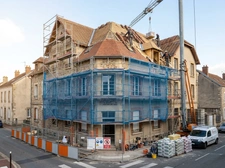
If the works have not yet been voted on, you can sell now: the buyer, informed in advance, will bear the cost once they become the owner. If a project has already been voted on at a general meeting but has not yet been paid for, the french law provides that the bill remains in principle your responsibility, even after the signing, unless otherwise agreed with the buyer through negotiation. Waiting for the vote can clarify things for everyone, but it delays your sale by several months, sometimes by more than a year. The right strategy therefore depends less on the general meeting calendar than on your personal situation, the amount of the works and your ability to negotiate intelligently with the buyer.
In summary
- Works voted on before the signing of the authentic deed (acte authentique) remain in principle the seller's responsibility, even if the call for funds arrives after the sale, unless the deed contains a clause to the contrary.
- Selling before the vote is neither prohibited nor even risky: the law only requires full and transparent information to be given to the buyer, through the condominium documents.
- The maintenance log, the last three general meeting minutes, the amount of the Alur works fund and, now, the multi-year works plan (PPPT) must be given to the buyer before the signing.
- It is often smarter to negotiate a tailored split with the buyer (adjusted price, shared responsibility) than to passively wait for a general meeting vote that can take months.
What the law really says about condominium works and the sale
Many owners imagine there is a simple rule along the lines of "whoever votes pays" or "whoever benefits from the works pays." That is not exactly how it works. The principle set out in the law of 10 July 1965, notably in Article 14-1, uses a precise criterion: it is the date on which the debt falls due that determines who must pay, not the date of the vote or the date of occupation of the property.
Works voted on before the signing: generally, the seller pays
In practical terms, if the general meeting has voted on works before you have signed the authentic deed of sale, the financial burden falls on you, even if the call for funds from the syndic arrives several weeks or several months after the keys have changed hands. This rule often surprises sellers, who are convinced that once the sale is completed, everything relating to the condominium becomes the new owner's concern. That is not the case for works that have already been voted on.
Works voted on after the signing: the burden shifts to the buyer
Conversely, once the authentic deed is signed and published, any decision subsequently taken at a general meeting falls to the buyer. One particular case is worth knowing about: if works are voted on between the signing of the preliminary sales agreement (compromis) and that of the final deed, they fall in principle to the buyer, provided that the seller has given them a proxy to represent them at that meeting. This mechanism, often poorly anticipated, deserves to be addressed with your notary and your adviser from the drafting of the compromis.
The expert's view
"In the field, I regularly see sellers panic as soon as they hear about a façade renovation or a roof repair in their condominium, as if it doomed their plan to sell for the next two years — and that is rarely the case. What really makes the difference is not waiting for everything to be voted on and paid for before putting the property on the market, but being able to explain the situation clearly to a buyer from the first viewing, with figures and documents to back it up. A buyer who understands exactly what they are paying, why and when, negotiates far more calmly than a buyer who discovers a general meeting minute three days before the signing. I have supported sales where the works project, well presented and intelligently built into the price, became a selling point rather than an obstacle: a building that invests in its maintenance and energy performance is a building that gains value over time, not the opposite."
Selling before the works are voted on: what really changes
Nothing legally prevents you from selling a unit while a works project is still under study, under discussion within the condominium council, or even already on the agenda of an upcoming general meeting. It is neither prohibited nor particularly risky from a legal standpoint, provided that you comply with a simple but strict obligation: informing the buyer.
The duty to inform leaves no room for improvisation
Since the Alur law, the seller of a condominium lot must provide the buyer, no later than the signing of the preliminary sales agreement, with a complete file: the co-ownership regulations (règlement de copropriété), the minutes of the last three general meetings, the building's maintenance logbook, the amount of current charges and of charges outside the forecast budget, as well as the amount of the works fund set up under the Alur law. If a major works project already appears on an agenda or in a quote reviewed by the co-ownership council (conseil syndical), the buyer must be informed of it, even if nothing has yet been voted on.
The new challenge: the multi-year works plan (PPPT)
Since 1 January 2025, the obligation to draw up a multi-year works plan has been extended to all residential co-ownerships more than 15 years old, with a phased timetable depending on the size of the building. This document schedules over ten years the work needed to preserve the building, ensure the safety of its occupants and maintain its energy performance. Where one exists, it must be included in the file given to the buyer, and honestly, it is better to highlight it than to hide it: a well-constructed PPPT reassures more than it worries, because it shows that the co-ownership is anticipating rather than simply reacting.
Waiting for the vote: the real advantages and the real drawbacks
Some sellers prefer to opt for total clarity and wait until the works have been voted on, costed and apportioned before putting their property on the market. It is a defensible strategy, but it has a cost, particularly in terms of time.
What you gain
Once the vote has been passed, everything becomes clear: the exact cost of the works, each lot's share, the completion schedule. You can then present a "clean" file to the buyer, with no grey areas, which often makes negotiation easier and reassures more cautious buyer profiles, in particular first-time buyers who fear unpleasant surprises.
What it costs you
The time between a project being placed on the agenda and its actual approval can stretch over several months, sometimes more than a year if the project requires several quotes, an additional technical study or a second general meeting for lack of a sufficient majority. In the meantime, your life plans are on hold, the market moves, and nothing guarantees that conditions will be more favourable in a year than they are today. It is a real trade-off to weigh with your adviser, depending on how urgently you need to sell.
The practical tip
- Ask the property manager (syndic) for an advance état daté and the latest general meeting minutes as soon as you are considering selling, not at the last minute.
- Have the planned works projects costed, even on an indicative basis: an approximate figure is better than a total unknown when it comes to reassuring the buyer.
- Include the amount of the available Alur works fund in your sales pitch: it is a real financial asset for the buyer.
- Propose a customised apportionment clause in the preliminary sales agreement rather than relying solely on the default legal rule.
- Have your property valued taking into account the real impact of the upcoming works, rather than ignoring it or overestimating it.
The real impact of works on the sale price
A works project that has been voted on or is under discussion is not necessarily bad news for your sale price. It all depends on the nature of the works, their cost and the way you present them.
Works that worry versus works that reassure
A mandatory façade renovation, an elevator upgrade to meet current standards or a roof repair may be seen by the buyer as a future expense, and therefore prompt a request for a price reduction. But energy renovation works, particularly those partly funded by aid schemes such as MaPrimeRénov' Copropriété, are increasingly viewed positively, because they anticipate future regulatory obligations concerning energy-inefficient buildings ("passoires thermiques") and enhance the building's value over the long term.
How to factor the works into your negotiation
The best approach is often to adjust the asking price to reflect the real cost of the upcoming works, rather than hoping the buyer will not ask questions. A buyer who is informed from the viewing onwards negotiates on a clear basis; a buyer who discovers an alarming set of minutes during the preliminary agreement phase negotiates with mistrust, or even withdraws. Your adviser can help you look at comparable property listings in your area to assess whether the local market readily absorbs this type of works into the price.
Energy audit and collective DPE: what has changed recently
The regulatory landscape surrounding the energy performance of co-owned buildings has changed considerably in recent months, and it is important to understand it before selling.
The collective DPE, now mandatory for most co-ownership properties
Since 1 January 2025, the collective energy performance diagnostic (DPE) has been mandatory for co-ownership properties with more than 200 units, as well as for those with between 50 and 200 units. Co-ownership properties with fewer than 50 units will fall under this obligation from 1 January 2026. This collective diagnostic is in addition to the individual DPE for your unit and gives the buyer an overall view of the building's energy performance, not just that of the apartment they are viewing.
The individual energy audit, mandatory only in certain cases
Contrary to a common misconception, a co-ownership property is not, as such, legally required to carry out an energy audit. This obligation primarily concerns single-family houses and single-owner buildings rated F or G that are put up for sale. In a co-ownership property, the energy audit remains recommended, notably to unlock financial aid, but it is mainly the collective DPE and the forthcoming multi-year works plan that currently structure the information provided to the buyer.
Preparing your sale properly when works are involved
Whether you choose to sell before or after the vote, careful preparation of your file makes all the difference to how smoothly the transaction goes.
Gather the right documents in advance
Request the documents from the syndic ahead of time: maintenance logbook, minutes of the last three general meetings, état daté, amount of the works fund, and the PPPT if there is one. A complete file from the moment the property is put on the market avoids back-and-forth that wastes time and sometimes loses buyers.
Work with a professional who knows your building and your area
Local support often makes the difference in calmly explaining the real situation of the co-ownership property to a potential buyer, without dramatising or downplaying it. If you do not yet have support, it may be useful to find a local real estate advisor who knows the specific features of your co-ownership property and its market.
Conclusion
There is no universal rule on whether to sell right away or wait for the vote on the works: it all depends on your situation, the scale of the project and your room for negotiation with a future buyer. What matters above all is transparency: a complete file, up-to-date documents and a clear explanation of the financial stakes are far more reassuring than a cautious silence that always ends up working against you. In most cases, it is perfectly possible to sell before the vote, provided you inform the buyer properly and adjust your price sensibly if necessary. Take the time to discuss it with a professional who knows your building before making a decision.
FAQ - Frequently asked questions
Can I sell my apartment if works have already been voted on but not yet paid for?
Yes, you can sell. The default rule is that works voted on before the signing of the authentic deed (acte authentique) remain your responsibility, even if the call for funds arrives after the sale. You may, however, negotiate a different allocation with the buyer in the preliminary sales agreement (compromis de vente).
What happens if the works are voted on between the compromis and the final deed?
In that case, the cost generally falls to the buyer, provided the seller has given them a proxy to represent them at that general meeting. This is a point to anticipate precisely with your notary.
Am I required to provide the PPPT to the buyer if there is one?
Yes. If your co-ownership property has a multi-year works plan, it must be included in the file given to the purchaser, along with the maintenance logbook and the latest minutes of general meetings.
Do co-ownership works systematically lower the sale price?
Not systematically. Well-anticipated energy renovation works can, on the contrary, add value to the building. However, heavy and poorly explained works can indeed weigh on the negotiation if the buyer discovers them too late.
How do I know whether I should wait for the vote before putting my property on the market?
It depends mainly on how urgently you need to sell and how far along the project is. If the vote is imminent and the amount has already been estimated, waiting may make the negotiation simpler. If the project remains vague or distant, it is better to sell now with full information rather than lose several months.
Are you thinking of selling? To find out the market value of your property, request a free estimate.
Also read on the blog
- Selling a property in a co-ownership: the mandatory documents and the role of the syndic
- Mandatory energy audit 2026: what changes for property owners
- What documents must be provided when selling a property?
Author of the publication

Fabrice DOBROWOLSKI, Director of the Optimhome network
«Benefit from myexpert advice, based on many years of experience in real estate, to ensure the success of your buying or selling project. »