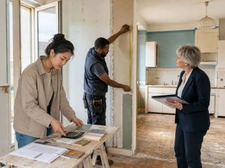
A property in need of refurbishment or major renovation can often be negotiated at a lower price than a home in perfect condition, making it attractive to buyers looking for a good deal.
However, this initial discount means very little if the renovation budget is poorly estimated before signing the preliminary sale agreement. To make buying a property to renovate financially worthwhile, you need to accurately estimate the cost of the work before making an offer, not afterwards.
This article explains a practical method for assessing the overall cost of a renovation project and making a more informed and secure purchasing decision.
In summary
- A property requiring renovation can offer genuine financial potential, but only if the renovation budget is carefully assessed before making an offer.
- Viewing the property with a building professional can help identify issues that may not be visible to an untrained eye.
- Obtaining estimates in advance for roofing, electrical work, insulation and plumbing is essential to avoid major budget overruns once work begins.
- The total cost—purchase price + renovation work + notary fees + additional expenses—should be compared with the property's estimated value once renovated to assess the true financial viability of the project.
- Renovation costs can often be incorporated into the main mortgage, while certain financial assistance schemes may be available for energy renovation work, subject to eligibility requirements.
- Asbestos and lead surveys, as well as unexpected additional costs, are among the most common pitfalls when purchasing a property to renovate.
Why a Property in Need of Renovation Can Be an Opportunity
A Lower Purchase Price as a Negotiating Advantage
A property requiring renovation will generally sell below the local market price, which is one of the main advantages of this type of purchase.
In principle, this discount reflects the cost of the work required. However, sellers rarely calculate this amount with complete accuracy.
It is precisely the difference between the discount reflected in the asking price and the actual cost of the renovation work that determines whether the project represents a worthwhile investment.
Before making an offer, it is useful to browse Optimhome property listings to compare the property you are considering with similar renovated and unrenovated properties in the same area.
Customisation: An Advantage That Comes with Risks
Beyond the purchase price, buying a property to renovate gives you the opportunity to create a home that meets your exact requirements, whether that involves changing the layout, selecting your own materials or potentially extending the property.
This freedom is particularly attractive for unusual properties such as farmhouses, mills or lofts, where the potential for transformation can be considerably greater than with a standard property.
The same principle applies from a seller's perspective: successfully marketing an unusual property with strong potential largely depends on helping buyers understand what renovation work could reveal and highlighting potential that may not yet be immediately visible.
From a buyer's perspective, however, this opportunity must be accompanied by a realistic assessment of the renovation budget. Customisation can quickly add to the cost of bringing a property up to standard, particularly when the original building presents specific technical, architectural or heritage-related constraints.
Estimating Renovation Costs Before Making an Offer: A Step-by-Step Method
View the Property with a Building Professional
The first rule when buying a property to renovate is to never rely solely on your own assessment during the viewing.
A tradesperson, project manager or architect can quickly identify warning signs that may go unnoticed by an untrained eye, such as damp at the base of walls, structural cracks, a weakened roof structure or an outdated electrical installation.
Ideally, this technical inspection should take place before you make an offer. It provides an initial estimate of the renovation budget and helps you avoid unpleasant surprises after signing.
If the property already shows visible defects that have not been addressed, it can also be useful to understand the process involved in selling a property with structural or maintenance issues. From a buyer's perspective, this helps you negotiate based on the actual cost of each issue rather than relying solely on the overall impression created during the viewing.
Obtain Quotes in Advance for the Main Structural Work
Once the main areas of concern have been identified, the second step is to obtain quotes from tradespeople or general contractors for the most expensive and important aspects of the renovation:
- Roofing: roof covering, roof structure and loft insulation;
- Electrical installation: bringing the system up to standard, electrical panel and wiring;
- Thermal insulation: walls, floors and windows;
- Plumbing: water supply, drainage and heating.
These four areas generally account for the majority of the budget in a major renovation project.
Obtaining at least two or three quotes for each area—even approximate ones at this stage—will help you produce a much more reliable estimate before committing to a purchase price.
It is also advisable to ask contractors to clearly distinguish between basic repairs and a full upgrade, such as enhanced insulation, bringing the electrical panel up to current standards or completely replacing an outdated plumbing system.
This distinction helps prevent certain costs from being underestimated by confusing a minimum repair estimate with a realistic renovation budget—one of the main causes of budget overruns when buying a property to renovate.
Calculating the Total Cost and the True Financial Viability of the Project
Calculating the Total Cost
To properly assess whether buying a property to renovate makes financial sense, you need to consider the total project cost, not just the purchase price.
The total cost includes:
- the negotiated purchase price;
- the total renovation budget, including a contingency allowance;
- notary fees, generally around 7% to 8% for an existing property in France;
- additional expenses, such as further surveys, moving costs, temporary accommodation during major renovation work and bank application fees.
For example, a property purchased for €180,000, with €60,000 of renovation work, €14,000 in notary fees and €6,000 in additional expenses, represents a total project cost of €260,000—significantly more than the advertised purchase price alone.
Compare the Total Cost with the Property's Value After Renovation
Once you have calculated the total project cost, you should compare it with the property's estimated market value after the renovation work has been completed, using comparable transactions in the same area.
If the total cost exceeds the market value of a similar property that has already been renovated, the project loses its financial appeal, even if the initial asking price appeared attractive.
To make this comparison more objective, you can use Optimhome's online property valuation to estimate how the property could be valued once the work is complete, based on the local property market and comparable properties.
This step is particularly important if you are planning to resell the property shortly after renovation, as it allows you to check whether the expected margin actually exists before committing to the purchase.
Once the renovation is complete, the final value achieved will also depend on how the property is presented. Professional photography can play an important role in showcasing the results of the renovation and helping you achieve the expected added value when the property is eventually resold.
Financing Renovation Work: Renovation Loans and Energy-Efficiency Grants
Including Renovation Costs in Your Main Mortgage
In most cases, renovation costs can be incorporated directly into the main mortgage through a dedicated renovation budget added to the amount borrowed for the property purchase.
This approach has the advantage of allowing you to negotiate a single interest rate and make a single monthly repayment, rather than combining a mortgage with a separate renovation loan, which is often more expensive.
The bank will generally ask to see the quotes obtained beforehand in order to approve the amount allocated to the renovation work. This makes it even more important to estimate the cost of the work accurately before making an offer.
MaPrimeRénov' and Other Schemes: Check Your Eligibility
Public financial assistance is available to help finance certain energy-efficiency improvements, particularly through the MaPrimeRénov' scheme and preferential-rate loans designed to improve a property's energy performance.
Eligibility requirements and available amounts change regularly and depend on specific criteria, including household income, the type of work being carried out and the targeted improvement in energy performance.
It is therefore essential to check your individual circumstances with the relevant official organisations before including any financial assistance in your financing plan.
As a general rule, these grants should be considered an additional contribution that can reduce the overall cost of the project, not a guaranteed amount to include in your initial profitability calculation.
Surveys and Common Pitfalls You Should Not Underestimate
Asbestos, Lead and Technical Surveys
Before purchasing an older property, the mandatory surveys should be reviewed carefully, particularly those relating to asbestos and lead for properties built before the relevant regulatory dates.
The presence of asbestos in a roof or lead in old paintwork can significantly increase renovation costs because specialist—and potentially expensive—removal procedures may be required.
These factors must therefore be included in the overall renovation budget before making an offer, rather than being discovered once work has already begun.
Unexpected Costs and Renovation Timescales
Even with reliable quotes, it is generally advisable to include a contingency allowance of 10% to 20% of the renovation budget to cover unexpected costs.
These could include a structural issue discovered after opening up a wall, additional work required to bring the property up to standard or an increase in the price of building materials.
The renovation schedule deserves the same level of attention. Major renovation projects often take longer than initially expected, which can directly affect your budget if you need to continue paying rent or a bridging loan while the work is being completed.
Factoring both unexpected costs and potential delays into your calculations from the outset can prevent an attractive opportunity from turning into a financially challenging project.
Work with an Optimhome Real Estate Advisor to Secure Your Renovation Project
Given the complexity of this type of purchase, working with a local professional can often make the difference between a genuine opportunity and a poorly assessed project.
A local Optimhome real estate advisor understands property prices in the area, can direct you towards trusted building professionals and can help you negotiate the purchase price based on a realistic estimate of the renovation budget.
Optimhome's services for buyers are specifically designed to provide support throughout the process, from searching for the right property through to finalising the financing.
You can also contact a local Optimhome real estate advisor to obtain an independent perspective before committing to an offer.
Conclusion
Buying a property to renovate can represent a genuine financial opportunity, provided that you never make an offer before carefully estimating the cost of the work.
- Have the property inspected by a building professional before making your offer.
- Obtain quotes in advance for the main areas of work: roofing, electrical systems, insulation and plumbing.
- Calculate the total cost of the project and compare it with the property's estimated market value once renovated.
- Include a contingency allowance for unexpected costs and potential renovation delays.
- Carefully review asbestos and lead surveys before committing to the purchase.
- Seek professional support to secure every stage of your project.
FAQ
How Can You Tell Whether a Property to Renovate Is Really a Good Investment?
You need to compare the total project cost—purchase price, renovation work, notary fees and additional expenses—with the property's estimated value once renovated, based on comparable transactions in the same area.
If the total cost exceeds the market value of an equivalent property that has already been renovated, the project is not financially worthwhile, regardless of how attractive the initial asking price may appear.
Should You Get Renovation Quotes Before or After Signing the Preliminary Sale Agreement?
It is strongly recommended to obtain renovation estimates before making an offer or, at the very latest, before signing the preliminary sale agreement.
This allows you to adjust the purchase price according to the actual renovation budget and avoid discovering a financial imbalance once you have already committed to the purchase.
Can Renovation Costs Be Included in the Main Mortgage?
Yes. In most cases, the renovation budget can be incorporated directly into the main mortgage, avoiding the need to take out two separate loans.
The bank will generally ask for the quotes obtained beforehand to approve the renovation budget, which is why it is important to have them available before finalising the financing.
Does MaPrimeRénov' Apply to All Renovation Work?
No. Schemes such as MaPrimeRénov' primarily target energy-efficiency renovation work that meets specific requirements.
Eligibility depends on factors including household income and the type of work planned. It is essential to check your situation with the relevant official organisations before including a specific amount of financial assistance in your financing plan.
How Much Contingency Should You Allow for Unexpected Renovation Costs?
A contingency allowance of 10% to 20% of the renovation budget is generally recommended to cover additional costs resulting from unexpected issues discovered during the work, such as structural problems or further work required to bring the property up to standard.
This contingency should be included in your initial profitability calculation before making an offer.
Are Asbestos and Lead Surveys Mandatory Before Purchasing a Property?
Yes, for properties built before the relevant regulatory dates, these surveys must be provided by the seller before the sale.
Their findings should be reviewed carefully, as the presence of asbestos or lead can significantly increase both the cost and duration of the renovation work required.
Can a Real Estate Advisor Help Estimate the Renovation Budget?
A real estate advisor does not personally prepare technical quotations for renovation work. However, they understand the local market and can direct you towards reliable building professionals and the appropriate contacts for financing.
They can also help assess the purchase price in relation to local market values, providing useful additional context alongside the renovation estimates prepared by contractors.
Author :

Fabrice DOBROWOLSKI - Optimhome Network Development Director
Optimhome offers you personalized support for your real estate project. Benefit from all my advice, based on several years of experience, to ensure the success of your project.