When preparing a property for sale, one question often comes up: is it better to sell a home empty or furnished to maximise your chances of a successful sale?
The furniture present during viewings directly influences buyers' perception of the price, the speed of the transaction and the overall impression the property makes.
This article examines the advantages and disadvantages of each option and clearly distinguishes furnishing for marketing purposes from the legal status of a furnished rental, which is governed by an entirely different framework. You will also find practical recommendations depending on the type of property and the local market.
Key Takeaways
Selling a property empty or furnished has nothing to do with its legal status as a furnished rental: here, we are simply referring to the presence of furniture during viewings for marketing purposes.
A furnished property helps buyers imagine themselves living there and showcases the proportions of the rooms, but furniture that is too distinctive can put buyers off or conceal defects.
Light home staging—decluttering and depersonalising—is often more cost-effective than fully furnishing a property.
An empty property can feel cold and require more imagination from buyers, potentially increasing the time needed to sell.
Selling a property with furniture included in the purchase price, such as a second home or investment property, is a separate contractual choice and should not be confused with selling a property subject to an existing furnished tenancy.
The right choice depends on the type of property, local market conditions and the budget available for presentation.
Selling Furnished for Marketing Purposes: What Does It Really Mean?
It is important to clarify a common misunderstanding from the outset.
When we talk about selling a home empty or furnished in the context of putting it on the market, we are not referring to the legal status of a furnished rental.
We are simply referring to whether furniture and decorative items are present in the property during viewings for the purpose of showcasing the home.
A Purely Visual and Marketing Choice
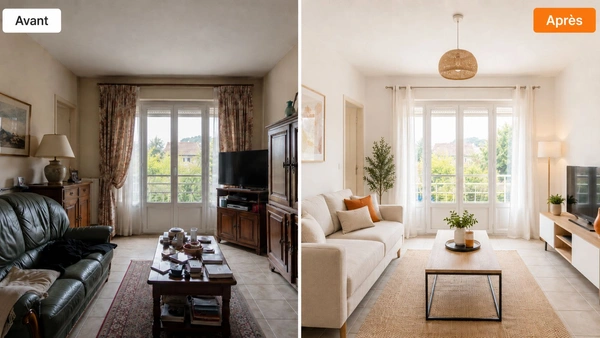
Whether the property is still occupied, has been vacant for several months or has just been emptied by its previous occupants, the seller—or their advisor—may decide to install a minimum amount of furniture for viewings: a sofa, table, lighting and a few decorative touches.
This furniture has no particular contractual significance.
As a general rule, it is not included in the sale price and is removed by the seller or home-staging provider once the transaction has been completed.
Do Not Confuse It with a Furnished Tenancy
This distinction is important because the two situations are often confused.
A property presented with furniture to make it more attractive during viewings has nothing to do with a property rented to a tenant under a furnished tenancy agreement.
If the property is occupied by a tenant under an existing furnished lease, the sale is subject to different rules, particularly regarding notice periods and termination of the tenancy.
The Advantages of Furnishing a Property for Viewings
Presenting a property with furniture, even minimally, offers several practical advantages during viewings.
Helping Buyers Imagine Themselves Living There
An empty space requires buyers to imagine the potential layout themselves: where the sofa could go, whether the bedroom can accommodate a double bed or whether the living room is genuinely functional.
Not everyone finds this easy.
Even a sparsely furnished property reduces this mental effort and makes it easier for most visitors to imagine their own life in the space.
Showcasing Space and Proportions
Without any points of reference, an empty room may appear smaller or larger than it actually is, which can distort a buyer's perception.
A few carefully selected pieces of furniture provide a sense of scale and help buyers understand how people can move through the space, the true size of a bedroom and how much furniture a living room can accommodate.
An Effect That Extends to Photos and Virtual Tours
The benefits of good presentation are not limited to physical viewings.
They directly affect the quality of the photographs and virtual tours published online, which are often a buyer's first contact with the property.
This first visual impression can play an important role in whether someone clicks on the listing, arranges a viewing and ultimately considers buying the property.
The Limitations and Risks of Furnishing a Property for Sale
Furniture is not a miracle solution and comes with several potential disadvantages that should be considered.
Furniture Will Not Appeal to Everyone
The main risk of overly distinctive furnishings—bright colours, a highly personal style or dated furniture—is that some visitors may be put off before they even focus on the property itself.
Neutral and understated furniture, on the other hand, leaves more room for buyers to imagine their own style.
Furniture should therefore remain simple and broadly appealing rather than imposing a strong personal aesthetic.
The Risk of Appearing to Conceal Defects
A sofa positioned in front of damp marks, a rug covering damaged flooring or a bookcase hiding a crack can all be interpreted by a cautious buyer as attempts to conceal defects, even if this was not the intention.
If the property has visible problems, it is better to deal with them transparently rather than trying to hide them behind furniture.
Transparency helps preserve buyer confidence and reduces the risk of complications later in the transaction.
Costs and Logistics Should Not Be Overlooked
Fully furnishing a property for the entire marketing period involves costs such as furniture rental, transport and insurance.
These expenses are not always justified by the potential improvement in the final sale price.
The cost should therefore be considered in relation to the expected marketing period and type of property.
It may make sense for a high-end property that has remained empty for several months, but much less so for a studio apartment likely to sell within a few weeks.
Selling with Furniture Included in the Purchase Price
There is one situation in which "selling furnished" has genuine contractual significance: when the furniture is explicitly included in the sale price.
Second Homes and Investment Properties
This is common for second homes, such as mountain chalets or coastal apartments, which may be sold with all their furniture and equipment.
It can also apply to furnished rental investment properties sold with the existing furniture to ensure continuity for the new owner.
In these situations, the furniture included in the transaction should be listed precisely, generally in an appendix to the preliminary sale agreement, to avoid disputes over what stays and what is removed.
A Possible Impact on the Allocation of the Sale Price
When valuable furniture is included, the parties may agree to allocate part of the overall purchase price to the furniture rather than entirely to the property itself.
This allocation must remain realistic and proportionate to the actual value of the furniture to avoid being challenged or reclassified.
This technical point is one reason why professional support can be useful when drafting and incorporating the relevant clause into the preliminary sale agreement.
Do Not Confuse This with an Existing Furnished Tenancy
Again, this contractual situation is completely separate from selling a property occupied by a tenant under a furnished tenancy agreement.
In the latter case, it is the property's rental status—not its presentation for marketing purposes—that determines how the transaction is handled and what rights the existing tenant has.
Light Home Staging: Often More Cost-Effective Than Fully Furnishing
Between a completely empty property and a fully furnished one, a third option often provides the best results: light home staging.
Declutter First
The first—and often most cost-effective—step is to declutter.
Remove unnecessary objects, excess furniture, piles of paperwork, clothing or anything else that creates an impression of limited space.
This costs virtually nothing and can usually be done by the seller within a few days.
Depersonalise Without Making the Property Feel Sterile
The second step is to depersonalise the rooms by removing family photographs, highly personal collections and, where possible, very distinctive paint colours.
The aim is not to make the property completely impersonal, but to help buyers imagine themselves living there rather than feeling as though they are visiting someone else's home.
A Generally Better Cost-Benefit Ratio
Decluttering and depersonalising a living room may require only a few hours of work and perhaps temporary storage costs.
Fully furnishing the same space with rented furniture, by contrast, can involve a significant monthly expense.
For most properties, particularly medium-sized apartments, light home staging therefore offers a better balance between the amount invested and the impact on buyers' perception of the property.
Impact on Selling Time: Empty, Furnished or Home Staged?
The choice between selling a home empty or furnished can also affect how quickly an offer is received.
An Empty Property Can Feel Cold
A completely empty property, particularly if it is large or has an unusual layout, may feel cold or impersonal.
Buyers who find it difficult to visualise spaces may need several viewings or may even decide against the property because they cannot imagine how to use the rooms.
This can increase the time required to sell, particularly for family homes or properties with many rooms.
Tastefully Furnished Properties Can Speed Up Decision-Making
Conversely, a property that is clean, tastefully and simply furnished and carefully presented generally reassures buyers about its overall condition and makes it easier for them to reach a decision.
This effect can be particularly important when a property is currently being used below its full potential—for example, a small room being used as storage—because suitable furniture can immediately demonstrate how the room could actually be used.
The Local Market Remains the Deciding Factor
The impact of furniture must always be considered in the context of local market conditions.
In a highly competitive market where properties sell within a few weeks regardless of their presentation, furniture is unlikely to have a major impact on selling time.
In a slower market, where buyers compare several properties before making a decision, good presentation can make a genuine difference to how quickly a sale is agreed.
Work with an Optimhome Real Estate Advisor
Choosing between selling empty, furnished or using light home staging depends on many factors specific to the property and its local market.
An external and objective opinion can therefore be particularly useful.
An Objective Outside Perspective
It is often difficult to assess your own home objectively.
What feels warm and welcoming to the owner may appear dated or overly personal to a potential buyer.
Working with a local Optimhome real estate advisor provides an impartial assessment of how the property is presented, based on the expectations of buyers in your local area.
A Valuation Based on the Property's Actual Condition
Before deciding whether to invest in furniture or home staging, it is useful to understand the property's starting value.
An online property valuation can provide an initial indication before refining the valuation with an advisor who visits the property in person.
Use Existing Property Listings for Inspiration
Comparing your property with Optimhome advisors' property listings already on the market can provide a practical idea of what works visually in your local area, whether you are selling a studio, family home or unusual property.
This can help determine the right level of presentation before putting the property on the market.
Conclusion
There is no universal answer to whether it is better to sell a home empty or furnished, but several principles can help guide your decision:
Furniture used during viewings is a marketing choice and has nothing to do with the legal status of a furnished rental.
Tasteful, neutral furniture helps buyers visualise the property and understand the proportions of the rooms, while overly distinctive furniture can work against the sale.
Light home staging—particularly decluttering and depersonalising—generally provides the best cost-benefit ratio.
An empty property can feel cold and potentially take longer to sell, particularly when it is a large family home.
Local market conditions remain the most important factor in determining the actual impact of furniture.
Professional advice can help determine the most appropriate strategy for the property and its location.
FAQ
Do You Have to Furnish an Empty Property to Sell It Faster?
No, not necessarily.
In a highly competitive market or for a small property that is easy to visualise, an empty home may sell without difficulty.
Light home staging is more useful when the property is large, unusual or has remained vacant for several months.
Is the Furniture Used During Viewings Included in the Sale Price?
As a general rule, no.
Furniture installed solely to showcase the property during viewings is removed by the seller or home-staging provider after completion.
It should only be included in the purchase price if this is explicitly agreed and detailed in the preliminary sale agreement.
What Is the Difference Between Selling Furnished and Selling a Furnished Rental Property?
Selling furnished in the context of this article simply means presenting the property with furniture during viewings. It has no connection with a tenancy agreement.
Selling a furnished rental property means that the home is occupied by a tenant under a furnished tenancy agreement, which involves specific rules regarding notice periods and termination.
Is Light Home Staging Really More Cost-Effective Than Fully Furnishing a Property?
In most cases, yes.
Decluttering and depersonalising cost relatively little and can already significantly improve buyers' perception of the property.
Renting a complete set of furniture, on the other hand, creates a recurring expense that may not always be justified by the improvement in the final price or selling time.
Can You Hide a Property Defect with Furniture?
This is not recommended.
A defect concealed by furniture may be discovered during a second viewing or survey, making the buyer feel misled and potentially damaging trust during negotiations.
Existing problems should instead be disclosed transparently.
Does a Completely Empty Property Always Sell for Less?
Not necessarily for less, but it may sometimes take longer to sell.
Some buyers find it more difficult to imagine themselves in an empty space.
The impact on the final sale price depends primarily on the property's overall condition and the local market rather than simply on whether furniture is present.
How Do I Know Whether My Property Needs Furniture or Simply Decluttering?
The easiest approach is to ask a professional who regularly visits and sells similar properties in your area.
A local Optimhome real estate advisor can assess the type and condition of the property and determine whether simple decluttering is sufficient or whether adding a few carefully selected pieces of furniture would genuinely improve the presentation during viewings.
Author :

Fabrice DOBROWOLSKI - Optimhome Network Development Director
Optimhome offers you personalized support for your real estate project. Benefit from all my advice, based on several years of experience, to ensure the success of your project.