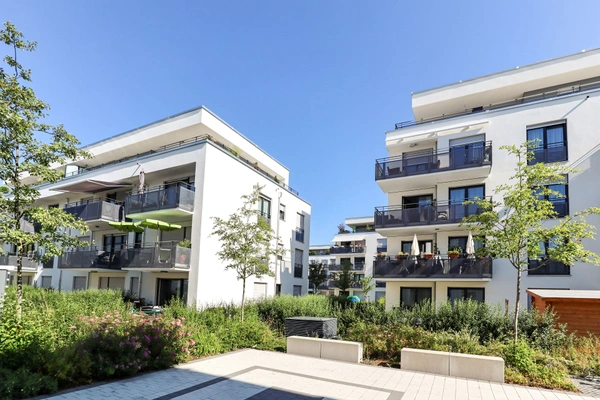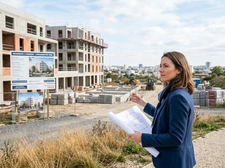
Yes, buying off-plan in a neighbourhood that is still under construction can be an excellent deal, provided you fully understand what you are signing. The sale of property in its future state of completion (VEFA) is regulated by law and protected by solid guarantees, such as the financial completion guarantee and the structural damage insurance (assurance dommages-ouvrage). The real challenge is not legal but human: living for several months, sometimes several years, in an environment that is still being built, without shops, without finished transport links and without total certainty about the atmosphere of the future neighbourhood. It is a bet on the future that can very well turn into an excellent property investment, provided you choose the right programme, in the right location, with the right guarantees.
In summary
- Buying off-plan (VEFA) often allows you to obtain a new home at a lower price than at delivery, with reduced notary fees and sometimes a 5.5% VAT rate in an ANRU zone.
- The main risk is not financial but environmental: living for several months in a neighbourhood still under construction, without fully operational shops or transport links.
- The law robustly protects the buyer through the financial completion guarantee (GFA) and the structural damage insurance (assurance dommages-ouvrage), but it does not cover mere delivery delays.
- Surrounding yourself with the right people, studying the urban development plan and being supported by a local professional remains the best way to secure this type of purchase.
What exactly is an off-plan purchase?
In practical terms, when you buy under a VEFA, you sign for a property that still exists only on a plan and in a 3D model. The developer undertakes to build the building in accordance with the technical specification you have approved, and you pay as the works progress, not all at once. It is a very different mechanism from a conventional purchase, and it deserves to be properly understood before you commit.
The payment schedule, step by step
The law strictly regulates the staging of payments in order to protect you: around 35% on completion of the foundations, 70% when the building is watertight, 95% on completion of the works, and the 5% balance on delivery, which you may moreover withhold in escrow if reservations are raised. This system prevents the developer from collecting the entire price before having delivered anything, which is already, in itself, a genuine safeguard for the buyer.
Reservation, final contract: don't rush the steps
Before the notarised deed (acte authentique), you sign a reservation contract with a security deposit capped by law. Take the time to read the descriptive notice in detail: materials, specifications, fittings. This is the document that will prevail in the event of a dispute over the quality of the finish delivered, far more than the programme's sales brochure.
A neighbourhood that doesn't exist yet: what are the real risks?
This is often where the shoe pinches, and it is exactly the question posed in the title of this article. Buying a new apartment in a mixed-use development zone (ZAC) or an eco-neighbourhood in the making means buying a finished home in an environment that is not yet finished. For months, sometimes two or three years, you may find yourself alone or almost alone in your building, surrounded by cranes, construction hoardings and still-vacant plots of land.
The absence of shops, schools and transport
This is the point that comes up most often with my clients who have taken the plunge. The bakery promised in the sales brochure may take years to open. The announced tramway line may be delayed, or even postponed. Before signing, I always advise consulting the ZAC creation file at the town hall: it details the provisional timetable for public facilities, and it is often more reliable than the promises of the developer's sales department.
Future appreciation, an unknown to be accepted
Conversely, this is also what makes the bet worthwhile: well-designed new neighbourhoods generally gain in value once they reach maturity, because they attract families, shops and a neighbourhood life. But nothing is guaranteed. Some programmes struggle to fill up, sales drag on, and the atmosphere promised in the brochure takes time to materialise. It must be accepted as a part of deliberately assumed uncertainty, not as a secondary detail.
The expert's view
"In more than twenty years in the field, I have seen off-plan buyers absolutely delighted five years on, in neighbourhoods that have become lively and sought-after, with a real capital gain on resale, and I have seen others, fortunately rarer, stuck in programmes where the second phase of works never started and where the promised neighbourhood never materialised as advertised; the difference between the two is almost never down to chance, it comes down to the strength of the developer, the real progress of the programme's sales at the time of signing, and the buyer's ability to look ahead with clear eyes rather than with their gaze fixed on the ultra-flattering 3D model shown to them in the showroom; my advice is always the same: go and walk the vacant lot before signing, imagine yourself living there for an entire winter with no open shop within ten minutes, and if you can still say yes after that, then the bet has a good chance of being the right one."
The guarantees that protect the buyer in a VEFA
This is the great advantage of the VEFA (off-plan sale) compared with a self-promotion purchase or a poorly managed construction project: French law regulates this type of sale in a way that is very protective of the buyer, far more than is often imagined.
The financial completion guarantee (GFA)
Even before the deed of sale is signed, the developer is required to take out a financial completion guarantee (garantie financière d'achèvement), or failing that a guarantee of reimbursement of the sums paid if the programme cannot be completed. In plain terms, if the developer goes bankrupt during construction, this guarantee ensures either that the works are continued and finished by a third party, or that you are reimbursed in full for what you have already paid. It is an essential safety net, and that is precisely why you should always check that this guarantee appears in black and white in your contract.
Dommages-ouvrage insurance and statutory guarantees
Once the property is delivered, you benefit from the guarantee of perfect completion (garantie de parfait achèvement) for one year, the two-year guarantee (garantie biennale) on equipment for two years, and the ten-year guarantee (garantie décennale), which covers defects affecting the structural soundness of the building for ten years. Dommages-ouvrage insurance, for its part, allows you to be compensated quickly in the event of a loss covered by the ten-year guarantee, without waiting for a court decision against the builder. However, keep in mind that none of these guarantees covers a mere delay in delivery as such: this is a point that many buyers discover too late.
Delivery schedule, construction delays: what to expect
Let's be honest with each other: a construction project that meets its delivery date to the month is more the exception than the rule. Between weather hazards, difficulties in sourcing materials and tensions in the construction labour market, a delay of a few weeks to a few months has almost become the norm on many programmes in 2025 and 2026.
What the contract really says about deadlines
Legally, there is an important nuance that few buyers know about: the delivery deadline stated in the contract is often accompanied by a grace period clause, generally of one to three months, which allows the developer to slightly exceed the announced date without being at fault. Beyond this grace period, and if the delay is not justified by a case of force majeure, you can in principle claim late-delivery penalties provided for in the contract, or even bring an action for breach of contract within five years from the scheduled delivery date.
How to plan concretely for a schedule slippage
My advice from the field: never time the sale of your current home, the termination of your lease or your children's move exactly to the announced delivery date. Always build in a safety margin of three to six months. It is frustrating to hear, I know, but it is what best spares you stress and unpleasant financial surprises when the time comes.
The practical tip
- Ask the developer for the programme's actual sales rate before signing: a rate below 50% a few months before works begin is a signal to take seriously.
- Consult the ZAC file at the town hall to find out the official timetable for public facilities (schools, transport, shops), which is more reliable than the sales brochure.
- If possible, negotiate a reinforced late-delivery penalty clause in your reservation contract.
- Visit the construction site regularly, or be accompanied by a professional who already knows the developer and its local reputation.
- Always keep a margin of three to six months between the announced delivery date and your personal commitments (sale, lease, move).
Taxation and new-build prices in 2026: is it the right time to buy?
This is the question everyone asks me in meetings, and the honest answer is: it depends mostly on your project, but the 2026 context has several arguments in its favour.
Tax advantages that remain real
Notary fees on new-build properties are around 2 to 3% of the price, compared with 7 to 8% on existing properties, which represents a significant immediate saving. And if the programme is located in an ANRU zone, in a priority neighbourhood under urban policy (quartier prioritaire de la politique de la ville), or within 300 metres of its boundaries, VAT can drop to 5.5% instead of 20%, subject to income and price ceiling conditions. On an apartment priced at €200,000 excluding tax, the difference between the two rates can represent nearly €29,000 in savings, which really changes the picture for a tight budget.
A market that is stabilising, favourable to negotiation
In terms of prices, the new-build market continues its adjustment in 2026: prices remain broadly stable or even slightly down depending on the region, with strong local disparities, some areas rising significantly while others decline. The volume of reservations, for its part, has dropped markedly compared with previous years, which mechanically gives the buyer more room to negotiate on the price, on the included features, or on the offered kitchen furniture. This is the kind of context where, with good support, you can obtain genuinely advantageous terms.
How to secure your purchase in an up-and-coming neighbourhood
Fundamentally, the question is not so much "should you buy off-plan" as "how to buy off-plan intelligently". Here is how I approach the subject with my clients in the field.
Study the urban project as a whole, not just the unit
Before becoming attached to your future apartment, look into the overall development project: who the developer-planner (aménageur) is, what the timetable for the successive phases is, how many homes are planned in total, and which public facilities are actually funded and budgeted. A neighbourhood backed by a solid local authority and an experienced planner has statistically far better chances of being completed on schedule than a project led by a single small, isolated developer.
Get support rather than going it alone
This is perhaps the most useful piece of advice in this article: do not stay alone when facing a reservation contract of several dozen pages. An advisor who knows the area generally already knows which developers meet their deadlines locally, and which neighbourhoods are truly gaining momentum and which are stagnating. They can also help you objectively compare this new-build project with an alternative among existing properties, or estimate your current property if its resale is to finance this new purchase. Take the time to find a local real estate advisor who truly knows the target area, its players, its history and its ongoing development projects.
Compare before committing
Finally, before signing anything, compare several programmes and several neighbourhoods. Spend time browsing the property listings for new-build and existing properties alike in the same area; this often helps to put into perspective a price that looked attractive on paper, or conversely to confirm that the opportunity is real.
Conclusion
Buying off-plan in a neighbourhood that is still under construction is neither an automatic stroke of genius nor a trap to be avoided at all costs: it is a project that requires method, patience and a little perspective. The statutory guarantees protect the buyer well on the financial and technical front, but they do not protect against waiting, against a neighbourhood that takes time to find its rhythm, or against a construction delay that disrupts your personal plans. With a solid developer, an urban project backed by serious players and quality support, this type of purchase remains one of the best ways to build up a new-build asset that meets current standards, often at a price that is still reasonable before the neighbourhood reaches its full value. The key, as is often the case in real estate, lies less in the property itself than in the quality of the preparation beforehand.
FAQ - Frequently asked questions
Can you visit the home before delivery in a VEFA?
Yes, most developers organise a so-called "partition" visit (visite « cloisons »), at an advanced stage of construction, which allows you to check the actual volumes and the layout of the rooms. Some also offer an intermediate visit when the partitions are being installed or before the finishing work, but this is not systematic: do not hesitate to ask for it in writing in your reservation contract.
What happens if the developer goes bankrupt before the construction is completed?
This is exactly the situation covered by the financial completion guarantee (garantie financière d'achèvement, or GFA), which is mandatory in a VEFA (off-plan sale). Depending on the type of guarantee taken out, either a financial guarantor takes over the continuation and completion of the works, or you are fully reimbursed for the sums already paid. Always check that this guarantee is expressly mentioned in your deed of sale.
Can you resell a property bought off-plan (VEFA) before delivery?
It is legally possible, but rarely advantageous: this is known as an assignment of the reservation contract or an off-plan resale, a more complex transaction than a standard resale and often valued less by buyers, who generally prefer to view a finished property rather than a construction site in progress. Where possible, it is better to wait until actual delivery in order to resell under good conditions.
How can you tell whether a new neighbourhood has a real chance of developing properly?
Look at who is leading the development project (a local authority, or a recognised public or private developer), the sales rate of the first phases, and the actual timetable for public facilities set out in the ZAC (zone d'aménagement concerté, or joint development zone) file, which can be consulted at the town hall. A useful additional indicator is the presence of institutional investors or social housing providers in the programme, who generally only commit to sound urban projects.
Is it more advantageous to buy off-plan (VEFA) or an older property in 2026?
There is no universal answer: new-build offers reduced notary fees, VAT that is sometimes lowered in an ANRU zone, energy performance that meets current standards and a ten-year builder's warranty (garantie décennale), whereas older property often allows you to move in immediately in an already established neighbourhood, with a price per square metre that is generally lower for an equivalent surface area. The best approach remains to compare the two options concretely in your specific area before making a decision.
Author of the publication

Fabrice DOBROWOLSKI, Director of the Optimhome network
«Benefit from myexpert advice, based on many years of experience in real estate, to ensure the success of your buying or selling project. »