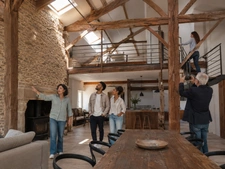
Industrial loft, converted mill, stone farmhouse or architect-designed house with unusual volumes: these properties fall outside the standard housing market and attract a particular type of buyer.
Selling an unusual property requires a different approach from selling a conventional apartment or house, as the usual market benchmarks do not always apply.
This article explains what defines an unusual property, how to value it correctly, how to showcase it and target the right buyers, as well as the technical points to anticipate. It also explains why working with an experienced real estate advisor can often make a real difference when selling this type of property.
Key Takeaways
An unusual property stands out because of its history, architecture or distinctive layout, such as a loft, mill, farmhouse or architect-designed house.
Valuation is more complex because there are fewer direct comparables: the property's value depends heavily on the potential perceived by each buyer.
Professional photography and careful presentation are essential to highlight the property's unique character.
Buyers of unusual properties often come from beyond the local market, meaning the listing should be advertised more widely.
The sales process is generally longer than average, requiring patience and an appropriate strategy.
Certain technical aspects, such as the roof structure, insulation and compliance following a change of use, require particular attention.
What Is an Unusual Property and Why Does It Appeal to Buyers?
An unusual property is defined by how much it differs from the standard housing that makes up most of the property market.
It may be a former industrial building converted into a home—such as a factory, warehouse or workshop transformed into a loft—a converted watermill or windmill, a farmhouse with outbuildings, an architect-designed house with unusual volumes or materials, or a property with a distinctive layout, such as an unusual duplex, semi-underground property, former chapel or converted barn.
What all these properties have in common is the absence of a close equivalent on the conventional property market.
This rarity is precisely what appeals to a niche group of buyers.
Buyers of unusual properties are often looking for a different living experience: large volumes, architectural history, high-quality materials such as stone, exposed beams or metal structures, or simply a setting that stands out from the ordinary.
These are not buyers who happen to visit the property among several others on a list. In many cases, they have been actively searching for this specific type of property for several months.
This particular type of demand directly influences the sales strategy, from the asking price to the choice of channels used to advertise the property.
There are also other categories of property that fall outside the conventional market benchmarks, such as selling commercial premises or selling a parking space or garage. In all these cases, the valuation method and target buyers differ significantly from those of a conventional home.
Valuing an Unusual Property: A Different Equation
The Problem of Limited Comparables
Valuing a conventional property relies heavily on the comparison method: looking at the sale prices of similar properties in the same area, with comparable floor areas and condition.
This method works less effectively for unusual properties because there is generally no genuinely comparable property nearby.
A converted mill or one-of-a-kind farmhouse cannot easily be compared with the neighbouring house, even if it is geographically close.
There are two risks: overvaluing the property based solely on its exceptional character, or undervaluing it by applying conventional criteria, such as a standard price per square metre, that fail to reflect its true value.
Value Depends on the Property's Perceived Potential
For an unusual property, value cannot be reduced to objective criteria such as floor area or location. It also depends heavily on the potential that each buyer sees in the property.
The same farmhouse may be valued very differently depending on whether a buyer sees it as an ambitious renovation project, a charming second home or an opportunity for a business such as a gîte, bed and breakfast or artist's studio.
It is precisely this subjective dimension that makes valuation more difficult and justifies working with a professional familiar with this type of property rather than relying solely on an automated valuation system.
An online property valuation provides a useful initial benchmark, but it should be supplemented by a detailed, personalised assessment of the property, its potential and its target market by a local professional.
In practice, it is advisable to combine several approaches: an assessment based on the value of the building and land, an analysis of the market for character properties at regional rather than purely local level, and the opinion of a professional who has previously handled similar sales.
Combining these approaches makes it possible to arrive at a realistic price that is neither too cautious nor disconnected from the reality of the market.
Showcasing the Property's Unique Character
Professional Photography: A Worthwhile Investment
For an unusual property, the quality of the listing's visuals plays an even more important role than for a conventional home.
The exceptional volumes of a loft, the exposed roof structure of a mill or the original materials of a farmhouse are rarely showcased effectively through smartphone photos taken in poor lighting conditions.
A professional photo shoot, potentially combined with a virtual tour, helps convey from the very first click what makes the property exceptional and attract buyers who might otherwise have overlooked the listing.
The impact of professional photography on a property sale is even greater for this type of property than for a standard home, as buyers need to imagine themselves in a space unlike anything they may have visited before.
Tell the Property's Story
Beyond the photographs, the listing description should explain what makes the property unique: its history—such as a former textile factory, 19th-century mill or family farmhouse—the architectural choices that define it and the different ways a future buyer could use it.
This narrative dimension, which is rarely necessary for a standard apartment, becomes a genuine selling point for an unusual property.
It allows buyers to develop an emotional connection with the property, which can often carry as much weight as practical considerations in their final decision.
Target the Right Buyers
An unusual property does not necessarily find its buyer within a few kilometres.
Unlike a conventional home, where demand is largely local—due to job relocation or proximity to work or family—the buyer of a mill, farmhouse or character loft may come from another region or even another country.
These buyers are often specifically looking for this type of property and may have been searching for a long time. They are therefore prepared to broaden their geographical search area to find it.
This means the listing strategy must be adapted accordingly. It is not simply a matter of advertising the property on local portals, but ensuring that it reaches a wider audience, particularly through Optimhome advisors' property listings, which benefit from national exposure.
Optimhome's property listings also include this type of character property, allowing these homes to be presented directly to an audience already interested in this particular segment of the market.
Targeting the right audience also means writing a description that speaks directly to the uses this niche clientele may be looking for: a lifestyle project, tourist accommodation business, creative studio or charming second home.
A Generally Longer Sales Process
As a general rule, you should expect an unusual property to take longer to sell than a conventional home.
The number of potential buyers interested in this type of property is naturally smaller, meaning it takes longer to find the person whose plans genuinely match what the property offers.
The process may take even longer if the property requires significant work or if its potential for improvement—conversion, extension or change of use—requires careful consideration by the buyer before making a decision.
This longer timeframe should not be seen as a negative signal or as a reason to rush into lowering the price.
It simply reflects the nature of the market for character properties: the aim is to wait for the right buyer rather than multiply viewings that are unlikely to lead anywhere.
Professional support can help manage this period by adjusting the marketing strategy where necessary—new photographs, highlighting a different potential use or making a targeted price adjustment—rather than simply reacting to the longer wait.
Technical and Regulatory Points to Watch
Roof Structure, Insulation and the Condition of Older Buildings
Unusual properties created through the conversion of older buildings—such as mills, farmhouses or former industrial sites—present specific technical issues that should be anticipated before putting the property on the market.
The roof structure, particularly in mills and barns, deserves special attention. Its condition can have a major impact on the property's value and may understandably raise questions from potential buyers.
Similarly, insulation is often a weak point in older buildings converted into homes, as the original materials and construction techniques were not designed to meet modern comfort standards.
Having a technical assessment carried out in advance, in addition to the mandatory surveys such as the DPE, asbestos and lead surveys depending on the age of the property, makes it possible to anticipate buyers' questions and avoid late-stage negotiations resulting from previously unidentified issues.
Compliance Following a Change of Use
Another essential point to check is the property's administrative compliance when it has undergone a change of use, for example from agricultural or industrial use to residential use.
This type of conversion normally requires planning permission, either through a prior declaration or a building permit depending on the extent of the work.
If the necessary procedures were not completed, this can complicate the sale.
Before putting the property on the market, it is essential to check that the required permissions were obtained and that the property's current use complies with what is—or should be—recorded in the relevant planning documents.
If this is not the case, it is preferable to regularise the situation beforehand rather than leave the issue unresolved. An informed buyer, or their notary, will inevitably pay close attention to this point during the sale.
Work with an Optimhome Real Estate Advisor Experienced in This Type of Property
Selling an unusual property requires different expertise from selling a standard home, both in terms of valuation and marketing strategy.
A local Optimhome real estate advisor experienced in this type of property can set the right asking price by taking into account both the property's rarity and its genuine potential, without overvaluing it because of the seller's emotional attachment or undervaluing it due to a lack of comparable properties.
They can also call on a network of professional photographers, direct the listing towards the most relevant channels for this type of buyer and qualify potential purchasers to avoid viewings by people without a genuine project.
Working with a professional also helps secure the technical and administrative aspects mentioned above: checking planning compliance, anticipating questions relating to the condition of the building and assisting with negotiations which, for this type of property, often focus as much on its potential as on its asking price.
This saves the seller time and provides greater peace of mind during a sale that generally requires more patience and method than a standard transaction.
Conclusion
Selling an unusual property—a loft, mill, farmhouse or architect-designed house—follows a different logic from selling a conventional home, both in terms of valuation and marketing.
The property stands out because of its rarity, history and lack of direct market comparables.
The valuation must take into account the potential perceived by the buyer, beyond floor area and location alone.
Professional photography and a carefully written description are essential to showcase the property's unique character.
The target audience often extends beyond the local market, so the listing strategy must be adapted accordingly.
A longer sales period should be anticipated without automatically resorting to a rushed price reduction.
Technical issues such as the roof structure, insulation and compliance following a change of use should be checked in advance.
Given these specific characteristics, it is strongly advisable to work with a professional experienced in character properties who can provide both an appropriate valuation method and access to a network of qualified buyers.
FAQ
What Defines an Unusual Property?
An unusual property is characterised by how much it differs from standard housing: a converted industrial building, unusual architecture such as a mill, farmhouse or architect-designed house, or distinctive volumes or layouts.
What sets these properties apart above all is the absence of genuinely comparable properties nearby, making conventional valuation more difficult.
Why Is It More Difficult to Value an Unusual Property Than a Conventional Home?
The comparison method, which relies on similar properties recently sold in the same area, is less effective because there are few direct comparables.
The value depends more heavily on the potential perceived by each buyer—such as a renovation project, hospitality business or charming residence—which makes a personalised valuation carried out with a professional particularly useful.
Should You Expect an Unusual Property to Take Longer to Sell?
Yes, as a general rule.
There are fewer potential buyers for this type of property, which naturally increases the sales timeframe compared with a standard home.
This longer timeframe does not necessarily justify a rushed price reduction. It simply reflects the need to find the right buyer.
Why Is Professional Photography So Important for This Type of Property?
The volumes, materials and architectural features that give an unusual property its value are difficult to showcase with poor-quality photographs.
A professional photo shoot, potentially combined with a virtual tour, helps capture potential buyers' attention as soon as they view the listing and convey the property's unique character.
How Can You Reach More Buyers for an Unusual Property?
It is essential not to limit the listing to the local market, as buyers of unusual properties often come from a much wider geographical area.
Advertising on platforms with national reach and writing a description that directly addresses the uses buyers may be looking for—such as a lifestyle project, business activity or second home—can help reach this specific audience.
What Technical Points Should Be Checked Before Selling a Converted Older Building?
Particular attention should be paid to the condition of the roof structure and the quality of the insulation, which are often weak points in converted older buildings.
You should also check that any change of use has received the necessary planning permission to avoid difficulties when the property is sold.
Can a Real Estate Advisor Really Make a Difference When Selling This Type of Property?
Yes. An advisor experienced in unusual properties has the necessary market knowledge to set the right asking price, access to a suitable network to showcase the property and the ability to identify genuinely interested buyers.
This support reduces the risk of overvaluation or undervaluation and helps secure the technical and administrative aspects specific to these properties.
Author :

Fabrice DOBROWOLSKI - Optimhome Network Development Director
Optimhome offers you personalized support for your real estate project. Benefit from all my advice, based on several years of experience, to ensure the success of your project.