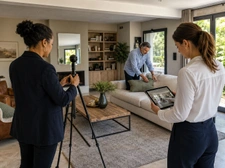
Before even stepping through the door of a property, almost every buyer forms a first impression on a screen, within just a few seconds of scrolling.
This invisible but decisive stage relies almost entirely on photographs and, increasingly, on virtual tours.
This article explains why professional real estate photography can change the way your listing is perceived, what a professional photo shoot actually offers compared with pictures taken on a smartphone, and how a 3D virtual tour can reduce the number of unnecessary physical viewings.
You will also discover how light home staging can complement these tools to maximise your property's appeal.
In summary
- Photos are the first filter used by buyers on property portals, long before they make contact or arrange a viewing.
- Professional property photography stands out through lighting, composition, editing and the way it showcases space and proportions, whereas amateur photos can often work against the property.
- A 3D virtual tour allows buyers to pre-select properties remotely and helps reduce the number of poorly qualified physical viewings.
- Combining professional real estate photography with a virtual tour can generally help shorten the time needed to connect with serious buyers and improve the visibility of the listing.
- Light home staging before the photo shoot can improve the final result without requiring a major investment.
- These services are generally included as part of the support provided by a real estate advisor, meaning sellers do not have to manage the equipment and technical expertise themselves.
Photos: The First Filter for Buyers Before They Even Arrange a Viewing
On property portals, potential buyers typically spend only a few seconds looking at each property before deciding whether to click through and find out more.
Within this very short timeframe, the photos—and particularly the main listing photo—are what initially capture their attention.
The listing description, price and location obviously matter, but the image remains the first visual element to stand out among dozens of similar properties.
This visual filtering has a direct consequence: a poorly photographed property may be dismissed by buyers who might otherwise have been interested if they had viewed it in person.
Conversely, photographs that provide an accurate yet attractive representation of the property's space, natural light and layout can help attract the right type of buyers—those who can genuinely picture themselves living there before requesting a viewing.
Investing in professional real estate photography is therefore not simply about aesthetics. It can directly influence both the number and quality of enquiries generated by a property listing.
A Visual Filter That Also Influences the Property's Credibility
Poor-quality photographs—blurry, badly framed or taken in poor lighting—can unintentionally create doubts about the property's overall condition, even when the home itself is in excellent condition.
By contrast, a carefully produced photo shoot helps convey a professional and serious approach to the sale and, indirectly, reinforces confidence in both the seller and the real estate advisor managing the property.
Amateur Photos vs Professional Property Photography: What Really Changes?
The difference between a quick smartphone photo and a professional property photo shoot comes down to several technical factors. These details may not always be immediately noticeable, but they have a significant impact on how buyers perceive the property.
Lighting and the Right Time to Take Photos
A professional photographer chooses the time of day when natural light best showcases each room, avoids backlighting that can make interiors appear dark and knows how to compensate for insufficient natural light with carefully controlled additional lighting.
Amateur photographs taken without considering lighting conditions can often make rooms appear smaller, darker or display inaccurate colours.
Composition and Accurately Representing Space
The choice of angle, camera height and lens all help accurately represent the proportions of a room while avoiding the distortions that smartphone lenses can sometimes create in smaller spaces.
Good composition creates a sense of space and visual consistency between rooms, helping potential buyers understand the property's layout and imagine how they would move through and use the space.
Editing and the Property Floor Plan
Professional editing is not about altering reality. Instead, it involves correcting exposure, ensuring consistent colours across the photographs and minimising minor visual distractions without misrepresenting the property.
Many professional property photo shoots also include a floor plan, helping buyers understand the overall layout and orientation of the property before they even arrange a viewing.
Combined with the photographs, a floor plan makes the listing clearer and can reduce repetitive questions during the initial enquiry.
3D Virtual Tours: Pre-Qualifying Buyers Remotely and Saving Time
A 3D virtual tour goes beyond static photography by allowing prospective buyers to move virtually through the property, room by room and at their own pace.
This changes the nature of the buyer's first interaction with the listing by providing an experience that is much closer to an actual viewing.
Better Pre-Qualification Before a Physical Viewing
With a virtual tour, buyers can determine for themselves whether a property meets their expectations in terms of room layout, natural light and overall configuration without having to travel to the property.
As a result, buyers who subsequently request a physical viewing are generally better qualified and further along in their purchasing decision.
Fewer Unnecessary Viewings and More Time for the Seller
For sellers who still live in the property, every viewing involves some inconvenience: arranging schedules, tidying the home and sometimes having to leave while prospective buyers visit.
By filtering out some unsuitable buyers before an appointment is even arranged, a virtual tour can reduce the number of physical viewings that are unlikely to lead anywhere.
This saves sellers time and allows them to focus on prospective buyers who are genuinely interested in the property.
Particularly Useful for Remote Buyers or Unusual Properties
Virtual tours are also particularly valuable when a property is located far from where potential buyers live or when it has an unusual layout that is easier to understand visually before travelling to see it.
This is particularly relevant when selling an unusual property, such as a loft, mill or farmhouse, where a virtual tour can help buyers understand unconventional spaces and layouts before arranging an in-person viewing.
What Is the Real Impact on Selling Time and Listing Appeal?
It is difficult to attribute a single guaranteed figure to the impact of professional real estate photography and virtual tours on selling time, as many factors come into play at the same time, including price, location, local market conditions and the type of property.
That said, the experience of real estate advisors generally points in the same direction: a visually appealing listing tends to generate more clicks and enquiries than a similar property with poor-quality images, while also attracting better-targeted prospective buyers.
In practice, listings featuring professional photography and, where appropriate, a virtual tour often stand out more effectively in property portal search results, where they compete with dozens of other listings in the same area.
This increased visibility can result in more viewing requests during the first few weeks on the market, which is generally when a property's appeal is at its strongest.
Conversely, a property that remains on the market for a long time with unappealing photographs may gradually become less attractive to buyers who regularly monitor listings, even though nothing about the property itself has changed.
These are observed trends rather than guaranteed results, as every property sale is different.
This is precisely why working with a professional who understands the local market can be valuable. They can adjust the property's overall presentation strategy rather than focusing solely on photography.
A reliable initial valuation remains the starting point for setting an appropriate asking price, which professional photography can then help showcase effectively.
Light Home Staging: The Natural Complement to Professional Photography
Light home staging involves reorganising and decluttering rooms before the photo shoot without carrying out renovation work or making significant investments.
This generally involves:
- removing excessive personal belongings;
- clearing surfaces;
- rearranging furniture to improve the visual flow of the rooms;
- adding a few simple touches, such as neutral household linen, plants or additional lighting, to create an atmosphere that feels both neutral and welcoming.
Why Home Staging Improves the Final Photographs
A cluttered or highly personalised room is more difficult to photograph effectively because the buyer's attention is drawn towards objects rather than the property's space and natural light.
By clearing and reorganising the rooms before the photo shoot, the photographer can highlight what really matters to prospective buyers: room size, natural light and layout.
Light home staging and professional photography therefore work together, with one preparing the property so that the other can achieve the best possible result.
The question of whether it is better to sell a property furnished or unfurnished often arises at the same stage, as this choice can directly influence how the property appears in photographs.
A Process to Coordinate Rather Than Improvise
Successfully preparing a property in this way requires some method: knowing what to remove, what to keep, how to optimise the available light and in what order to prepare the rooms before the photographer arrives.
This is where an experienced professional's outside perspective can make a significant difference compared with preparing the property alone.
As the owner, it is naturally more difficult to take a completely objective view of a home you know well and may have lived in for many years.
Why Work with a Real Estate Advisor Rather Than Handle Everything Yourself?
Taking your own photographs, creating a virtual tour and preparing the property through home staging require suitable equipment, technical expertise and, above all, an objective perspective on your own home. Combining all three is rarely straightforward.
This is why these services are generally included as part of the support provided by a local Optimhome real estate advisor, who can coordinate professional photography and the virtual tour tools best suited to the property.
Working with an Optimhome real estate advisor also ensures that the photo shoot forms part of a coherent overall sales strategy, including the asking price, timing of the listing, property description and distribution across the most relevant property portals.
This comprehensive approach means sellers do not have to manage every technical aspect themselves, while ensuring that the presentation of the property supports the sales strategy from the first buyer enquiry through to completion.
Precautions and Common Mistakes to Avoid
Some sellers are eager to get their property onto the market and publish a listing with quickly taken photographs, intending to replace them with better images later.
This can negatively affect visibility because the first few weeks after a property is listed are often when it receives the most attention. A poor visual launch can therefore be difficult to recover from, even if the photographs are subsequently replaced.
Another common mistake is using photographs that have been excessively edited or no longer accurately represent the property.
A significant difference between the listing photographs and what buyers discover during an in-person viewing can lead to disappointment and a loss of trust, potentially undermining a negotiation that has already begun.
The purpose of professional property photography is not to transform the property, but to present it at its best while remaining true to reality.
Particular care should also be taken with properties whose condition or layout requires a more thoughtful presentation.
For example, when selling a property with visible defects such as cracks, damp or termite damage, honest but carefully composed photographs are preferable to trying to conceal an issue that buyers will inevitably discover during the viewing.
Work with an Optimhome Real Estate Advisor
An Optimhome real estate advisor can organise professional property photography, arrange a 3D virtual tour where appropriate and advise you on the most effective light home staging adjustments to make before the photo shoot.
This forms part of broader support for your property sale, from the initial valuation through to the final negotiation with the buyer.
You can also browse Optimhome property listings to see the standard of presentation currently expected on the market and use them as a reference when preparing your own property.
Comparing listings can help illustrate the difference between a standard property advert and one supported by professional photography and a carefully planned presentation.
Conclusion
Professional photography and virtual tours are more than just aesthetic extras. They are often the first point of contact between your property and dozens of potential buyers every week.
- Photos act as the initial filter on property portals, even before buyers make contact.
- Professional photography stands out through lighting, composition, editing and the inclusion of a floor plan.
- A 3D virtual tour helps pre-qualify buyers remotely and reduces unnecessary physical viewings.
- The impact on selling time varies depending on the market, but these tools generally contribute to a more attractive listing.
- Light home staging effectively complements professional photography without requiring significant investment.
- Working with an Optimhome real estate advisor allows these different stages to be coordinated as part of a complete sales strategy.
Professional support can therefore turn what may seem like a purely technical aspect of the sale into a genuine marketing advantage for your property.
FAQ
Are Professional Photos Really Essential When Selling a Property?
They are not legally required, but they can play a decisive role in the number of viewing enquiries generated by a listing.
On property portals where buyers are faced with a large number of competing listings, professional real estate photography can help your property stand out within the first few seconds.
How Many Photos Should a Property Listing Include?
There is no fixed rule, but a comprehensive property listing will generally include around 10 to 20 photographs covering each room, outdoor areas and the property's main selling points.
The aim is to provide a complete and honest overview of the property without overwhelming the listing with repetitive images.
Does a Virtual Tour Completely Replace an In-Person Viewing?
No. A virtual tour primarily acts as a pre-qualification tool.
It allows prospective buyers to explore the property and decide whether they want to take the next step, but an in-person viewing remains essential before making a purchase decision, particularly to assess the property's actual condition.
Are Virtual Tours Suitable for Every Type of Property?
They are particularly useful for larger properties, unusual homes and properties located far from the majority of prospective buyers.
For an unusual property, for example, a virtual tour can help buyers understand an unconventional layout before travelling for an in-person viewing.
Is Light Home Staging Expensive?
Generally, no. Light home staging is primarily about reorganising and decluttering rather than carrying out renovation work or making major purchases.
A few simple adjustments are often enough to significantly improve how the property appears in photographs.
Should You Take New Photos if the Property Has Been on the Market for a Long Time?
It can be worthwhile, particularly if the original photographs are outdated, the interior decoration has changed or seasonal changes have affected the natural light in the property.
Refreshing the photographs can help renew interest in a listing that has begun to lose momentum.
Who Usually Organises Professional Photography When Selling a Property?
The real estate advisor will generally coordinate the service and arrange for a professional photographer suited to the type of property.
This saves the seller from having to find the right photographer, equipment and technical solution themselves.
Author :

Fabrice DOBROWOLSKI - Optimhome Network Development Director
Optimhome offers you personalized support for your real estate project. Benefit from all my advice, based on several years of experience, to ensure the success of your project.