In 2027, the multi-year works plan (plan pluriannuel de travaux, or PPT) directly affects the sale of an apartment in a co-owned building: it is among the documents provided to the buyer and reveals the works planned over ten years and their estimated cost. A heavy PPT, with a facade renovation, insulation work or a boiler room to be replaced, can lead to price negotiation, whereas a building that has already been renovated or a well-funded works fund becomes a selling point. For works that have already been voted, the basic rule is simple: the seller pays the calls for funds that fall due before the sale, and the buyer pays those that fall due after, unless a different arrangement is set out in the preliminary sales agreement (compromis). Well prepared, the PPT is not an obstacle but a tool for transparency that reassures buyers. Here is how to anticipate it in order to sell at the best price.
In summary
- Since 1 January 2025, all residential co-owned buildings more than fifteen years old must have a PPT.
- The PPT, or failing that the draft plan, is among the information documents to be provided to the buyer.
- Calls for funds that fall due before the sale are paid by the seller, and those that fall due after by the buyer, unless otherwise agreed.
- Sums paid into the works fund remain attached to the lot and are not refunded to the seller.
- A heavy PPT often justifies negotiation; a building that has already been renovated sells more easily.
What exactly is the PPT?
If you are a co-owner, you have probably heard about the PPT at a recent general meeting. Let's go over the basics simply.
A ten-year works programme
The multi-year works plan lists the works necessary to preserve the building, to protect the health and safety of the occupants and to achieve energy savings. It ranks them by priority, estimates their cost and proposes a timetable for carrying them out over ten years.
A preliminary assessment
It is based on an analysis of the structure and equipment, carried out by a qualified professional, and incorporates the results of the collective energy performance diagnosis (DPE). It is updated at least every ten years.
A completed phase-in schedule
Introduced by the Climate and Resilience Act (loi Climat et résilience), the PPT has been mandatory since 2023 for co-owned buildings with more than 200 lots, since 2024 for those with 51 to 200 lots, and since 1 January 2025 for those with 50 lots or fewer, provided the building is more than fifteen years old.
Adopted at the general meeting
The draft plan is presented at the general meeting. The co-owners then decide whether to adopt all or part of the works, according to the proposed timetable.
Why the PPT changes the game for sellers
For a long time, a buyer would discover upcoming works by chance in the minutes of a general meeting. Now they are set out in black and white, costed and scheduled.
Full transparency for the buyer
The PPT allows the buyer to estimate precisely their share of future works. Buyers now compare apartments on their overall cost, purchase price and works included.
A new pricing criterion
With equivalent surface area and location, an apartment in a building that must undertake €1.5 million of works within five years does not sell for the same price as an apartment in a recently renovated building.
An already demanding market
In 2026, nine out of ten sales are negotiated, with an average margin of 4.8%, and selling times reach around a hundred days. Buyers take the time to analyse the documents and do not hesitate to rely on the PPT to negotiate.
Documents to provide when selling
The sale of a co-owned lot comes with a long list of documents. The official website Service-Public.fr details the information to be provided to the buyer when selling a co-owned lot.
Documents relating to the organisation
The co-ownership summary sheet (fiche synthétique de la copropriété), the co-ownership regulations (règlement de copropriété), the descriptive statement of division (état descriptif de division) and the minutes of the last three general meetings.
Financial documents
The current and extra-budgetary charges for the last two financial years, the sums that may be owed by the buyer, the overall statement of unpaid charges and debts owed to suppliers, as well as the amount of the works fund attached to the lot.
Technical documents
The building's maintenance logbook, the overall technical diagnosis if one exists, the collective DPE (energy performance diagnosis) and the multi-year works plan as adopted or, failing that, the draft plan.
The pre-dated statement and the dated statement
The pre-dated statement (pré-état daté), provided before the preliminary sales agreement (compromis), summarizes the financial situation of the lot. The dated statement (état daté), prepared by the syndic before the notarized deed of sale (acte authentique), settles the accounts between seller and buyer. Its fees are capped by regulation.
Who pays for the works: the seller or the buyer?
This is the question that comes up most often, and it deserves a clear answer.
The general rule
The seller pays the calls for funds that fall due before the date of the sale; the buyer pays those that fall due after it. What matters is the due date of each call for funds, not the date on which the works were voted.
A concrete example
A facade renovation of €30,000 for your lot is voted in June 2026, payable in four quarterly calls starting in October 2026. If the sale is signed in February 2027, you will have paid the first two calls (October and January); the buyer will pay the next two (April and July).
A split that can be freely negotiated
Seller and buyer may agree on a different split in the preliminary sales agreement (compromis): for example, the seller bears the entire cost of the works that have been voted, in exchange for a higher price. This agreement is binding only between them, not on the syndicat des copropriétaires (the co-ownership association).
Works only planned in the PPT
Works that are merely included in the PPT but have not yet been voted will be the responsibility of the owner at the time they are voted and called for, that is, the buyer. This is why they weigh on the negotiation.
The works fund: an asset to highlight
The works fund is often misunderstood by sellers, who feel they are "losing" the sums they have paid in.
Savings that stay in the building
Contributions to the works fund are permanently acquired by the syndicat des copropriétaires. They are not refunded to the seller upon the sale.
An argument for your price
However, a well-funded reserve reduces future calls for funds for the buyer. You can legitimately use this to support your price, and some sellers negotiate a reimbursement of their share by the buyer, in addition to the price.
A strengthened minimum amount
The annual contribution must represent at least 5% of the provisional budget and, once the PPT has been adopted, at least 2.5% of the amount of the planned works. In many co-ownerships, the fund has therefore grown significantly in recent years.
The real impact on the sale price
The PPT does not mechanically lower prices, but it changes the way buyers assess a property.
When the PPT weighs on the price
Major works in the short term, a low works fund, a collective DPE rated F or G: the buyer factors their future share into their offer. For an apartment priced at €250,000 with €25,000 of upcoming works, a negotiation of €10,000 to €20,000 is not unusual.
When it becomes a selling point
A building that has already been renovated, works spread over time, a well-funded works fund, an improved collective DPE: the PPT is reassuring and justifies a price at the upper end of the range.
The case of rented apartments
For an investor, energy renovation works can be good news: they allow the property to remain rentable after 2028 for class F, and after 2034 for class E.
Knowing your market value
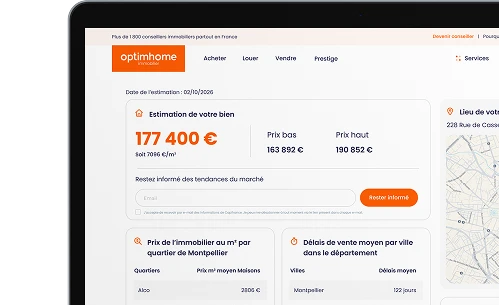
To measure the impact of the PPT on your property, start by getting a free online estimate of your apartment with Optimhome, then refine it with an advisor who knows the condominiums in your neighbourhood.
Sell before or after the works?
This is a genuine strategic choice, which depends on your situation and on how far the works have progressed.
Selling before the vote
You avoid paying the capital calls, but the buyer will negotiate based on the works planned in the PPT. The operation is often financially neutral, with the advantage of speed.
Selling during the works
Scaffolding and the building site may deter some buyers. A clear allocation of the capital calls in the preliminary sales agreement (compromis) is then essential.
Selling after the works
You have paid your share, but you are selling an apartment in a renovated building, often with a better DPE (energy performance diagnostic). The added value in terms of image and energy rating often offsets a good part of the investment.
Preparing your sale step by step
A sale in a condominium needs to be prepared several weeks in advance. Here are the steps to get off to a good start.
1. Gather the documents
Ask the syndic (the condominium managing agent) for the pre-dated statement (pré-état daté), the PPT, the collective DPE and the latest minutes. Some documents are available on the condominium's extranet.
2. Calculate your share of the works
Based on the tantièmes (ownership shares) of your unit, calculate your share of the works planned over the next five years. This will allow you to anticipate buyers' questions.
3. Set a pricing strategy
Factor the context of the works into your price from the outset. A property that is correctly positioned sells faster than an overpriced one that ends up being reduced.
4. Draft a precise compromis
Have the allocation of the approved works and of the upcoming capital calls specified. This is the best protection against disputes after the sale.
Buyers: how to read an apartment's PPT
If you are on the other side of the table, the PPT is your best ally for comparing properties and avoiding unpleasant surprises.
Look at the first five years
These are the most likely works and the ones with the most reliable cost estimates. Calculate your share and add it to the purchase price.
Check what has already been voted
The minutes of general meetings (assemblées générales) show whether the works in the PPT have been approved, postponed or rejected.
Compare several buildings
To compare apartments in different condominiums, browse the listings of apartments for sale on Optimhome and always ask for the condominium's documents before making an offer.
Mistakes that cost sellers dearly
Certain common blunders can delay a sale or cause a dispute after signing. It is better to know them in order to avoid them.
Downplaying upcoming works
Telling a buyer that "the façade renovation (ravalement) isn't happening any time soon" when it is listed in the PPT for the following year is a very bad idea. The buyer will find the information in the documents, and trust will be broken. At worst, misleading information can make you liable.
Forgetting an imminent general meeting
If a general meeting is called between the compromis and the deed of sale (acte authentique), and it is due to vote on major works, inform the buyer and provide in the compromis for who will bear the sums voted. You can also give the buyer a proxy to vote on the items that will concern them.
Overlooking unpaid charges in the condominium
A high level of unpaid charges in the building worries buyers and their banks. Be prepared to explain the situation and the measures taken by the syndic.
Overestimating your price without taking the works into account
A price that ignores a significant share of the works costs will be renegotiated anyway. The result: a property that stays on the market for several months and ends up selling for less than it would have fetched at the outset.
Waiting until the last minute to gather the documents
The syndic can take several weeks to provide certain documents. Requesting them late risks delaying the signing of the compromis and losing a motivated buyer.
The practical tip
- Ask the syndic for the PPT and the pré-état daté as soon as the property goes on sale.
- Calculate your share of the works planned over the next five years so you can answer buyers' questions.
- Highlight the works already completed and the amount of the works fund.
- Have the compromis specify who pays each upcoming call for funds.
- If major works are approaching, compare the "sell before" and "sell after" scenarios with your adviser.
The pro's advice
"Many sellers are afraid that the multi-year works plan will scare buyers away. In reality, what scares them away is surprise. When I present an apartment, I put the PPT on the table from the very first viewing, along with the calculation of the owner's share. The buyer feels respected, can compare options with full knowledge of the facts, and the negotiation takes place on a sound footing. A transparent seller almost always sells faster and on better terms."
Getting support when selling in a co-ownership building
Selling an apartment with a PPT requires knowing how to present the works, calculate their impact and defend your price.
To sell with peace of mind, entrust your project to an Optimhome real estate adviser near you: they will analyse your co-ownership's documents, adjust your pricing strategy and reassure buyers.
Conclusion
In 2027, the multi-year works plan is a fully integral part of selling an apartment in a co-ownership building. It brings a new level of transparency about upcoming works and influences the negotiation, but it can also become a selling point when it shows that a building is well maintained. Gather your documents early, calculate your share, make the most of the works fund and specify the allocation of costs in the compromis: your sale will only go more smoothly for it.
Does a neighbour in your co-ownership want to sell? Recommend them and be rewarded by becoming an Optimhome business referrer.
FAQ - Frequently asked questions
Does the PPT have to be given to the buyer?
Yes, the adopted multi-year works plan or, failing that, the draft plan is one of the information documents that must be provided to the buyer.
Who pays for works voted on before the sale?
The seller pays the calls for funds that fall due before the sale, and the buyer pays those that fall due afterwards, unless a different arrangement is provided for in the compromis.
Is the works fund refunded to the seller?
No, it remains the property of the co-ownership. It can, however, be taken into account when negotiating the price.
Does the PPT lower the sale price?
Not automatically. Heavy works that are close at hand often justify a negotiation, but a building that has already been renovated gains in value.
My building doesn't have a PPT yet, can I sell?
Yes, the sale is still possible. But the absence of a PPT, which is now mandatory for buildings more than fifteen years old, may worry buyers.
Is it better to sell before or after works?
It depends on the timeline and the amount. Selling after often makes it possible to showcase a renovated building and a better DPE.
What is the pré-état daté?
It is a document summarising the financial situation of the lot and of the co-ownership, given to the buyer before the compromis is signed.
Are the works in the PPT mandatory?
The PPT is mandatory, but the works must then be voted on at the general meeting; they may be adopted, postponed or rejected.
What should you do if a general meeting of co-owners takes place between the compromis and the sale?
Inform the buyer, provide in the compromis for who will bear the cost of any works that may be voted on, and, if you wish, give the buyer a proxy to vote on the resolutions that will concern them.
Author of the publication

Fabrice DOBROWOLSKI, Director of the Optimhome network
«Benefit from myexpert advice, based on many years of experience in real estate, to ensure the success of your buying or selling project. »