The master suite has become one of the most sought-after comfort and privacy spaces in real estate projects in 2026. Whether you are planning a new build or renovating your current home, this guide walks you through every stage: planning the right floor area, optimizing the layout, and choosing the perfect décor to transform this resting space into a true haven of peace. In this detailed article, discover how to increase the value of your property by creating a comfortable and stylish master suite for a future property sale, rental investment, or simply to improve your quality of life in your primary residence. To make all your real estate projects a success, contact your local Optimhome advisor and start by obtaining your personalized property valuation in just a few clicks!
Summary
- A well-designed master suite improves everyday comfort and enhances the perceived value of a property when selling or renting.
- Its impact on property value depends on the quality of the layout, the level of finishes, and its consistency with the rest of the home.
- A high-end master suite acts as a premium upgrade lever, especially for family homes and properties aimed at buyers seeking comfort and privacy.
- To be profitable, the project must be tailored to the budget, local market conditions, and intended objective: faster resale, stronger negotiating power, or increased rental potential.
What Is a Master Suite?
A master suite refers to a group of rooms within a home exclusively reserved for the parents, including at minimum a bedroom and an adjoining bathroom with direct access. Unlike a standard master bedroom, which is limited to the sleeping area, a master suite offers a truly private and self-contained sleeping zone, ensuring privacy and optimal comfort.
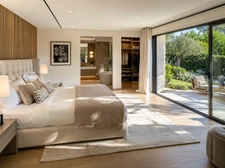
The generally accepted minimum size for a master suite is 15 m² (161 sq ft). This area allows for the inclusion of a functional bedroom and a compact bathroom. For a more comfortable layout that includes a walk-in closet or a small relaxation area, plan for 20 to 25 m² (215 to 269 sq ft). This configuration transforms the space into a genuine retreat, appreciated during resale and highlighted by Optimhome advisors during a property valuation.
How to Properly Design Your Master Suite
1. Plan the Right Size According to Your Bedroom Dimensions
To create a comfortable master suite, floor area plays a crucial role. Starting at 15 m², you can design a master bedroom with an adjoining bathroom, which represents the minimum configuration for a functional space. Movement remains fluid, and privacy is preserved.
With 20 m², additional possibilities become available: add a small integrated walk-in closet or generous wall storage. At 25 m², a relaxation corner or reading chair fits naturally into the space. Finally, from 30 m² onward, you can enjoy a complete luxury configuration including a spacious bedroom, custom walk-in closet, and a bathroom with double vanity.
Here is a summary table of possible configurations according to available floor area:
Area | Possible Configuration |
|---|---|
15 m² | Bedroom + adjoining bathroom |
20 m² | Bedroom + bathroom + small walk-in closet |
25 m² | Bedroom + bathroom + walk-in closet + relaxation area |
30 m² | Complete luxury layout (spacious bedroom + custom walk-in closet + double-vanity bathroom) |
2. Create a Small Master Suite in an Attic Space
Attics offer tremendous potential for creating a master suite, provided a few key rules are respected. Ceiling height should reach at least 1.80 m (5.9 ft) over two-thirds of the floor area for the space to be considered habitable. In practice, a ridge height of 2.50 m (8.2 ft) ensures a comfortable layout.
Make smart use of sloped ceilings by installing custom storage units, perfect for maximizing every square meter. Glass partitions or roof windows provide natural light and ventilation, two essential elements for avoiding a tunnel-like effect. If the layout proves complex, hiring an interior designer can help you get the most out of your project.
3. Design a Layout Adapted to a Long Narrow Space
Designing a long master suite requires careful consideration of circulation between the different areas. Favor a linear layout: bedroom first, followed by the walk-in closet acting as a transition area, and finally the bathroom at the end. This sequence avoids a corridor-like effect and naturally structures the space.
The central walk-in closet also serves as an effective sound barrier between the sleeping area and the bathroom. Choose sliding doors rather than hinged ones, as they save valuable circulation space. Mark the layout on the floor before construction begins to validate traffic flow and ensure each area remains easily accessible.
Integrating an Open Bathroom and a Functional Walk-In Closet
4. Create an Adjoining Bathroom with a Walk-In Closet
Your master suite gains comfort with a private bathroom and a thoughtfully designed walk-in closet. For the bathroom, prioritize a walk-in shower for easy access and simplified maintenance. If space allows, add a freestanding bathtub to create a luxury hotel-style atmosphere. A double vanity provides genuine daily comfort, especially during busy mornings.
For the adjoining walk-in closet, choose modular hanging rails, adjustable shelving, and a full-length mirror. An L-shaped or U-shaped closet optimizes available space, even in a smaller suite. The key is maintaining smooth circulation between the bedroom, closet, and bathroom for practical everyday use.
5. Choose Suitable Partitions Between Spaces
The separation between the bedroom and bathroom deserves careful consideration. A glass partition brings light into the space while visually defining each area. It creates a modern and airy effect, particularly appreciated in contemporary master suites. You may also opt for a sliding door, which saves space and fully isolates the bathroom when needed.
For a softer atmosphere, a simple curtain or partial partition may be sufficient. The important thing is to provide good ventilation in an open bathroom to prevent moisture from reaching the bedroom and closet. An efficient ventilation system or a strategically placed window solves this issue effectively.
6. Consider an Extension to Gain Additional Space
Does your current home lack the space required for a complete master suite? A home extension can be the ideal solution. You may consider adding a second story if your lot is limited, or extending laterally to create a new wing dedicated to the parents. Converting an adjacent room, such as an old garage or guest bedroom, is also an attractive option.
Beyond immediate comfort, this extension increases your property’s value when it comes time to sell. Buyers actively seek homes with master suites, which can help accelerate the transaction. To assess the feasibility and potential of your project, do not hesitate to contact an Optimhome advisor who understands local market expectations perfectly.
4 Decorating Ideas for a Modern and Cozy Master Suite
7. Use Lighting to Create a Luxury Atmosphere
Lighting dramatically transforms the atmosphere of your master suite. To recreate the warm ambiance of a luxury hotel, multiply your light sources. Prioritize natural light by installing glass partitions or large bay windows that bathe the room in softness.
Complement this with wall sconces on each side of the bed and adjustable reading lights for reading moments. Dimmer switches are essential for adapting the ambiance according to the time of day and activity. Choose warm white bulbs (2700–3000 K) that encourage relaxation and avoid excessively cool LED lighting. Indirect lighting behind the headboard or beneath shelves adds a highly appreciated cozy touch.
8. Choose the Ideal Color for Your Master Bedroom
Color directly influences the atmosphere of your sleeping area and the quality of your sleep. In 2026, calming shades dominate modern master suites. Off-white, sandy beige, and taupe create a neutral and timeless foundation. For more character, dare to use navy blue or sage green on a feature wall. These colors encourage relaxation while adding a contemporary touch. Avoid overly bright shades that stimulate activity rather than rest. Consider coordinating wall colors with your textiles (curtains, bedding) to create a cohesive and enveloping atmosphere.
9. Select the Right Flooring for Each Space
Light wood flooring brings warmth and elegance while providing pleasant comfort under bare feet. For the adjoining bathroom, opt for wood-look tiles or polished concrete, which are perfectly resistant to moisture. Large-format tiles reduce grout lines and simplify maintenance, while polished concrete creates a modern look with no visual break between spaces. You may also choose high-quality vinyl flooring in the bathroom, which is economical, easy to install, and available in a wide range of realistic finishes.
10. Pay Attention to the Headboard and Furniture
The headboard structures your sleeping area and immediately defines the room’s style. In 2026, trends favor curved shapes and wooden slat panels that add depth and texture. A tufted velvet headboard in gray or beige provides appreciated tactile comfort for reading in bed. Pair it with matching bedside tables made from natural materials such as light wood or rattan. If space permits, add a small desk near a window or a reading chair in a corner accompanied by a floor lamp. These personal touches transform your master suite into a genuine sanctuary.
Summary Checklist: 10 Tips for Your Master Suite
☐ Plan the right size according to your bedroom dimensions
☐ Create a small master suite in an attic space
☐ Design a layout adapted to a long narrow room
☐ Create an adjoining bathroom with a walk-in closet
☐ Choose suitable partitions between spaces
☐ Consider an extension to gain additional space
☐ Use lighting to create a luxury atmosphere
☐ Choose the ideal color for your master bedroom
☐ Select the right flooring for each area
☐ Pay attention to the headboard and furniture
The Impact of a Master Suite on Property Value
Creating a master suite is a genuine property value enhancement lever because it meets a strong buyer expectation in 2026: having a comfortable, functional, and distinctive private space. Whether in a family home or a large apartment, the presence of a master suite strengthens the perceived quality of the property and improves its positioning on the market.
This value increase is based on several factors. First, the master suite provides a practical and immediately understandable use during viewings: spacious bedroom, adjoining bathroom, walk-in closet, office corner, or relaxation area. Second, it improves the interior layout by creating a clear separation between the parents’ area and the other living spaces or bedrooms. Finally, it gives the property a more premium dimension, particularly appreciated by families, executives, and buyers seeking greater comfort.
In a resale context, a well-designed master suite can help accelerate the sale, reduce negotiations, and support a more ambitious asking price. The more coherent the layout is with the overall size of the home, the greater the perceived value.
Value Enhancement Levers for a Real Estate Investment Through a High-End Master Suite
Creating a high-end master suite is not simply about adding a bathroom to a bedroom. To genuinely increase the value of a property, the layout must be conceived as a coherent whole, with a focus on comfort, flow, and quality.
The first value-enhancement lever is the quality of the space distribution. A valuable master suite relies on a clear hierarchy between the sleeping area, the walk-in closet, and the bathroom. Smooth circulation, well-proportioned volumes, and elegant separations such as glass partitions, partial walls, or sliding doors reinforce the impression of a thoughtfully designed space.
The second lever is the level of finishing. Buyers are sensitive to durable and attractive materials: warm wood flooring, large-format tiles, premium fixtures, walk-in showers, double vanities, indirect lighting, and custom storage solutions. These elements go beyond decoration; they directly contribute to positioning the property within a more premium market segment.
The third lever concerns usability. A well-designed master suite should simplify everyday life: abundant storage, effective sound insulation, efficient ventilation, natural light, and preserved privacy. The more obvious the comfort, the easier it is for buyers to envision themselves enjoying life in the property.
Finally, consistency with the rest of the home is essential. A high-end master suite significantly enhances a property’s value when it integrates naturally into the overall architecture. Conversely, an overly luxurious suite within a home that does not offer a comparable standard elsewhere may create an imbalance and limit the value-enhancing effect.
Tips for Maximizing the Return on Your Rental Investment or Property Sale by Creating a Master Suite
From a profitability perspective, creating a master suite should be viewed as a strategic investment rather than a simple renovation expense. The objective is to maximize perceived value while keeping renovation costs under control.
For a property sale, it is preferable to focus investment on the elements that are immediately noticeable during viewings: a clear layout, an attractive bathroom, built-in storage, carefully designed lighting, and harmonious materials. An elegant and functional master suite can justify a higher selling price and strengthen buyers’ emotional connection to the property. It is often more profitable to pursue a coherent upgrade in quality than to multiply costly but less visible features.
For a rental investment, the strategy depends on the type of property and target audience. In a family home intended for long-term rental, a master suite is a strong selling point for households seeking comfort and functionality. In a premium property or furnished luxury rental, it can support a higher rental rate provided that the overall standard of the property is aligned. On the other hand, in a smaller property or an investment focused purely on rental yield, it is important to verify that creating a master suite does not reduce the number of rooms or the flexibility of the layout.
Before starting the work, it is advisable to evaluate three key factors:
- The total cost of the renovation
- The potential increase in resale or rental value
- The alignment with local market demand
A local real estate advisor can help determine whether creating a master suite represents a genuine profitability factor in your market.
Conclusion
Creating a master suite is not just about personal comfort; it is also an effective strategy for increasing a property's value.
When thoughtfully designed, it improves the readability of the home's layout, enhances its attractiveness, and supports a more premium market positioning.
The best results are achieved by combining functionality, quality materials, smooth circulation, and adaptation to local market expectations.
Before starting your project, it is advisable to carefully evaluate your property's value-enhancement potential with an Optimhome advisor in order to transform this renovation into a genuine real estate investment.
Remember to carry out a property valuation both before and after the work to assess the impact of your new master suite on the value of your house or apartment!
FAQ About the Master Suite
What Is the Difference Between a Master Suite and a Master Bedroom?
A master bedroom simply refers to a room dedicated to the parents' sleeping area, typically equipped with a bed and storage.
A master suite, on the other hand, is a true private living space that necessarily includes a bedroom and an adjoining bathroom with direct access. Depending on the available floor area, it may also incorporate a walk-in closet or a home office corner.
This configuration guarantees privacy and optimal daily comfort.
In the event of a resale, a well-designed master suite represents a significant value-enhancing asset for your property.
What Should You Include in a Master Suite?
The layout of a master suite varies depending on the available floor area.
The essential elements include:
- A comfortable bed
- A private bathroom with a shower or bathtub
- A walk-in closet to optimize storage
If space permits, you can also add:
- A home office area for working quietly
- A reading chair to create a relaxation space
- Carefully designed ambient lighting to enhance the sleeping area
To find a property that already includes a master suite or offers the potential to create one, an Optimhome advisor can guide you throughout your search.
Author :

Fabrice DOBROWOLSKI - Optimhome Network Development Director
Optimhome offers you personalized support for your real estate project. Benefit from all my advice, based on several years of experience, to ensure the success of your project.