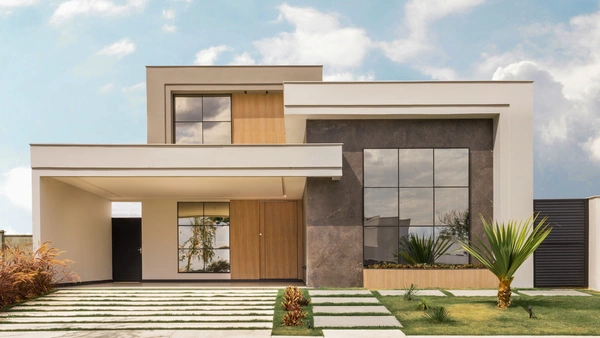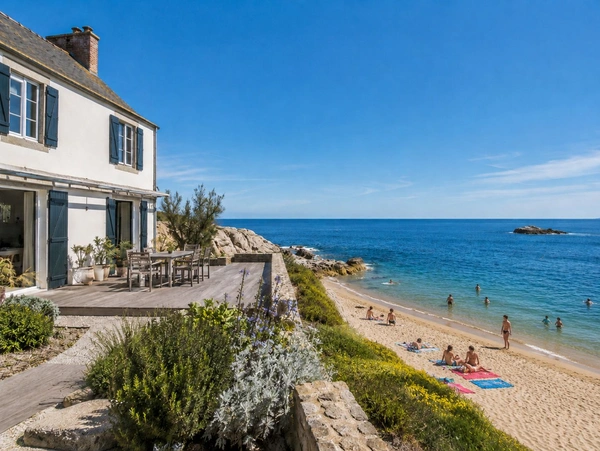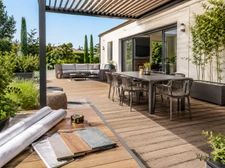
A terrace has become a true extension of your home, an outdoor living space that combines comfort and adds value to your property. In 2026, this open-air living area receives just as much attention as your living room. This guide will help you successfully plan your terrace project by covering terrace types, materials, decoration, regulations, and budget considerations.
What Is a Terrace and Which Type Should You Choose?
Ground-Level Terrace: The Most Common Model
A terrace is an outdoor living space designed as an extension of your home, whether it opens onto the garden or is installed at an elevated level. The ground-level terrace is the most common type of terrace in France. Built directly at ground level as a continuation of your house, it provides easy and seamless access between the indoors and outdoors, without steps or elevation.
This model offers a major regulatory advantage: in most cases, it does not require any planning permission unless your property is located in a protected area.
Raised Terrace and Its Specific Regulations
A raised terrace, often built on stilts, is particularly suited to sloping land or situations requiring elevation. As soon as your terrace exceeds 60 centimeters in height and 20 square meters in area, you must submit a prior declaration to the local authority, or even apply for a building permit depending on the footprint.
This type of terrace also requires compliance with distance regulations from neighboring properties: allow at least 1.90 meters for direct views overlooking neighboring land. Be sure to consult your municipality's Local Urban Development Plan (PLU) before starting your project.
Roof Terrace, Balcony, and Covered Terrace: Key Differences
To clearly define your project, it is useful to understand the differences between these outdoor spaces. A roof terrace is located on top of a building and often provides unobstructed views, but it requires significant waterproofing work. A balcony is a platform projecting from a façade, generally smaller in size and reserved for upper floors. Finally, a covered terrace features a roof or canopy and may require a prior declaration depending on its size. Each of these outdoor spaces is subject to specific technical and regulatory constraints.
Which Materials Should You Choose for Your Terrace?
Choosing the material is probably the most important decision in your terrace project. It determines not only the appearance and atmosphere of your outdoor space but also the initial budget, future maintenance, and lifespan of your installation. Here is an overview of the most popular options in 2026.
Wood and Composite Decking Boards: Warmth and Elegance
Wood remains the benchmark for creating a warm and natural terrace. Among the most popular species, pressure-treated pine offers excellent value for money (approximately €40 to €60 per m²), making it ideal for controlled budgets. Teak and ipe, exotic Class 5 woods, are prized for their exceptional weather resistance and natural beauty, although their price is higher (€60 to €120 per m² for the material alone).
Composite decking boards are an attractive alternative. Made from recycled wood fibers and plastic, they combine the appearance of wood with minimal maintenance requirements: no annual treatment and no greying. Their lifespan averages 25 to 30 years, compared with 15 to 20 years for natural wood. Expect to pay between €50 and €150 per m² depending on quality.
Tiles, Paving Slabs, and Natural Stone Flooring
Outdoor tiles and natural stone bring durability and elegance. Porcelain stoneware tiles with anti-slip finishes (R11 rating recommended) are highly resistant to frost and offer a wide range of styles, including wood-effect and concrete-effect finishes. Costs range from €30 to €100 per m², installation included.
Natural stone (granite, travertine, slate) provides unique character thanks to its natural variations. More expensive (€60 to €200 per m²), it requires regular maintenance but can last for decades. Concrete paving slabs are an economical and durable option (€40 to €80 per m²), particularly suited to high-traffic terraces.
Installation on Adjustable Pedestals: A Practical and Flexible Solution
Installation on adjustable pedestals has revolutionized terrace construction. This system compensates for uneven ground, creates an optimal drainage slope (1.5% to 2%), and provides easy access to utilities beneath the terrace. Compatible with most coverings (wood, composite, paving slabs, tiles), it offers complete reversibility: you can remove and reinstall the elements whenever necessary.
Natural drainage is one of its main advantages. Water flows freely beneath the slabs, eliminating any risk of standing water. Allow approximately 6 to 9 pedestals per m² depending on the type of decking board, with a standard spacing of no more than 40 to 60 cm to ensure stability.
Terrace Material Comparison Table
Material | Price per m² (installation included) | Lifespan | Maintenance | Appearance |
|---|---|---|---|---|
Wood (treated pine) | €80 to €120 | 15 to 20 years | Annual treatment | Warm, natural |
Exotic wood (ipe, teak) | €120 to €200 | 25 to 40 years | Wood saturator every 2 years | Elegant, premium |
Composite | €120 to €250 | 25 to 30 years | Minimal (cleaning) | Uniform, modern |
Porcelain stoneware tile | €60 to €140 | 30+ years | Easy cleaning | Varied, contemporary |
Natural stone | €100 to €300 | 40+ years | Regular cleaning | Authentic, unique |
Concrete slabs | €50 to €120 | 20 to 30 years | Low | Simple, durable |
What Design and Decoration Ideas Can Enhance Your Outdoor Terrace?
Landscaping for a Harmonious Garden Terrace
Creating a green setting around your terrace transforms it into a true haven of peace. Consider plants in containers and planters to structure the space: ornamental grasses add movement and lightness, while evergreen shrubs provide year-round greenery. Potted herbs (basil, rosemary, mint) add a practical and sensory touch to your relaxation area. To maximize visual impact, play with different heights by combining low-growing plants and taller vegetation, creating a harmonious landscape composition that naturally guides the eye.
Parasols, Railings, and Terrace Finishes
Essential accessories make all the difference when it comes to enjoying your terrace. A well-chosen parasol provides shade during long summer evenings and visually structures the space. For raised terraces, railings ensure safety while contributing to the overall design. In 2026, decoration trends favor living room-inspired furniture: deep modular sofas, generous armchairs, and comfortable poufs that encourage relaxation. Mediterranean-inspired colors dominate, with shades of terracotta, ochre, and khaki bringing warmth without overwhelming the space. Lighting also plays a key role: string lights, portable floor lamps, and LED spotlights create a soft atmosphere that extends evenings outdoors.
Optimizing a Small Urban Terrace
Even a few square meters can become a true urban oasis. The key is to optimize every centimeter by focusing on vertical space: wall-mounted shelves for plants, hanging storage solutions, and railing-mounted planters free up floor space. Choose folding or modular furniture that adapts to your needs. Dual-purpose furniture (storage benches, extendable tables) maximizes functionality without cluttering the space. To visually enlarge the area, opt for light colors and lightweight materials while creating perspective with outdoor mirrors or decorative screens.
Do You Need a Building Permit for Your Terrace?
Administrative Procedures: Prior Declaration or Building Permit
The regulations governing terrace construction depend mainly on three criteria: the area created, the height above natural ground level, and whether the terrace is covered.
For a ground-level terrace that is not elevated or only slightly elevated, no administrative procedure is required. No authorization is necessary unless your property is located in a protected area (near a historic monument, within a protected heritage site, or a listed site), where a prior declaration of works remains mandatory.
For a raised or covered terrace, the requirements vary according to the surface area. If the project creates a floor area of 20 m² or less (or 40 m² in an urban area covered by a PLU), a prior declaration is sufficient. Above these thresholds, a building permit becomes necessary.
In all cases, you must comply with the rules of your municipality's Local Urban Development Plan. Regarding property boundaries, your terrace must either be built directly on the boundary or at least 3 meters away from it, unless the PLU specifies otherwise.
Hiring a Specialized Terrace Contractor
For complex projects, particularly on sloping land requiring significant earthworks or when renovating an existing terrace, hiring a specialized company guarantees quality and compliance.
A professional will know how to adapt the construction to the constraints of your land, comply with planning regulations, and ensure the long-term durability of the structure. Before committing, request several detailed quotes covering material costs, labor, any required foundations, and the warranties offered. Also verify that the contractor carries a ten-year structural warranty and review previous projects or references to assess their expertise.
How Much Does a Terrace Cost and How Can You Get a Quote?
Terrace Costs by Material and Surface Area
The budget required for your terrace varies considerably depending on the materials selected. A concrete slab terrace generally costs between €40 and €80 per m² installed. Outdoor tiling ranges from €30 to €100 per m², while premium natural stone costs between €60 and €200 per m². Wood prices range from €40 to €120 per m² depending on the species chosen (pine, Douglas fir, or exotic wood). Composite decking, highly valued for its durability and low maintenance, ranges from €50 to €150 per m².
For a 40 m² terrace, the total cost can therefore range from €1,600 (basic concrete) to €8,000 (high-end natural stone). Labor generally represents 30% to 50% of the overall budget. Also consider terrain complexity: a sloping site requiring earthworks may increase costs by 20% to 40%.
Material | Price per m² (excluding installation) | Price per m² (installation included) |
Concrete | €25–50 | €40–80 |
Tile | €20–60 | €30–100 |
Wood | €25–80 | €40–120 |
Composite | €30–100 | €50–150 |
Natural stone | €40–120 | €60–200 |
Tips for an Affordable Terrace
Want to reduce costs without sacrificing quality? Start by choosing cost-effective materials such as concrete or standard tiles, which offer excellent value for money. Request multiple quotes from specialized contractors to compare prices and services. Differences can reach up to 30% between professionals.
If you enjoy DIY projects, handling certain tasks yourself can reduce labor costs: site preparation, pedestal installation, or finishing work. Consider scheduling work during off-peak seasons (autumn or early spring) to negotiate better rates. Finally, think about scalability: a modular composite-tile terrace can be expanded gradually as your budget allows.
How Does a Terrace Increase the Value of Your Home When Selling?
A well-designed terrace is now a major asset when selling a property. In 2026, buyers increasingly prioritize outdoor space when searching for a home. According to recent market studies, the presence of a terrace can increase a property's value by 4% to 30%, depending on its size and layout. A terrace exceeding 50 m² with sea views or an unobstructed panorama can increase a home's value by up to 25% in some sunny regions.
Visual impact plays a crucial role during property viewings. This is where outdoor home staging becomes important to maximize your terrace's appeal. A clean, uncluttered space enhanced with comfortable furniture and greenery allows visitors to immediately imagine themselves living there. An attractive terrace transforms the overall perception of the property and often creates the decisive emotional connection.
To showcase your terrace effectively in your property listing, Optimhome experts offer tailored services. Online valuations help estimate the added value created by your terrace, while virtual tours and drone videos highlight your outdoor spaces from their best angles. Contact an Optimhome advisor to assess the precise impact of your terrace on your property's value or to discover houses and apartments with terraces in your area.
Frequently Asked Questions About Terraces
How Do You Build a Wooden Terrace?
To build a wooden terrace, start by preparing and leveling the ground while ensuring proper drainage. Install adjustable pedestals at regular intervals, then fix the joists perpendicular to the direction of the decking boards. Screw the boards into place, leaving an expansion gap of 3 to 6 mm between each one. Finish by applying a protective treatment (wood saturator or oil) to protect the wood from weathering and extend its lifespan.
How Do You Clean and Maintain a Wooden Terrace?
Maintaining a wooden terrace involves an annual cleaning in spring, ideally using a stiff brush and mild soap or a specific outdoor wood cleaner. You can use a low-pressure washer (maximum 80 bars) while keeping the nozzle at least 30 cm away from the wood. After cleaning and complete drying, apply a wood saturator to nourish and protect the material. Also check all fixings and tighten them if necessary to ensure safety and stability.
What Is the Best Surface Material for an Outdoor Terrace?
There is no universally ideal surface material for every terrace. The right choice depends on your budget, your home's style, and the level of maintenance you are willing to perform. Wood offers a warm appearance but requires regular maintenance. Composite combines the look of wood with minimal upkeep. Tiles and natural stone provide durability and elegance, while concrete offers an economical and long-lasting solution. Consider these criteria according to your priorities.
Why Is My Terrace Turning Green or Black?
Green discoloration is caused by moss, algae, and lichen growth encouraged by humidity, lack of sunlight, and the accumulation of organic debris. Blackening is generally caused by mold, atmospheric pollution, or dirt embedded in porous materials. To remedy this, clean your terrace regularly with a suitable anti-moss product, scrub thoroughly, and rinse generously. Applying a water-repellent treatment after cleaning will help prevent future growth.
When Should You Build or Maintain Your Terrace?
The ideal period for building a terrace is spring or early autumn, when weather conditions are stable and favorable for outdoor work. Annual maintenance should preferably be carried out in spring, just before the warmer season. This is the perfect time to deep clean your terrace, inspect the condition of boards and fixings, and apply a protective treatment. Your outdoor space will then be ready for relaxation during long summer evenings.
How Many Pedestals Are Needed for a Wooden Terrace?
The number of pedestals depends on the terrace size and the type of decking boards used. Professionals generally recommend between 5 and 9 pedestals per m² depending on spacing and board thickness. For example, a small 12 m² terrace will require between 60 and 108 pedestals. Pedestal spacing is typically between 40 and 50 cm. For an accurate calculation, prepare a layout plan taking into account the arrangement of joists and the length of your decking boards.
Author :

Fabrice DOBROWOLSKI - Optimhome Network Development Director
Optimhome offers you personalized support for your real estate project. Benefit from all my advice, based on several years of experience, to ensure the success of your project.