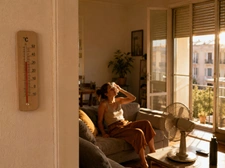
This summer 2026, France experienced one of the most intense heatwaves in its history, with historic heat records in several départements and nighttime temperatures exceeding 30°C in many homes. In this context of frequent intense heat, a new term is entering the real estate vocabulary: the thermal kettle. And it could well weigh heavily on the value of your property.
Because a silent revolution is underway: a home's ability to remain livable in summer is becoming a value criterion in its own right, sometimes independent of its energy performance rating (DPE). In this article, we explain what a thermal kettle is, why a home's poor adaptation to heat can lower a property valuation, and above all how the right improvements can enhance your property's value in the face of heatwaves.
Curious to know the value of your property? Get a free online estimate for your house or apartment with Optimhomeand a real estate advisor from our network near you can refine this estimate with a complete valuation opinion, with no obligation.
Data up to date as of 2026.
In summary
- A new key concept: a thermal kettle is a home that overheats quickly in summer and struggles to release heat, becoming uncomfortable, even unlivable, during heatwaves.
- Independent of the DPE: a home can be well rated on the DPE (even A or B) and still remain a thermal kettle, because the DPE mainly measures winter and annual performance, not summer comfort.
- A real impact on valuation: faced with repeated heatwaves, thermal kettles risk a price discount and longer selling times, while "cool" properties are valued more highly.
- Solutions that add value: solar shading, roof insulation with strong thermal lag, nighttime ventilation, and solar-control glazing improve summer comfort... and the valuation.
Need a reliable opinion? A local Optimhome advisor now knows how to factor summer comfort into your property's valuation.
What is a thermal kettle?
The term is recent, but it describes a reality that many homeowners already know: the feeling of living in a furnace as soon as the mercury rises.
The definition of the thermal kettle
A thermal kettle is a home — house or apartment, old or new — where heat builds up quickly in summer and becomes difficult to release. Concretely, outdoor heat penetrates within a few hours, and nothing allows it to come back down: the home turns into a "kettle" during heatwave episodes. This refers to a home whose indoor temperature durably exceeds comfort thresholds (often above26 to 28°C, including at night).
A thermal kettle is not a thermal sieve
Be careful not to confuse these two notions, which are complementary but distinct. A thermal sieve refers to a poorly insulated home that leaks heat in winter (rated F or G on the DPE): this is an issue of cold and heating consumption. The thermal kettle, on the other hand, concerns summer comfort: a home that overheats when it's hot outside. Often, a thermal sieve is also a thermal kettle... but not always the reverse: a home very well insulated against cold can remain a real oven in summer.
How many homes are affected in France?
The phenomenon is massive. According to a 2025 estimate, around 35% of French homes would be thermal kettles — far more than the share of thermal sieves (13 to 15% of the housing stock). A large industry study (IGNES–Pouget Consultants), covering nearly 9 million DPEs, goes further: only 10% of homes would offer good summer comfort, and nearly one home in two would behave like a thermal kettle during an extreme heat episode. In other words: the majority of the housing stock is poorly equipped to handle heatwaves.
To remember
- A thermal kettle overheats quickly in summer and struggles to cool down.
- It's distinct from the thermal sieve (a winter cold issue): a property can be one, the other, or both.
Why a thermal kettle can be well rated on the DPE, for now
This is the most surprising point — and the most important one for your valuation.
So far, the DPE mainly measures winter performance
The Energy Performance Diagnosis (DPE) was originally designed to assess energy consumption and emissions, mainly linked to heating in winter. As a result: a home can display an excellent rating (A or B) thanks to strong insulation against cold... while becoming a furnace in summer. According to a recent analysis, up to 30% of A-rated homes could turn into thermal kettles during intense heat. The DPE alone, therefore, doesn't say whether a home is pleasant during a full heatwave.
The "summer comfort" indicator and the "degree-hour"
To fill this gap, two tools are gaining traction. The DPE now includes a summer comfort indicator, still little looked at, based on five criteria: exterior solar shading (shutters, blinds, sun screens), roof insulation, the building's thermal inertia, whether the home is through-ventilated (cross-ventilation), and the presence of air circulators. Separately, the RE2020 regulation introduced the degree-hour (DH), which measures the duration and intensity of overheating periods: beyond a certain threshold, a new home is considered uncomfortable in summer. These indicators foreshadow a growing consideration of heat in property valuations.
To remember
- The DPE alone doesn't guarantee summer comfort: an A or B-rated property can be a thermal kettle.
- The "summer comfort" indicator and the degree-hour (RE2020) are becoming value benchmarks to watch.
The impact of the thermal kettle on your property valuation
Let's get to the heart of the matter: concretely, what does this change for the value of your property?
A new value criterion for a property, independent of the DPE
For a long time, a "sun-drenched" house was a selling point. With recurring heatwaves, the situation is reversing: the ability to stay cool in summer is becoming an increasingly decisive criterion for buyers. Yet this criterion is partly independent of the DPE: two properties with an identical energy label can have very different perceived value depending on their behavior in intense heat. Summer comfort is thus establishing itself as a new valuation lever, on par with surface area, location, or natural light.
Toward a discount for thermal kettles?
Professionals are already observing it in the field: during periods of intense heat, uncomfortable homes trigger buyer doubts, downward negotiations, and longer selling times. A top-floor apartment, south-facing, with no shutters or solar protection, can see its appeal — and therefore its price — erode. As heatwaves become more common, this thermal kettle discount is expected to grow, somewhat like the discount currently observed for thermal sieves in winter.
Conversely, "cool" properties gain value
The good news is that the effect also works the other way. A home that stays pleasant in summer — thanks to good orientation, solar shading, thermal inertia, vegetation, or cross-ventilation — becomes a premium selling point. These "cool" properties stand out, sell faster, and can justify a better price. Investing in summer comfort is therefore not an expense: it's an investment in the value of your property.
How to recognize a thermal kettle
Certain signs don't lie. Particularly exposed are: top-floor apartments or those on the highest floors, homes facing south or west without solar protection, those fitted with single glazing, non-cross-ventilated properties (impossible to create airflow), a poorly insulated roof, low thermal inertia (lightweight materials), and a lack of exterior shutters or blinds. Context matters too: dense, heavily paved urban areas (lots of concrete, little vegetation) suffer from the urban heat island effect, which worsens overheating, especially at night. A good habit before buying: visit the home at different times of day, or ask how it behaved during past heatwaves.
How to enhance your property's value against heat (and improve its valuation)
Good news: a thermal kettle is not inevitable. Several improvements, often passive (without air conditioning), significantly improve summer comfort — and the perceived value of the property in the face of climate change.
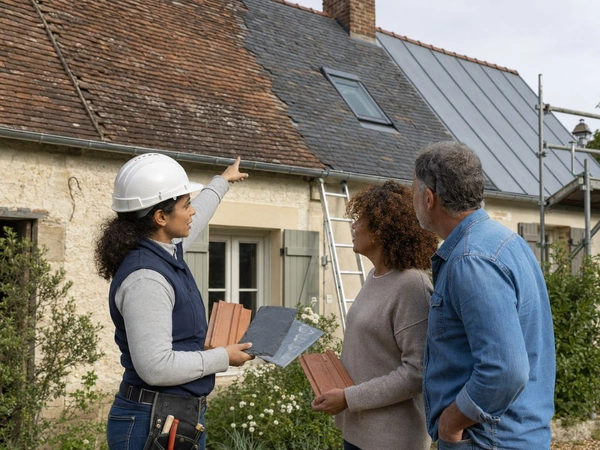
Install exterior solar shading
This is the most cost-effective step. Roller shutters, adjustable louvered sun screens (BSO), exterior blinds, or pergolas block solar radiation before it reaches the windows. Top priority for south- and west-facing façades.
Insulate the roof with a high-thermal-lag material
The roof is the main source of overheating. Good attic insulation, with an insulator offering strong thermal lag (such as wood fiber), significantly slows heat entry. Conversely, some conventional insulators (glass wool, polystyrene) protect less well against summer heat. External insulation (ITE) is, in this regard, more effective than internal insulation for summer comfort.
Encourage nighttime ventilation and air circulators
Releasing heat accumulated during the day at night is essential. A cross-ventilated home, well-designed ventilation (even dual-flow), and air circulators (ceiling fans) allow the temperature to drop naturally, without systematically resorting to air conditioning.
Replace glazing and rely on thermal inertia
Solar-control double glazing lets light through while reducing heat gain. And where possible, leveraging the building's thermal inertia (thick walls, heavy materials) helps smooth out temperature peaks.
Access financial assistance
These renovations benefit from support programs: MaPrimeRénov' (which now includes summer comfort), the zero-interest eco-loan (up to €50,000), and energy savings certificates (CEE). Check your eligibility in advance — an Optimhome advisor can point you toward the right programs and qualified contractors.
To remember
- Passive solutions (solar shading, roofing, ventilation) can gain several degrees without air conditioning.
- These renovations improve summer comfort, reduce the risk of a discount, and add value to your property.
Thermal kettle: what to do if you're selling your house or apartment?
If you're selling a property exposed to overheating, transparency and anticipation are your best allies. Document the improvements already made (shutters, insulation, ventilation) and present them as strengths. If work still needs to be done, cost it out and prepare a plan: a clear file reassures the buyer and limits negotiation. Above all, start from an accurate estimate that takes into account your home's real summer comfort — because a poorly calibrated price, ignoring this now closely watched criterion, lengthens selling times. Finally, highlight everything that naturally cools the property: orientation, shade, vegetation, cross-ventilation.
Accurately estimate your property with Optimhome
Summer comfort is changing the way a home is evaluated. A relevant estimate can no longer be limited to surface area and the DPE: it must factor in the property's ability to stay pleasant during a heatwave. This is where support makes the difference.
First step, simple and free: the Optimhome online property estimate tool gives you, in just a few minutes, a first reliable benchmark for the value of your house or apartment. Then, a local Optimhome real estate advisor refines this estimate by taking into account the specifics of your property and your market — including this new summer comfort criterion — advises you on the most value-adding improvements, and supports you through to signing, to sell within the best timeframe and at the right price.
local Optimhome real estate advisorfree online estimate👉 Start with a, then get support from a.
Conclusion
- A thermal kettle overheats in summer: a value criterion that is rising, independent of the DPE.
- A good DPE doesn't guarantee summer comfort: up to 30% of A-rated homes could overheat.
- Thermal kettles risk a discount and longer selling times in the future.
- Anti-heat improvements (solar shading, roofing, ventilation) add value to your property.
- Get an accurate estimate of your property with Optimhome, factoring in summer comfort.
FAQ
What is a thermal kettle?
It's a home (house or apartment) where heat builds up quickly in summer and is difficult to release, making it uncomfortable, even unlivable, during heatwaves. The temperature there durably exceeds comfort thresholds, often even at night.
Can a thermal kettle have a good DPE?
Yes. The DPE mainly measures winter and annual performance (heating, consumption). A home very well insulated against cold can display a DPE of A or B while overheating in summer: according to some analyses, up to 30% of A-rated homes could become thermal kettles during intense heat.
Does a thermal kettle lower the selling price?
Increasingly so. With recurring heatwaves, homes that are uncomfortable in summer trigger buyer doubts, downward negotiations, and longer selling times. Conversely, a property that stays cool is valued more highly. Summer comfort is becoming a valuation criterion in its own right, partly independent of the DPE.
How do I know if my home is a thermal kettle?
Certain signs are warning signs: a top-floor or highest-floor home, south- or west-facing without protection, single glazing, a non-cross-ventilated property, a poorly insulated roof, no exterior shutters, or a location in a heavily paved urban area. Best approach: observe its temperature during heatwave episodes.
How can I improve summer comfort and add value to my property?
Focus on passive solutions: exterior solar shading (shutters, sun screens), high-thermal-lag roof insulation, nighttime ventilation, air circulators, solar-control double glazing. Assistance programs exist (MaPrimeRénov', eco-PTZ, CEE). These renovations improve comfort... and your property's valuation.
Do I need to install air conditioning to sell a thermal kettle?
Not necessarily. Passive solutions durably reduce overheating and cost less to run, while adding value to the property. Air conditioning remains a comfort add-on, but it consumes energy and doesn't replace good thermal design of the home.
Information up to date as of the publication date (2026). The regulatory framework (DPE, summer comfort, assistance programs) and the market are evolving; for an estimate tailored to your situation, consult an Optimhome advisor.
Auteur de la publication

Fabrice DOBROWOLSKI, Director of Network Development at Optimhome
"Benefit from my expert advice, built on many years of experience in the real estate industry, to help ensure the success of your buying or selling project."