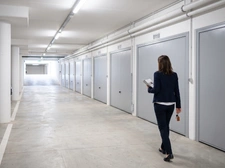
Is a parking space or a garage box more profitable than a traditional apartment? Yes, in many major French cities, this investment offers a higher rental yield than residential property, with a much lower entry price and virtually hassle-free management. This niche investment is attracting more and more investors in 2026, provided that they choose the right location and understand the applicable tax rules.
Key points
- A parking space or garage box often costs between €10,000 and €40,000 depending on the city, compared with several hundred thousand euros for a residential property.
- Gross rental yields frequently range between 5% and 10%, compared with 3% to 5% for an apartment in major metropolitan areas.
- Management is greatly simplified: no major renovation work, little administrative vacancy, and limited tenant turnover.
- Location remains a key factor, particularly in the face of the growth of cycling and public transport, which is reshaping demand.
Why parking spaces are increasingly attractive to investors
In France's major urban areas, parking has become a scarce commodity. Low-emission zones, reductions in the number of on-street parking spaces, pedestrianisation of city centres and rising land prices are making private parking spaces particularly sought-after. In Paris, Lyon, Bordeaux, Marseille and Lille, finding a parking space to rent can sometimes feel like an obstacle course, creating structural and lasting rental demand.
This pressure translates into regularly increasing rents in high-demand areas, and very low rental vacancy as long as the property is well located. Unlike residential property, a parking space does not go out of fashion, does not require energy-efficiency upgrades and is not subject to the same regulatory constraints related to the DPE.
A rental yield often higher than that of traditional residential property
This is the main argument for this type of investment. While an apartment in a major city generally offers a gross yield of between 3% and 5%, a parking space or garage box can reach 6% to 10% gross, or even more in certain well-located configurations purchased at a reasonable price.
- A parking space in the heart of a major city can be rented for between €80 and €180 per month depending on the city and local demand.
- A secure, enclosed garage box generally rents for 20% to 40% more than an outdoor or open basement parking space.
- The purchase price, often contained between €10,000 and €40,000, mechanically increases the rate of return relative to the initial investment.
This yield differential is also explained by very low condominium fees compared with those of a residential property, as well as the absence of recurring renovation costs.
Significantly simplified rental management
Another major advantage is the simplicity of management. Renting out a parking space requires neither a complex inventory of fixtures, nor extensive technical diagnostics, nor frequent claims management. Leases are short and flexible, often tacitly renewable, which limits procedures if the property needs to be recovered.
- No risk of unpaid charges related to the wear and tear of a residential property (boiler, plumbing, appliances).
- Generally low tenant turnover once a tenant has moved in.
- Possibility of renting by the day, month or year through specialised platforms, allowing the rental strategy to be adjusted.
This simplicity makes it an investment particularly suited to a beginner investor, an employed person wishing to diversify their assets without devoting time to it, or a future retiree looking for a regular additional income.
What is the tax treatment for income from a parking space or garage box?
Rental income received from a parking space or garage box falls under the category of property income, just like income from a traditional built property. Two tax regimes are possible depending on the amount of rent received and the expenses to be deducted.
- The micro-property income regime automatically applies if annual gross property income does not exceed €15,000, with a flat-rate 30% allowance representing expenses.
- The actual-cost regime allows actual expenses (property tax, condominium fees, loan interest, management fees) to be deducted when these exceed the 30% flat-rate allowance.
In practice, since expenses associated with a parking space are low, the micro-property income regime is often the most advantageous, except when financing through a loan generates significant interest expenses. It is recommended to compare the two regimes each year, particularly when the property is held as part of a larger rental portfolio including other properties.
Financing a parking space: cash or credit, specific rules
Financing a parking space or garage box follows a different logic from financing a residential property. Due to the low amount borrowed and the generally short duration of loans offered for this type of property, many investors opt for a cash purchase.
- Banks often require a high down payment, sometimes exceeding 30% of the purchase price, or even full financing with personal funds.
- Loan terms are generally shorter than for residential property, averaging between 5 and 15 years.
- Interest rates may be slightly higher than those of a traditional mortgage, due to the low loan amount and proportionally higher application fees.
For an investor with available savings, a cash purchase often remains the simplest and most profitable solution, as the leverage effect of credit is less significant for this type of small investment.
Choosing the right location: the number-one criterion
As with any real estate investment, location largely determines the profitability and security of the investment. Some areas offer virtually guaranteed rental demand, while others present a genuine risk of vacancy.
- The immediate surroundings of train stations and multimodal transport hubs, where commuters are looking for a reliable parking solution on a daily basis.
- City centres and historic districts where on-street parking is limited or expensive.
- Dense residential areas with a high rate of car ownership but an insufficient number of private parking spaces.
- The surroundings of hospitals, universities and major employment hubs, which generate regular flows of people.
Conversely, suburban or rural areas where free parking remains widely available offer much more limited rental potential. Before making any purchase, it is advisable to assess the level of local demand, compare rents charged nearby and seek the opinion of a local professional.
Risks and limitations to anticipate
Despite its advantages, this investment is not without risk. Rental vacancy can be significant in areas where the supply of parking exceeds demand, particularly on the outskirts of medium-sized cities or in remote condominium developments.
Changes in mobility patterns are also a factor that should be closely monitored. The development of cycle lanes, the growth of carpooling, public transport and free-floating mobility services in major metropolitan areas may, over time, reduce demand for individual parking in certain well-served neighbourhoods. Conversely, this same dynamic increases the value of spaces located near transport hubs, which become strategic transfer points.
- Check the level of car ownership among households in the neighbourhood before investing.
- Anticipate any potential change in the use of the property, particularly for a garage box that could be used as a storage unit.
- Remain attentive to local regulatory developments concerning parking and traffic.
Conclusion
Investing in a parking space or garage box is a relevant and often underestimated alternative for diversifying one's real estate assets. An accessible entry price, simplified rental management and a rental yield generally higher than that of residential property make it an investment of interest to many types of investors, provided that they target a promising location and remain vigilant regarding changes in urban mobility.
Before getting started, it remains essential to accurately assess the value and rental potential of the targeted property, as well as that of one's existing assets. An online property valuation provides a reliable initial benchmark, while the support of an Optimhome real estate advisor provides valuable local insight into the level of demand for parking in your area.
FAQ
What budget should you plan for when buying a parking space or garage box?
The price varies considerably depending on the city and location, but you should generally expect to pay between €10,000 and €40,000. In very large metropolitan areas such as Paris, prices can exceed this range for the most sought-after spaces.
Is the yield of a parking space really better than that of an apartment?
In many major cities, yes: the gross yield of a parking space is often between 6% and 10%, compared with 3% to 5% for a traditional residential property. This higher yield is explained by a low purchase price and very limited expenses.
Should you finance a parking space with a loan or pay cash?
Banks often require a high down payment and offer shorter loan terms for this type of property. Many investors therefore choose to pay cash, which is simpler to implement for a limited amount.
Which tax regime should you choose to declare rental income from a parking space?
The micro-property income regime, with its 30% allowance, is suitable for most owners as long as gross property income remains below €15,000 per year. The actual-cost regime may be more advantageous when a loan generates significant interest expenses.
Does the development of cycling threaten the profitability of this investment?
This trend may reduce demand in certain neighbourhoods that are very well served by soft mobility options, but it also increases the attractiveness of spaces located near train stations and multimodal transport hubs. Location therefore remains decisive in limiting this risk.
How can you tell whether an area offers good rental potential for a parking space?
You need to look at parking pressure on the street, the car ownership rate among residents and the proximity of demand generators such as train stations, hospitals or city centres. An Optimhome real estate advisor can refine this analysis locally, while consulting Optimhome real estate listings allows you to compare prices in the target area.
Author of the publication

Fabrice DOBROWOLSKI, Director of the Optimhome network
« Benefit from my expert advice, based on many years of experience in real estate, to ensure the success of your buying or selling project. »