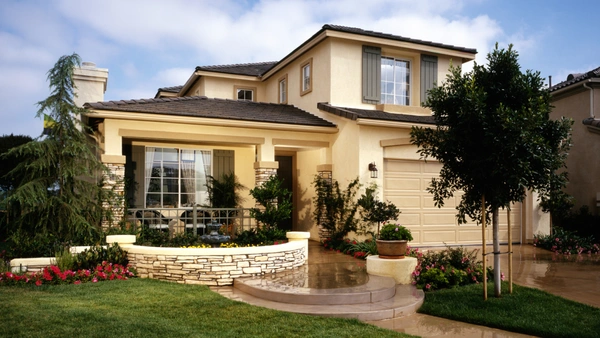
Is this the right time to buy an apartment or sell your house in spring 2026? Following on from our analysis of the real estate market in February 2026, Optimhome offers you a complete breakdown of the current situation: mortgage rates, changes in prices per square meter, transaction volumes, regulations, and practical advice to help you succeed with your real estate project this year.
Interest rates and mortgage lending conditions in april 2026
Macroeconomic context and real estate climate in april 2026
The economic climate in April 2026 remains marked by a delicate balance between moderate growth and vigilance regarding inflation. After a period of tension at the beginning of the year, bond markets have shown a certain degree of volatility, particularly for the 10-year OAT, which is fluctuating around 3.7% to 3.8%. This benchmark, which is essential for fixed rates, directly influences the bank rate schedules offered to borrowers.
The European Central Bank is maintaining a cautious monetary policy. At its March 2026 meeting, the Governing Council chose to leave all three key interest rates unchanged. The objective remains clear: to stabilize inflation around the 2% target over the medium term. According to ECB projections, headline inflation is expected to average 2.6% in 2026. This contained inflation provides some room for maneuver, even though international geopolitical tensions are still weighing on bond markets and oil prices.
For households, this environment results in a more stable lending market than in 2023-2024, but with bank requirements that remain strict. Banks are prioritizing strong applications and adjusting their offers according to refinancing costs.
Changes in mortgage rates in april 2026
In April 2026, mortgage rates are showing relative stability after the increases seen at the beginning of the year. According to the Crédit Logement/CSA Observatory and broker barometers (Cafpi, Meilleurtaux), the average 20-year rate stands at around 3.20% to 3.25% excluding insurance. Rate ranges by term remain close to those observed in March:
10 years: average rates between 2.80% and 3.10%
15 years: average rates between 2.95% and 3.15%
20 years: average rates between 3.20% and 3.30%
25 years: average rates between 3.30% and 3.45%
These figures remain indicative. The strongest borrower profiles (minimum 20% down payment, stable employment, comfortable income) can still negotiate rates below 3% over certain terms. Conversely, more fragile applications are subject to surcharges and more limited access to credit.
The rise in energy prices during the first quarter of 2026 helped maintain pressure on bond markets. Banks are incorporating these factors into their pricing grids, hence a slight tightening compared with levels seen at the end of 2025. The APR, which includes insurance, administration fees, and guarantees, remains the key indicator to compare when evaluating the total cost of the loan.
Borrowing capacity and household purchasing power
In practical terms, current rates directly affect household borrowing capacity. For a couple with a net monthly income of €4,500, while respecting the maximum debt ratio of 35%, the maximum monthly repayment allowed is around €1,575. With a 3.20% rate over 25 years, this couple can borrow around €290,000 (excluding down payment and insurance).
By comparison, with a rate of 2.70%, the amount that could have been borrowed would have been close to €310,000. This €20,000 difference illustrates the tangible impact of rate changes on real estate purchasing power.
Banks remain selective in April 2026. Personal contribution (ideally between 10% and 20% of the purchase price) and employment stability are decisive criteria. Banks also analyze disposable income and existing charges (consumer loans, alimony) before approving applications.
First-time buyers, although supported by the expanded PTZ, must prepare strong applications to maximize their chances of obtaining financing under the best conditions. To anticipate your real estate project in April 2026, run a simulation with a broker or a local Optimhome advisor. This will allow you to estimate your borrowing capacity precisely and adjust your budget according to current rates and your profile.
Market recovery: transaction volume in april 2026
Comparative review of transaction volumes
The French real estate market is continuing its normalization phase in April 2026. After reaching around 945,000 transactions over a rolling 12-month period at the end of 2025 according to notaries, representing a 12% increase year on year, momentum is holding up in spring. This level reflects a measured recovery after the downturn of 2024, when volume had fallen below 800,000 sales. Compared with April 2025, growth remains visible, driven by improved real estate purchasing power and bank selectivity that is easing slightly.
However, these figures remain below the historic peak of 1.2 million transactions recorded in 2021. This is not a return to euphoria, but a gradual normalization. The market has become a user market, according to notaries. Signed preliminary sale agreements and new listings are activating the transaction chain, but the recovery remains uneven depending on the area.
Changes in transaction volumes (Q1 2025 vs Q1 2026)
Period
Existing homes (number of transactions)
New homes (number of transactions)
Estimated total
Q1 2025
~210,000
~18,000
~228,000
Q1 2026
~230,000
~20,000
~250,000
Change
+9.5%
+11%
+9.6%
This table illustrates the gradual recovery of the existing-home market, while the new-home market is benefiting from a slight renewed interest thanks to support measures such as the expanded PTZ.
Regional disparities and segmentation by property type
The market recovery in April 2026 is not happening at the same pace everywhere. Detached houses, particularly sought after in suburban and rural areas, are seeing robust demand supported by remote working and the search for space. Apartments, meanwhile, are concentrating solvent demand in urban centers where supply remains relatively tight. This duality is leading to distinct trajectories depending on property type.
High-demand areas such as Paris, Lyon, or the French Riviera are maintaining solid transaction volumes, but with slightly longer selling times and wider room for negotiation. Conversely, some rural areas and mid-sized cities are benefiting from a catch-up effect, attracting buyers and investors seeking profitability or quality of life. Pas-de-Calais, Brittany, and Rennes illustrate these contrasting local dynamics.
The market has become a user market, according to notaries. Buy-to-let investors remain on the sidelines in the face of fiscal instability, leaving room for first-time buyers and owner-occupiers. This shift supports a more stable recovery, but also a slower one, as it depends more heavily on household borrowing capacity and the quality of financing applications.
To secure your selling project in France and benefit from a reliable valuation tailored to your local market, contact an Optimhome real estate advisor.
Price trends per square meter: between rises and falls depending on the area
The French real estate market in April 2026 is showing a contrasting dynamic depending on the area. While the national trend remains one of stabilization, the gaps between major metropolitan areas, mid-sized cities, and rural zones continue to widen. Understanding these disparities is essential to adjusting your buying or selling strategy.
National changes in prices per square meter in april 2026
At the national level, property prices are rising moderately, with an increase of +1.7% year on year, according to data from De Particulier à Particulier (PAP). This change remains contained and masks a highly heterogeneous reality from one area to another. After the declines seen in 2023 and 2024, the market is gradually stabilizing.
This stabilization can be explained by several factors. On the one hand, mortgage rates around 3.2% are improving household solvency and reviving demand. On the other hand, available supply remains limited in certain high-demand areas, which is supporting prices.
In less pressured areas, however, sellers often have to accept room for negotiation to close a transaction.
The average price in France stands at around €3,140/m² in April 2026, with ranges from €1,750 to €5,040 depending on the municipality. Apartments average €3,920/m², while houses are selling at an average of €2,540/m². These national averages remain only partially representative, however, given the marked regional disparities.
Property prices in major metropolitan areas and attractive cities
Major French metropolitan areas are maintaining high price levels, driven by strong demand and limited supply. Paris is showing an average price of €9,720/m² for older apartments, up +1.9% year on year according to the Greater Paris notaries. This modest rebound confirms the end of the correction phase that began in 2023.
In Lyon, the average price stands at around €4,510/m² for apartments and €6,010/m² for houses. The Lyon metropolitan area benefits from economic attractiveness and solid infrastructure, which supports demand.
Bordeaux and Nantes are following contrasting paths: Bordeaux is recording a slight rise (+1.2%), while Nantes remains stable after several years of strong growth.
Nice and Rennes are also posting prices above the national average. Nice is maintaining high prices (around €4,800/m²) thanks to its residential and tourist appeal. Rennes, driven by its economic dynamism and young population, is seeing prices rise by +2.1% year on year. Selling times in these metropolitan areas remain short for well-located and properly presented properties, often between 60 and 90 days.
City
Average price (€/m²)
12-month change
Paris
9,720
+1.9%
Lyon
4,510
+1.5%
Bordeaux
4,120
+1.2%
Nantes
3,850
Stable
Nice
4,800
+0.8%
Rennes
3,620
+2.1%
Prices in rural municipalities and less pressured areas
Mid-sized cities and rural areas are offering attractive buying opportunities in April 2026. Cities such as Angers, Clermont-Ferrand, Tours, or Nîmes are seeing growing demand, driven by the search for a better quality-of-life-to-price ratio and the development of remote working. Prices in these mid-sized cities range from €1,500 to €3,500/m², well below levels in major metropolitan areas.
In rural areas, the situation varies greatly depending on local attractiveness. Some rural municipalities are benefiting from a catch-up effect, with modest increases (+2.6% on average according to the SeLoger-MeilleursAgents barometer). Others have abundant supply and interesting room for negotiation for buyers.
The average price in rural areas stands at around €1,500/m², with properties available from as low as €1,200/m² in some regions.
These areas attract households looking for space, nature, and controlled costs. Detached houses with gardens are particularly sought after. However, buyers must remain vigilant regarding energy performance, mandatory inspections, and proximity to services (jobs, transport, shops). An Optimhome advisor can support you in identifying high-potential areas and securing your project.
Property supply and available housing stock in april 2026
The supply of properties on the French market in spring 2026 presents very contrasting realities depending on the area. Understanding these disparities and adapting your sales strategy accordingly can make all the difference in closing quickly and at the right price.
Housing stock and selling times on the market
The stock of available properties varies greatly from one region to another. In high-demand areas such as Paris, Lyon, or Rennes, supply remains limited. This scarcity supports prices and reduces selling times for well-presented properties.
Conversely, in less pressured areas or rural municipalities, supply is more abundant and leaves buyers with greater room for negotiation.
In April 2026, the average selling time stands between 90 and 120 days nationwide. But this figure hides major disparities. In dynamic metropolitan areas, a properly valued property can find a buyer in less than two months. By contrast, in some parts of Pas-de-Calais or Brittany, selling times may lengthen if the property is not properly showcased or if the asking price does not match the local market reality.
Longer selling times have become a natural market adjustment mechanism. When supply exceeds solvent demand, properties stay on the market longer and sellers often have to revise their strategy.
The quality of the listing then plays a decisive role. Professional photos, virtual tours, and detailed descriptions are now essential to capture buyers’ attention and accelerate the process. A well-presented property stands out immediately in a market where competition between listings is strong.
Property type also affects selling times. Apartments in city centers attract steady demand, while houses in suburban or rural areas may appeal to specific profiles, notably thanks to remote working. This segmentation by area and property type is a sign of persistent tension in some sectors and rebalancing elsewhere.
Practical advice for sellers in april 2026
To sell under the best conditions in April 2026, start by obtaining an accurate valuation of your property. A realistic valuation, based on a comparative analysis of the local market, avoids disappointment and limits the risk of overpricing, which unnecessarily extends the selling period. Your Optimhome advisor can carry out this valuation based on in-depth knowledge of the area and recent transactions.
Next, prepare your property carefully. Home staging remains a powerful lever for accelerating a sale. According to sector studies, a home enhanced through home staging sells on average in 19 days, compared with 127 days without intervention. Depersonalizing spaces, optimizing light, and tidying up allow buyers to picture themselves in the property immediately. Combine this presentation with professional photos and a virtual tour to maximize the impact of your listing.
Also make sure all your inspections are up to date. EPC, asbestos, electricity, gas: a complete file reassures buyers and avoids delays at the preliminary agreement stage. In 2026, the EPC is being scrutinized particularly closely. A property rated F or G immediately raises questions about renovation costs, which can slow negotiations or reduce the number of viewings.
Finally, align your pricing strategy with the local market. In high-demand areas, a realistic price makes it possible to close quickly. In less pressured areas, a slight margin for negotiation can be built in, but be careful not to overprice and risk seeing your property stagnate.
Your Optimhome advisor supports you in targeting potential buyers and optimizing your sales schedule, taking into account the specific features of your area and your property profile.
Market analysis by buyer profile in april 2026
The real estate market in April 2026 reveals very different dynamics depending on buyer profile. Each category of buyer faces specific opportunities and constraints, influenced by changes in mortgage rates, the regulatory framework, and market geography.
First-time buyers: easier access thanks to the expanded PTZ
First-time buyers are benefiting in April 2026 from a more favorable context than in 2023-2024. The extension of the zero-interest loan since April 2025 is a major lever: the PTZ now finances the purchase of new detached houses throughout the country, in all zones, with portions reaching up to 50% of the cost of the transaction for the most modest households.
In practical terms, this support improves first-time buyers’ solvency by reducing the amount borrowed at a standard rate. To benefit from the PTZ in 2026, three cumulative conditions apply: comply with income ceilings according to zoning and household composition, prove first-time buyer status (not having owned a primary residence in the previous two years), and buy an eligible property (new build, off-plan purchase, new house, or older property with renovation work).
However, banks remain selective. They generally require a personal contribution of 10% to 20% of the total amount, employment stability, and flawless banking management. A strong application remains decisive in obtaining the best rates.
To maximize your chances and build an optimized financing package (PTZ, main loan, Action Logement loan), support from a local Optimhome advisor is strongly recommended.
Buy-to-let investors: opportunities and vigilance
The buy-to-let investment market in April 2026 is characterized by increased caution among investors. The end of the Pinel scheme at the end of 2024 and the tax framework, deemed unstable after recent changes, have led to a relative withdrawal by private investors.
However, opportunities exist for well-informed investors. Mid-sized cities such as Angers, Tours, Nîmes, or Clermont-Ferrand offer attractive rental yields thanks to a good purchase-price-to-rent ratio and strong rental demand. Average rental yield in France stands at around 5.2% in 2026, compared with 4.6% in 2022.
On the tax side, LMNP status (Non-Professional Furnished Letting) remains an interesting option for optimizing taxation. In addition, the Denormandie scheme, extended until December 31, 2026, provides a tax reduction for investment in older properties with renovation work in degraded neighborhoods.
Finally, the new Jeanbrun scheme, launched in 2026 as part of the Housing Recovery plan, aims to revive buy-to-let investment through tax advantages combining depreciation and land deficit.
The essential point remains to prioritize rental quality and location before tax advantage. A 0.30-point increase in the mortgage rate weighs heavily on net profitability. Always calculate your yield by factoring in charges, taxation, and the total financing cost.
Buyers of primary and secondary residences
Buyers of primary residences are taking a long-term approach in April 2026. Faced with economic instability and financial market volatility, real estate is retaining its safe-haven status. These buyers prioritize access to services, quality of life, and wealth stability.
The market remains a user market: the majority of transactions involve households buying to live in the property long term, not to speculate. This dynamic explains the market’s resilience despite the rise in rates since 2022.
Primary residence buyers are less sensitive to short-term variations and pay more attention to property quality, energy performance, and medium-term appreciation potential.
For second-home buyers, April 2026 reveals targeted opportunities. Nearly 74% of second-home buyers are considering converting their property into a primary residence in the long term, reflecting a strategic, wealth-building approach. These buyers assess seasonality, rental potential, and the quality of life offered by the area.
Rural areas, mid-sized cities, and certain seaside or mountain resorts offer attractive prices (sometimes below €200,000) and good value for money.
Whatever your profile, a local Optimhome advisor will help you compare opportunities, calculate actual costs (notary fees, charges, taxation), and identify properties with the best potential for your project.
Regulatory and tax changes affecting the market in 2026
The year 2026 marks a turning point for buyers and real estate investors. Between stronger support measures and stricter energy constraints, the regulatory framework is evolving to steer the market toward greater efficiency and accessibility. Understanding these schemes is becoming essential to optimizing your project, whether you are a first-time buyer, an investor, or a landlord.
Support schemes for buying and investing in 2026
The 2026 PTZ remains the cornerstone of home ownership access. Expanded since April 2025, it now finances new detached houses in zones B2 and C, with income ceilings raised by 25%. First-time buyers can borrow up to 50% of the cost of the transaction interest-free, depending on their zone and family composition. This support considerably reduces financing costs and improves household borrowing capacity in the face of current rates.
The temporary donation tax exemption is an exceptional opportunity until December 31, 2026. Each parent can give up to €100,000 tax-free to a child to finance the purchase of a primary residence or energy renovation work. This measure can be combined with the standard €100,000 allowance every 15 years, allowing a couple to transfer up to €400,000 per child under advantageous tax conditions.
The Denormandie scheme, extended until December 31, 2026, offers a tax reduction for buy-to-let investment in older properties with renovation work, provided this work represents at least 25% of the total cost. The BRS (Real Solidarity Lease) facilitates social home ownership by separating land ownership from the building, thereby reducing the purchase price by 30% to 40%.
To optimize your financing package, consult a notary and a broker. They will help you combine these support measures with borrower insurance delegation, which can significantly reduce the total cost of the loan and its duration.
Regulatory constraints for sellers and landlords
The 2026 EPC is changing with a new calculation method that came into force on January 1. The electricity conversion coefficient is falling from 2.3 to 1.9, improving the energy rating of many electrically heated homes. Older EPCs remain valid but can be updated free of charge on the Ademe DPE-Audit Observatory website.
Since April 1, 2025, a mandatory energy audit has applied to the sale of properties rated E, F, or G in certain areas. This obligation aims to inform buyers about the work required and its estimated cost. F- and G-rated thermal sieves are receiving particular attention: their rental will gradually be banned, forcing landlords to undertake renovations or risk losing their rental market.
In co-ownership buildings, a collective EPC has become mandatory for buildings with fewer than 50 lots since 2026.
The 2026 Finance Act is also strengthening regulations for landlords. Beyond the EPC, disclosure obligations are increasing and the tax framework is evolving to encourage energy renovation. Investors must incorporate these constraints into their profitability calculations and anticipate compliance costs to secure their real estate project.
Forecasts: should we fear a real estate crash in 2026?
Possible scenarios: lasting stabilization, selective recovery, or adjustment
The French real estate market in April 2026 is showing no signs of a generalized crash. The conditions that usually characterize a speculative bubble are not present nationwide: there is no excessive household debt, and demand remains rooted in genuine housing needs.
Three scenarios are emerging for the coming months. The first, and most likely, is based on a gradual stabilization of the market. In this case, the temporary tension observed on bond markets in March gradually fades. The 10-year OAT returns to a level close to 3.2%, bank rate schedules remain around 3.3% to 3.5% over 20 years, and property prices continue their moderate adjustment, with national growth contained around 1% to 2% over the year.
This central scenario is based on controlled inflation and an ECB monetary policy that remains accommodative without being expansionary.
The second scenario envisions a selective recovery by area. Some attractive metropolitan areas (Nantes, Rennes, Lyon) could experience faster demand growth thanks to improved household purchasing power and the expansion of the PTZ. In this context, prices would rise again in these high-demand areas, while less dynamic regions would remain stable or see a slight slowdown.
This scenario assumes stronger household confidence and bank selectivity that eases for the strongest profiles.
The third scenario, less favorable but not dominant, points to a localized adjustment. If geopolitical tensions intensify and trigger another surge in energy prices, bond yields could rise sustainably above 3.7%. Bank rate schedules would follow this increase, further reducing borrowing capacity and lengthening selling times.
In this case, some already fragile areas would see prices fall by 3% to 5% over the year, but this would not be a national crash, rather a localized correction.
Key indicators to watch to anticipate the coming months
To monitor developments in the French real estate market and anticipate trends, several economic and real estate indicators deserve close attention.
The 10-year OAT remains the benchmark barometer. Its evolution directly influences bank refinancing costs and, in turn, fixed-rate mortgage schedules. A lasting move above the 3.5% threshold could signal tighter lending conditions. Conversely, a return below 3.2% would pave the way for improved bank offers.
European Central Bank decisions on key rates are another strong signal. Any increase in the deposit rate above 2.5% would weigh on borrowing conditions. By contrast, a stable monetary policy would support household confidence and the recovery in transactions.
On the real estate side, transaction volumes published monthly by the Notaires de France and the Crédit Logement Observatory make it possible to measure the market’s real momentum. A prolonged decline in sales over several consecutive quarters could signal a slowdown. Conversely, sustained growth would confirm the recovery that began in 2025.
Changes in prices per square meter by area must be monitored closely. The gaps between major metropolitan areas, mid-sized cities, and rural zones reveal local imbalances and investment opportunities. Data from PAP and the notaries provide reliable indicators for this territorial analysis.
Household confidence, measured by INSEE, directly influences buying and selling decisions. Low morale slows real estate projects, while renewed confidence stimulates demand. Finally, the supply of new housing and building permits issued provide an indication of the market’s ability to meet future demand.
In April 2026, the French real estate market requires a local and nuanced reading. Optimhome real estate advisors, experts in their areas, support you in interpreting these signals and securing your buying or selling project.
Why use an Optimhome real estate advisor in april 2026?
In a real estate market that remains selective and heterogeneous, successfully completing a buying or selling project above all relies on detailed local knowledge. Optimhome real estate advisors, experts in their sector, support you at every stage with a personalized approach that makes all the difference.
In practical terms, an Optimhome advisor offers you a reliable valuation of your property, based on a comparative analysis of the local market and recent transactions. This precise assessment is the first key to attracting future buyers and avoiding prolonged selling times.
Beyond valuation, the support includes targeting buyer profiles, showcasing your property (home staging, professional photos, virtual tour), and optimizing the timing of your listing according to market developments.
For buyers, our advisors help you build a strong financing file, create competition between banks, and secure your project in a context where real estate purchasing power remains under pressure. Their knowledge of support schemes (expanded PTZ, donation tax exemption) and their ability to decipher local signals allow you to seize the right opportunities at the right time.
Optimhome provides you with a free valuation tool, a useful first step in obtaining a value range. But nothing replaces the eye and expertise of a professional on the ground to refine this assessment and advise you on the best strategy.
Whether you are selling or buying, contact an Optimhome advisor today to secure your real estate project and benefit from local support tailored to your needs.
FAQ on the real estate market in april 2026
Is 2026 a good year to sell a property?
Yes, 2026 offers favorable conditions for selling. Household purchasing power is improving thanks to mortgage rates stabilized around 3.2% to 3.5%, which strengthens buyers’ borrowing capacity and supports demand. However, the success of your sale depends on rigorous preparation: accurate valuation, property enhancement, and an adapted marketing strategy. An Optimhome real estate advisor supports you in optimizing your project, targeting the right buyers, and reducing selling times.
Will house prices fall in 2026?
At the national level, the trend is toward a moderate rise in prices, with an increase of +1.7% year on year. Some cities are still experiencing downward adjustments, but these corrections are now limited. Market adjustment is taking place more through negotiation and longer selling times than through sharp price drops. The French real estate market is gradually regaining its balance, with marked disparities depending on the area. A local analysis remains essential to assess the situation in your city.
Will borrowing rates fall in 2026?
The most likely scenario for 2026 is stability in mortgage rates around 3.2% to 3.5%, with possible marginal adjustments depending on changes in the 10-year OAT and ECB decisions. A return below 3% remains unlikely in the short term, as bond markets are still factoring in geopolitical tensions and inflation expectations. However, the strongest borrower profiles continue to benefit from significant discounts. To optimize your financing project, compare offers and use a broker.
Where should you invest in real estate in France in 2026?
For a successful rental investment in 2026, prioritize mid-sized cities that combine reasonable entry prices with strong rental demand. Angers, Clermont-Ferrand, Tours, and Nîmes are among the most attractive markets, with rental yields above 5% and stable rent levels. Local analysis remains decisive: proximity to transport, shops, economic dynamism, and the supply of new housing directly influence profitability. An Optimhome advisor helps you identify the best opportunities according to your borrowing capacity and wealth-building goals.